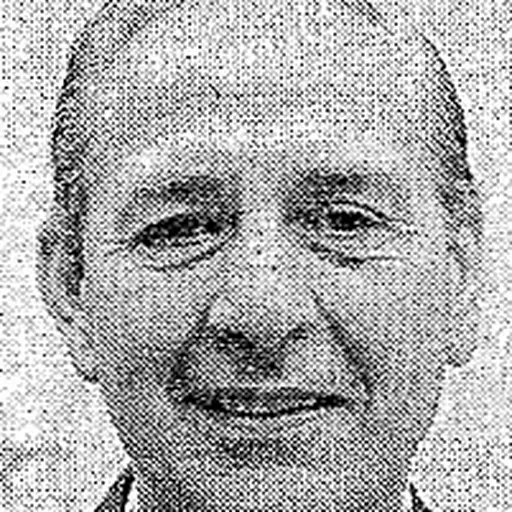
About Rex Williams
Born 1933. Rex Williams is a British snooker player.
Desmond Rex Williams (born 20 July 1933) is an English retired professional billiards and snooker player. He was the second player to make an official maximum break in snooker, achieving this in an exhibition match in December 1965. Williams won the World Professional Billiards Championship from Clark McConachy in 1968, the first time that the title had been contested since 1951. Williams retained the title in several challenge matches in the 1970s and, after losing it to Fred Davis in 1980, regained it from 1982 to 1983.
He played a leading role in the re-establishment of the World Snooker Championship on a challenge basis in 1964, and lost twice to John Pulman, once in a single match and once in a series of matches played in South Africa. When the Championship reverted to being a knockout from 1969, he reached the semi-finals three times. In 1968 he initiated the revival of the Professional Billiards Players Association (known as the World Professional Billiards and Snooker Association from 1970). He chaired the association, barring a few weeks in 1983, until 1987, and again from 1997 to 1999.
Williams was a successful junior player in both snooker and billiards, and became a professional in 1951 at the age of 18. At the 1986 Grand Prix, aged 53, he became the oldest player to reach a ranking tournament final. He lost the match 6–10 to Jimmy White after leading 6–4. He retired from competitive snooker in 1995, having achieved his highest ranking, 6th, in 1976/77.
Career Junior career
Williams was born in Halesowen on 20 July 1933. He started playing on a full-size billiard table at the age of 13 on a table installed at his father's printing works, and was coached by Kingsley Kennerley. He won the Midlands Boys Titles in both billiards and snooker. In 1948 he won the British Boys' (under-16) Championships at both snooker and billiards, and in 1950 he was the National Under-19 Billiards champion. He played an exhibition match against Joe Davis in 1949, winning the one 85–51 after receiving 21 start. In 1951, at 17 years old, he became the youngest winner of the English Amateur Snooker Championship (until Jimmy White in 1979), beating the 1939 champion Percy Bendon 6–1 in the final. He also won the 1951 National Under-19 Championships at both snooker and billiards. Williams made his debut at Leicester Square Hall in early 1952, playing John Pulman in an challenge match on level terms. Pulman won the six-day match 42–31. Williams then beat John Barrie 40–33 in another challenge match, receiving 10 points each frame in the handicapped match.
In May and early June 1952, Williams played in the qualifying competition for the 1952/1953 News of the World Snooker Tournament. In his first match he played 66-year-old Willie Smith and won 22–15. The qualifying was won by Jackie Rea who advanced to the main event. Williams met Kingsley Kennerley in the first qualifying round for the World Championship. Kennerley had already beaten him 23–14 in the News of the World qualifying and beat him again, this time 25–12. Albert Brown was ill for two of his matches in the News of the World Tournament and Williams played Fred Davis in a three-day exhibition match, in place of the planned second contest. Williams received a 14-point start but Fred Davis won the match 23–14. In March 1953, Williams played Joe Davis in an exhibition match. Williams received a 21-point handicap but Joe Davis won 43–30, scoring 4 centuries on the final day.
Williams met Harry Stokes in the 31-frame qualifying round of the World Championship in early October 1953 and led 3–2 after the first session. Williams was then ill and the match was rearranged for a later date. The match was, however, later cancelled and Stokes advanced to the next round.
1960s revival of snooker In 1964, the Conayes £200 Professional Tournament was staged at the Rex Williams Snooker Centre in Blackheath, being the first commercially sponsored professional snooker event since 1960. Williams was one of the four competitors, along with Fred Davis, John Pulman and Jackie Rea. Pulman won the event. Williams was instrumental in the revival of the World Snooker Championship in 1964, obtaining sanction for the competition after taking the Billiards Association and Control Council (BA&CC) chairman Harold Phillips out to lunch. The championship was staged on a challenge basis, with the first match being scheduled between Pulman, the winner of the 1957 World Professional Match-play Championship, and Fred Davis. but Pulman won 11 of the 12 frames on the second day to lead 15–9. Pulman extended his lead to 31–17 after four days and won the match on the fifth day, taking a 37–23 winning lead. Pulman made a break of 109 in frame 57. The remaining 13 "dead" frames were played on the final day with Pulman finishing 40–33 ahead. Williams and Pulman met again in late 1965 in a series of short matches in South Africa, but Williams was unsuccessful again, losing 25 matches to 22. In one of these matches in East London in the Eastern Cape, Williams made a break of 142, breaking the World Championship record of 136 set by Joe Davis in 1946. This stood as the world championship record break until 1981, when Doug Mountjoy compiled a 145. In December 1965, during an exhibition match in Cape Town against Mannie Francisco, Williams followed Joe Davis as the second man to make a recognised 147 break.
In 1967, Williams and Fred Davis played a 51 match series that was billed as the World Open Matchplay Snooker Challenge, even though no other entries were solicited.
World professional billiards championship and the WPBSA Williams won the World Professional Billiards Championship seven times from 1968 to 1983, including a reign as champion from 1968 to 1980. In 1968, Williams was on a trip to Australia, and decided to travel to Auckland in New Zealand to play the reigning champion Clark McConachy for the billiards title, which had not been contested since McConachy's 1951 win. By this time, McConachy was 73, and his play was affected by his Parkinson's disease. Williams won the title 5,499–5,234, and made the match's highest break, 293. During the 1970s, Williams made four successful defences of his title, against Bernard Bennett in 1971, Karnehm in 1973, and Eddie Charlton in 1974 and 1976.
Williams lost the world title to Fred Davis in May 1980. Davis made a break of 583, the highest in the world championship for 46 years, in beating Williams 5,978–4,452. The championship then reverted to a knockout format, and was held in November 1980, with Williams losing to Mark Wildman in the semi-final. At the next staging, in 1982, Williams regained the title by beating Wildman 3,000–1,785 in the final; he retained it in 1983 with a 1,500–605 victory over Davis in the final. Unhappy at not being allowed to use a practice table near another match at the 1983 tournament, Williams had left the venue and returned late for his semi-final against Ray Edmonds, causing the match to start 48 minutes late. There were no rules in place for penalties for late arrivals, but following complaints to the WPBSA, Williams was fined £500 by the association, and resigned as chairman, but remained on the board. Three weeks later, he accepted the board's invitation to become chairman again. but was reinstated as a full member the following year. The Association apologised for its actions "unequivocally".
Later professional career Williams reached the semi-final of the World Snooker Championship three times, losing to John Spencer in 1969, in 1972 to Alex Higgins 30–31 (having been four frames ahead with five left to play) and, in 1974, 7–15 to Graham Miles. He recovered from 8–2 down to win 9–8 against Terry Griffiths in the first round of the 1978 UK Championship, in the future World Champion Griffiths' first match as a professional. Williams was the 1973 Pot Black runner-up, losing 33–99 to Charlton in the one-frame final. During the 1986–87 snooker season, Williams became the oldest player to reach a world-ranking final when, aged 53, he lost 6–10 to Jimmy White at the 1986 Grand Prix, after having led 6–4. His run to the Grand Prix final included 5–1 wins over both Higgins and Steve Davis, and a 9–8 semi-final defeat of Neal Foulds. He finished the season ranked 12th. Williams was a commentator for snooker television broadcasts for the BBC from 1978 to 1984, and after that for ITV. His book Snooker : How to become a Champion was published in 1975, and republished with some amendments as How to play Snooker in 1982 and 1988, and as Snooker in 1984.
Williams was awarded the British Empire Medal in the 2020 Birthday Honours for services to snooker and billiards.
Performance and rankings timeline Post-war Canadian Masters Tournament Not HeldWTournament Not Held UK Championship Tournament Not Held1RNot Held
Performance Table LegendLQ lost in the qualifying draw#R lost in the early rounds of the tournament(WR = Wildcard round, RR = Round robin)QF lost in the quarter-finalsSF lost in the semi-finalsF lost in the finalW won the tournamentDNQ did not qualify for the tournamentA did not participate in the tournamentWD withdrew from the tournament NH / Not Held means an event was not held.NR / Non-Ranking Event means an event is/was no longer a ranking event.R / Ranking Event means an event is/was a ranking event.
Career titles Junior snooker and billiards
Amateur snooker OutcomeNo.DateChampionshipOpponent in the finalScoreRef.Winner11951 English Amateur Championship 6–1
Professional snooker
Professional billiards
Books
Year Title Author(s) Publisher ISBN 1975 Snooker : How to become a Champion Rex Williams (with diagrams by Peter F. Chaplin and photographs by M. Athar Chaudhry) William Luscombe 0860020096 / 086002136X 1982 How to Play Snooker Rex Williams (with diagrams by Peter F. Chaplin and photographs by M. Athar Chaudhry) Hamlyn 0600350134 1984 Snooker Rex Williams (with diagrams by Peter F. Chaplin and photographs by M. Athar Chaudhry) Hamlyn 0600347664 1988 How to Play Snooker Rex Williams (with diagrams by Peter F. Chaplin and photographs by M. Athar Chaudhry) Treasure Press 1860513031
Don’t just read it —
keep it.
Full-length biographies made to live with: read them, listen on the way to work, watch them tonight.
- E-book
- Audio
- Video
Instant download · yours to keep · every purchase keeps this site free
Important facts
People in Rex Williams's life
Named in this biography and alive at the same time





Related people
Same field, nearest in time


Contemporaries
People whose lives overlapped Rex Williams's




Frequently asked questions
Who is Rex Williams?
English snooker player
When was Rex Williams born?
Rex Williams was born on 20 July 1933 in Halesowen.
What is Rex Williams's occupation?
Rex Williams is a snooker player.
What nationality is Rex Williams?
Rex Williams is British.
Sources & further reading
Cite this page
APA: Biography.guide. (2026). Rex Williams. https://biography.guide/rex-williams/
MLA: "Rex Williams." Biography.guide, https://biography.guide/rex-williams/.
Chicago: "Rex Williams." Biography.guide. https://biography.guide/rex-williams/.
Data last updated: 2026-09-24 · Spot an error? Report a correction.
Portrait: Wikimedia Commons · author & licence
Page generated 2026-09-27 05:08 UTC