
About Terry Griffiths
Lived 1947 – 2024 (aged 77). Terry Griffiths was a British snooker player.
Terence Martin Griffiths (16October 1947 – 1December 2024) was a Welsh professional snooker player, coach, and commentator. He won several amateur championships, including the Welsh Amateur Championship in 1975 and consecutive English Amateur Championship titles in 1977 and 1978, before turning professional in 1978 at the age of 30.
Griffiths won the 1979 World Snooker Championship as a qualifier, defeating Alex Higgins in the quarter-finals, Eddie Charlton in the semi-finals, and Dennis Taylor 24–16 in the final. He was only the second qualifier to win the World Championship, after Higgins in 1972; only Shaun Murphy (2005) and Zhao Xintong (2025) have repeated the feat. He reached a second World Championship final in 1988, losing 11–18 to Steve Davis after being level at 8–8.
Between 1984 and 1992, Griffiths reached at least the quarter-finals of the World Championship for nine consecutive years. He won the Masters in 1980 and the UK Championship in 1982, completing snooker’s Triple Crown. He was also runner-up at the Masters three times and reached the final of the 1989 European Open, losing the to John Parrott.
Later in his career, Griffiths focused on coaching and mentoring, serving as the World Professional Billiards and Snooker Association's director of coaching. He worked with several leading players, including Stephen Hendry, Mark Williams, and Ding Junhui. Griffiths retired from professional competition in 1997 and died in December 2024, aged 77, following a prolonged illness related to dementia.
Early years Griffiths was born in Llanelli on 16 October 1947. He was admitted to a grammar school but was expelled for truancy and became a student at a secondary modern school, where he played rugby union with future Welsh national-team members Phil Bennett and Derek Quinnell. Griffiths began playing snooker when he was 14. After leaving school at 15, he worked as a blacksmith's apprentice and as a coal miner and became the youngest winner of the Llanelli and District snooker championship at age 16. Griffiths subsequently began working as a bus conductor, a job which gave him more time to practise. He later worked as a postman and as an insurance salesman.
At age 17, Griffiths won the West Wales snooker championship. When he was 18 and working as a bus conductor, he met Annette Jones; they married in 1969. Anticipating his acceptance as a professional, Snooker Scene said in May 1978 that "his power screws and long potting are second to no one's ... it will not be in the least surprising, if very soon he becomes a serious challenger for snooker's top professional titles."
In his first professional match, qualifying for the 1978 UK Championship, Griffiths lost 8–9 to Rex Williams after leading 8–2. Williams took a 2–1 lead; Griffiths won the next seven frames, and Williams took the following seven. In the , Griffiths rushed when potting the and went , a shot. Williams later potted the pink for the victory. After qualifying for the 1979 World Championship by eliminating Bernard Bennett 9–2 (from 0–2 behind) and Jim Meadowcroft 9–6 (from 6–6), Griffiths defeated the previous year's runner-up Perrie Mans 13–8 in the first round and Alex Higgins 13–12 in the quarter-finals. After beating Eddie Charlton 19–17 in a long semi-final which finished at 1:40 am, Griffiths told interviewer David Vine: "I'm in the final now, you know." In the final, he faced Dennis Taylor, who had been a professional since 1973 and was also playing in his first World Championship final. The match was close for the first four of the six and level at 15–15 before Griffiths took a 17–16 lead and won 24–16, becoming World Champion at his first attempt. It was Griffiths's second tournament as a professional. and Zhao Xintong in 2025.
Griffiths reached the final of the 1979 Canadian Open the following season, losing 16–17 to Cliff Thorburn, and was part of the Welsh team that won the inaugural World Cup of snooker; Ray Reardon, Doug Mountjoy and Griffiths defeated England 14–3 in the final. At the end of 1979, Griffiths faced John Virgo in the UK Championship final. Virgo had been penalised two frames for arriving late to a session (not realising that the start time had been moved up as requested by the television broadcasters), which reduced his lead to 9–11. When the scores were 11–11, Griffiths offered to split the prize money. Virgo declined and went on to win the match 14–13.
Griffiths was named the BBC Cymru Wales Sports Personality of the Year for 1979, and was the subject for a This Is Your Life episode the following year. He won the 1980 Masters, defeating Higgins 9–5 in front of 2,323 spectators (a record crowd for a UK snooker event) at the Wembley Conference Centre after compiling a break of 131 to win the deciding frame. It was his first Masters appearance and his only Masters title, although he was runner-up at the event three times in the subsequent four years.
Defending champion at the 1980 World Championship, Griffiths lost the first seven frames against Davis in his first-round match and ended the first session trailing 1–7. Davis won the opening frame of the second session to extend his lead to 8–1, and had a seven-frame lead again at 10–3 before Griffiths won three frames to end the session 6–10 behind. In the third session, Griffiths won the first four frames to level at 10–10; Davis won the next three for a 13–10 victory, which included a 116 break in the 22nd frame. With this first-round defeat, Griffiths became the first victim of the so-called "Crucible curse", a term later adopted to describe the failure of any first-time champion to defend their title at the venue. He moved up three places to fifth in the annual rankings for 1980/1981.
Griffiths and his Wales teammates retained the 1980 World Challenge Cup, and he again won the Irish Masters in 1981 before losing to eventual winner Davis in the quarter-finals of the 1981 World Snooker Championship. Griffiths lost 3–16 to Davis in the 1981 UK Championship final, the first of five finals in consecutive events contested by the pair. Griffiths won two of the five, winning 9–8 on the final black in the deciding frame of the 1982 Classic after Davis had recovered from 3–8 to 8–8. He also won the 1982 Irish Masters, his third consecutive title at the event, defeating Davis 9–5 in the final. After Tony Knowles's surprise 10–1 win over Davis in the first round of the 1982 World Championship, Griffiths became the bookmakers' favourite for the title. However, Griffiths also exited in the first round, losing 6–10 to Willie Thorne. Despite this, he advanced again in the rankings, achieving third place, which would be his highest-ever ranking, in 1981/1982. He won the 1982 UK Championship at the end of the year, defeating Higgins 16–15 in the final.
1983–1989 Griffiths won several further invitational events, including Pot Black in 1984, and the 1984 Malaysian Masters (where he topped a round-robin group in which Tony Meo was the runner-up). He also gained titles at the 1984 Singapore Masters, where he also topped a round-robin group in which Davis was the runner-up; and the 1985 Hong Kong Masters, where he defeated Davis 4–2. He improved to ninth in 1983/1984, and was eighth for both 1984/1985 and 1985/1986 before falling to tenth for 1986/1987.
Two months before the 1986 World Snooker Championship, Griffiths began working with coach Frank Callan. After eliminating Higgins 13–12 in the last 16, he praised Callan for helping his game: "I tried to do the right things myself for three years... Frank has knitted it all together for me. I didn't think anyone knew that much about snooker." He led eventual winner Johnson 12–9 in their quarter-final match, but Johnson won four consecutive frames, two with century breaks, for a 13–12 victory. He ended the season by winning the 1986 Pontins Professional, defeating Thorne in the final.
Griffiths was the only player to reach the televised stages of each ranking tournament in the 1986–87 season, but did not reach the semi-finals in any of them. At the end of the season, he moved up four places in the rankings to sixth. He won the Welsh Professional Championship again in 1986, defeating Doug Mountjoy 9–3. The 1989 European Open was his only final the following season. Although Griffiths won four of the first five frames, John Parrott tied the scores at 4–4 after the first session. Griffiths later led 8–7, but Parrott won the match (and his first major title) 9–8.
1989–1997 In the 1989–90 snooker season, Griffiths reached the semi-finals of the 1989 Asian Open and the 1989 UK Championship and the quarter-finals of the 1990 World Snooker Championship. His only final was in the 1989 Scottish Masters, where he lost 1–10 to Stephen Hendry. Griffiths dropped one place in the world rankings, to sixth, at the end of the season. The following season, he was again runner-up to Hendry at the Scottish Masters; he had little success in other ranking events, however, and fell from sixth to eleventh place at the season's end.
Griffiths moved back into sixth place after the 1991–92 season, during which he reached three ranking semi-finals, including that of the 1992 World Championship, where he scored victories over Bob Chaperon, Foulds and Peter Ebdon before losing to Hendry. His best performance at a ranking tournament the following season was the semi-final of the 1992 Grand Prix, which he lost 6–9 to Ken Doherty; his best showings at ranking tournaments over the next three seasons were a single quarter-final appearance in each.
At the 1996 World Snooker Championship, Griffiths eliminated Jamie Burnett 10–9 in a first-round final-frame decider after trailing 0–6 and 5–9. In the second round, he lost to old rival Davis (whom he never defeated at the Crucible in six attempts) and announced his retirement from the game to become the World Professional Billiards and Snooker Association's director of coaching. He retired at 23rd in the rankings (the first year since his debut season that he had not been in the top 16). Clive Everton wrote that Griffiths was "the only player to retire when his standard was still in touch with the circuit's top players."
At the 1997 World Championship, Griffiths came out of retirement, and won his qualifying match against Alfie Burden 10–4, to play in the main tournament at the Crucible one last time. He led fellow countryman Mark Williams 9–8 in the first round, but lost the next two frames, each on the final , and was eliminated 9–10. During his professional career, he played a total of 999 frames at the Crucible.
In their book, Masters of the Baize, Luke Williams and Paul Gadsby wrote that Griffiths may have won more tournaments if he had not adjusted his playing technique to challenge Davis. Gordon Burn reported in his 1986 book, Pocket Money, that Reardon felt that Griffiths began to decline as a player after he signed a management contract with Barry Hearn (Davis's manager) at the end of the 1981–82 season, claiming changes Griffiths made to his stance and cueing cost him his "natural flair". Burn wrote that after Hearn became Griffiths's manager, "In the first year, Hearn tripled Griffiths's income and halved his work." He quotes Griffiths: "I just found it difficult to accept that there was a better player than me in the world", but "I wasn't even getting at Steve Davis, because other players were beating me first." Everton wrote about Griffiths's change of technique, "While he acquired an encyclopaedic technical knowledge in the process and maintained an admirable consistency, he could never quite recapture the flair and inspiration that had brought him the world title."
Later career, retirement and death Griffiths resigned as the WPBSA director of coaching in 1998, describing the association as "a hopeless set-up with no one giving the staff any direction at all." He coached a number of top players, including Mark Allen, Ali Carter, Ding Junhui, Marco Fu, Barry Hawkins, Stephen Hendry, Stephen Maguire, Joe Perry and Mark Williams. Griffiths said about his coaching that "it used to be a lot of technical stuff years ago – probably 90% on the technical side. Now it's the other way about, perhaps 80–20% on the mental side." and a snooker commentator for the BBC.
Griffiths received an OBE appointment in 2007 for his "services to snooker". He launched "SQ", a handicapping system for snooker, in 2021. During his career, Griffiths won over a million pounds in prize money.
In 2024, his family announced that he had dementia. He died in his hometown of Llanelli, on 1 December 2024, at the age of 77.
Performance and rankings timeline
Performance Table Legend #R lost in the early rounds of the tournament(WR = Wildcard round, RR = Round robin) QF lost in the quarter-finals SF lost in the semi-finals F lost in the final W won the tournament A did not participate in the tournament ?? no reliable source available NH / Not Held means an event was not held. NR / Non-Ranking Event means an event is/was no longer a ranking event. R / Ranking Event means an event is/was a ranking event.
Career finals Sources for the ranking and non-ranking final results can be found in the Performance timeline section above.
Ranking finals: 3 (1 title)
Legend World Championship (1–1) Other (0–1)
+Ranking tournament finals contested by Terry GriffithsOutcomeNo.YearChampionshipOpponent in the finalScore Winner 1. 1979 World Championship 24–16 Runner-up 1. 1988 World Championship 11–18 Runner-up 2. 1989 European Open 8–9
Non-ranking finals: 39 (17 titles) Legend UK Championship (1–2) The Masters (1–3) Other (15–18)
+Non-ranking tournament finals contested by Terry GriffithsOutcome No. Year Championship Opponent in the final Score Runner-up 1. 1979 Canadian Open 16–17 Runner-up 2. 1979 UK Championship 13–14 Winner 1. 1980 The Masters 9–5 Winner 2. 1980 Irish Masters 10–9 Runner-up 3. 1980 Canadian Open (2) 10–17 Runner-up 4. 1981 The Masters 6–9 Winner 3. 1981 Irish Masters (2) 9–7 Winner 4. 1981 Pontins Professional 9–8 Runner-up 5. 1981 UK Championship (2) 3–16 Winner 5. 1982 The Classic 9–8 Runner-up 6. 1982 The Masters (2) 5–9 Runner-up 7. 1982 Welsh Professional Championship 8–9 Runner-up 8. 1982 International Masters 7–9 Winner 6. 1982 Irish Masters (3) 9–5 Winner 7. 1982 UK Championship 16–15 Runner-up 9. 1983 Tolly Cobbold Classic 5–7 Runner-up 10. 1983 Hong Kong Masters 3–4 Winner 8. 1984 Pot Black 2–1 Runner-up 11. 1984 The Masters (3) 5–9 Runner-up 12. 1984 Irish Masters 1–9 Runner-up 13. 1984 Thailand Masters 3–4 Winner 9. 1984 Malaysian Masters Winner 10. 1984 Singapore Masters Winner 11. 1985 Welsh Professional Championship 9–4 Winner 12. 1985 Pontins Professional (2) 9–7 Winner 13. 1985 Hong Kong Masters 4–2 Runner-up 14. 1985 Thailand Masters (2) 0–4 Runner-up 15. 1985 Singapore Masters 2–4 Winner 14. 1986 Belgian Classic 9–7 Winner 15. 1986 9–3 Winner 16. 1986 Pontins Professional (3) 9–6 Runner-up 16. 1986 Thailand Masters (3) 1–2 Runner-up 17. 1986 China Masters 0–3 Runner-up 18. 1987 Tokyo Masters 3–6 Runner-up 19. 1987 Scottish Masters 7–9 Winner 17. 1988Welsh Professional Championship (3) 9–3 Runner-up 20. 1989 Welsh Professional Championship (2) 6–9 Runner-up 21. 1989 Scottish Masters (2) 1–10 Runner-up 22. 1990 Scottish Masters (3) 6–10
Team finals: 5 (2 titles) +Team finals contested by Terry Griffiths Outcome No.YearChampionship Team/partnerOpponent(s) in the final Score Winner 1. 1979 World Challenge Cup 14–3 Winner 2. 1980 World Challenge Cup (2) 8–5 Runner-up 1. 1981 World Team Classic 3–4 Runner-up 2. 1982 World Doubles Championship and 2–13 Runner-up 3. 1983 World Team Classic (2) 2–4
Pro-am finals: 3 (2 titles)
+Pro-am finals contested by Terry Griffiths Outcome No. Year Championship Opponent in the final Score Runner-up 1. 1977 Pontins Spring Open 4–7 Winner 1. 1983 Pontins Spring Open 7–3 Winner 2. 1980 Rhydcar Pro-am 5–3
Amateur finals: 4 (3 titles)
+Amateur finals contested by Terry Griffiths Outcome No. Year Championship Opponent in the final Score Runner-up 1. 1972 Welsh Amateur Championship 2–6 Winner 1. 1975 Welsh Amateur Championship 8–7 Winner 2. 1977 English Amateur Championship 13–3 Winner 3. 1978 English Amateur Championship (2) 13–6
Seniors finals: 1 +Seniors tournament finals contested by Terry GriffithsOutcome No. Year Championship Opponent in the final Score Runner-up 1. 1997 Seniors Pot Black 0–2
Publications Year Title Authors Publisher ISBN 1981 Championship Snooker Terry Griffiths with Clive Everton Queen Anne Press, London 1984 Complete Snooker Terry Griffiths with Julian Worthington Pelham, London 1989 Griff : the Autobiography of Terry Griffiths Terry Griffiths with Julian Worthington Pelham, London
Don’t just read it —
keep it.
Full-length biographies made to live with: read them, listen on the way to work, watch them tonight.
- E-book
- Audio
- Video
Instant download · yours to keep · every purchase keeps this site free
Important facts
People in Terry Griffiths's life
Named in this biography and alive at the same time

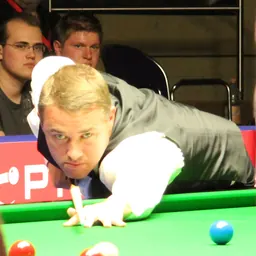


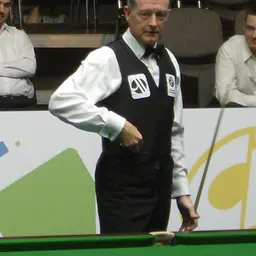

Related people
Same field, nearest in time



Contemporaries
People whose lives overlapped Terry Griffiths's




Frequently asked questions
Who was Terry Griffiths?
Welsh snooker player (1947–2024)
When was Terry Griffiths born?
Terry Griffiths was born on 16 October 1947 in Llanelli.
When did Terry Griffiths die?
Terry Griffiths died on 1 December 2024 in Llanelli.
What was Terry Griffiths's occupation?
Terry Griffiths was a snooker player.
What nationality was Terry Griffiths?
Terry Griffiths was British.
Sources & further reading
Cite this page
APA: Biography.guide. (2026). Terry Griffiths. https://biography.guide/terry-griffiths/
MLA: "Terry Griffiths." Biography.guide, https://biography.guide/terry-griffiths/.
Chicago: "Terry Griffiths." Biography.guide. https://biography.guide/terry-griffiths/.
Data last updated: 2026-09-20 · Spot an error? Report a correction.
Page generated 2026-09-27 05:22 UTC