
John Seymour
Author, influential figure in the self-sufficiency movement
About John Seymour
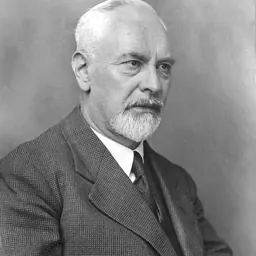
Lived 1914 – 2004 (aged 90). John Seymour was a British writer, farmer, environmentalist, ecologist and agronomist.
John Seymour (12 June 1914 – 14 September 2004) was a British author and pioneer in the self-sufficiency movement. In 1976, he wrote The Complete Book of Self-Sufficiency.
He had multiple roles as a writer, broadcaster, environmentalist, agrarian, smallholder and activist; a rebel against: consumerism, industrialisation, genetically modified organisms, cities, motor cars; an advocate for: self-reliance, personal responsibility, self-sufficiency, conviviality (food, drink, dancing and singing), gardening, caring for the Earth and for the soil.
Early life Seymour was born in Hampstead, London, England; His father was Albert Angus Turbayne, a skilled bookbinder and designer. His parents separated and his mother, Christine Owens, remarried and the family moved to the seaside town of Frinton-on-Sea in north-east Essex. and was posted to the King's African Rifles. He fought against Italian troops in the Abyssinian Campaign in Ethiopia. The regiment was then posted to Sri Lanka (formerly Ceylon) and afterwards to Burma, where allied forces were fighting against Japan. For Seymour the war ended on a low note; he expressed his disgust when the Allies used nuclear bombs on Hiroshima and Nagasaki.
On his return to Britain after the war Seymour worked for a while on a Thames sailing barge 'Cambria', skippered by Bob Roberts, operating around the south and east coasts of England, where he picked up the folk songs of a disappearing occupation. After working as a labour officer for the War Agricultural Executive Committee finding agricultural work for German prisoners of war who had still not returned home, he started writing and broadcasting on the BBC Home Service. He travelled overland to India for the BBC, gaining experience of the Subsistence agriculture still common in eastern Europe and Asia. His experiences on that journey led to his first book, The Hard Way to India, published in 1951.
The Smallholdings Seymour was living aboard a Dutch sailing smack when he married Sally Medworth, an Australian potter and artist in 1954. In this they travelled around the waterways and rivers of England, journeys later described in Sailing through England. As their first daughter grew older they felt that a land-base would be more suitable. They leased two isolated cottages on of land near Orford in Suffolk. These 5-acres are still called Seymour's Bit by the current owner. The manner in which they developed self-sufficiency on this smallholding is recounted in The Fat of the Land (1961). At the end of the 1960s, Seymour, along with other radical voices like Herbert Read, Edward Goldsmith, Leopold Kohr and Fritz Schumacher, provided a stream of articles for the journal Resurgence edited from 1966 to 1970 by John Papworth.
In 1964 the family moved to a farm near Newport, Pembrokeshire. The 1970s saw Seymour's publication rate reach its peak. In 1973 John and Sally wrote Self-Sufficiency and in 1976 The Complete Book of Self-Sufficiency was published. Appearing shortly after the publication of E.F. Schumacher's Small Is Beautiful: A Study of Economics As If People Mattered (1973) and The Good Life's first showing on British television (1975), the sales of the book exceeded all expectations. It was also set to establish the reputation of two young publishers, Christopher Dorling and Peter Kindersley who had commissioned and edited the work. In addition to self-sufficiency he wrote four guide books in the Companion Guide series.
John also made many television programmes: an early series followed the footsteps of George Borrow's Wild Wales (1862). In the early 1980s he spent three years making the BBC series Far From Paradise (with Herbert Girardet) which examined the history of human impact on the environment.
His farm in Wales welcomed visitors seeking guidance on the smallholder's life, a project which continued when he moved to County Wexford in Ireland. Here in 1999 he was taken to court for destroying a crop of GM sugar beet. For the last years of his life, he lived back on his old Pembrokeshire farm with his daughter's family. He died there on 14 September 2004 and is buried in the top field in an orchard that he planted.
Legacy His obituary in the Guardian said: John was as much at home in the humblest house on a hillside, as in the manor house of landed gentry. He was like a force of nature, always willing to listen, always interested in learning about new — or very old — ways of working the land. He was a one-man rebellion against modernism. Herbert Girardet, 2005.
Don’t just read it —
keep it.
Full-length biographies made to live with: read them, listen on the way to work, watch them tonight.
- E-book
- Audio
- Video
Instant download · yours to keep · every purchase keeps this site free
Important facts
People in John Seymour's life
Named in this biography and alive at the same time







Related people
Same field, nearest in time

Contemporaries
People whose lives overlapped John Seymour's


Frequently asked questions
Who was John Seymour?
author, influential figure in the self-sufficiency movement (1914-2004)
When was John Seymour born?
John Seymour was born on 12 June 1914 in London.
When did John Seymour die?
John Seymour died on 14 September 2004 in County Wexford.
What was John Seymour's occupation?
John Seymour was a writer, farmer, environmentalist, ecologist and agronomist.
What nationality was John Seymour?
John Seymour was British.
Sources & further reading
· DBpedia: John Seymour (author)
Cite this page
APA: Biography.guide. (2026). John Seymour. https://biography.guide/john-seymour/
MLA: "John Seymour." Biography.guide, https://biography.guide/john-seymour/.
Chicago: "John Seymour." Biography.guide. https://biography.guide/john-seymour/.
Data last updated: 2026-09-20 · Spot an error? Report a correction.
Page generated 2026-09-27 04:58 UTC