
About Leopold Kohr
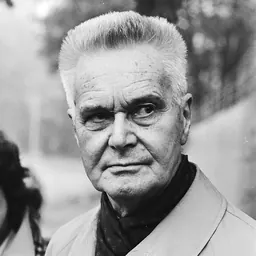
Lived 1909 – 1994 (aged 84). Leopold Kohr was an Austrian economist, philosopher, university teacher and jurist.
Leopold Kohr (5 October 1909 – 26 February 1994) was an economist, jurist and political scientist known both for his opposition to the "cult of bigness" in social organization and as one of those who inspired the Small Is Beautiful movement. For almost twenty years, he was Professor of Economics and Public Administration at the University of Puerto Rico. He described himself as a "philosophical anarchist." His most influential work was The Breakdown of Nations. In 1983, he was awarded the Right Livelihood Award for "his early inspiration of the movement for a human scale." Kohr is considered to represent anti-imperialist, anti-capitalist, and anti-utilitarist concepts and ideology. He was also considered a green anarchist. Kohr was a mentor of E. F. Schumacher as well as Ivan Illich. He often commented on the fact that the Christmas carol "Silent Night" was written and composed as "Stille Nacht" in his home village. He earned doctorate degrees in law, at the University of Innsbruck, Austria, and political science, at the University of Vienna. He also studied economics and political theory at the London School of Economics.
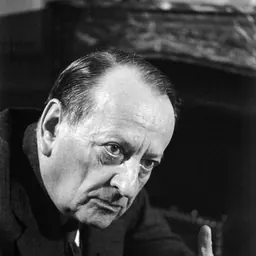
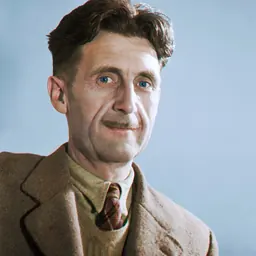
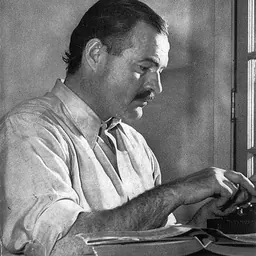
In 1937, Kohr became a freelance correspondent during the Spanish Civil War, and he was impressed by the limited, self-contained governments of the separatist states of Catalonia and Aragon, as well as the small Spanish anarchist city-states of Alcoy and Caspe. He became a close friend of the journalist George Orwell and shared offices with the correspondents Ernest Hemingway and André Malraux.
Kohr fled Austria in 1938 after it had been annexed by Nazi Germany, and he emigrated to the United States. He later became an American citizen.
Kohr taught economics and political philosophy at Rutgers University, New Jersey, from 1943 to 1955. The project of Welsh independence, founded on the ideal of cymdeithas (community) was dear to him, and Kohr became a mentor to Plaid Cymru and a close friend of its leader, Gwynfor Evans.
After retiring from teaching, Kohr divided his time between Gloucester, England, and Hellbrunn, outside Salzburg.
In 1983, in Stockholm, Sweden, Kohr received the Right Livelihood Award "for his early inspiration of the movement for a human scale". His ashes were buried there.
A friend of Raphael Lemkin, Kohr wrote to express his concern "that the crime of genocide will end up giving rise to the very conditions it seeks to ameliorate", by increasing the potential for intergroup conflict.
Philosophy Kohr described himself as a "philosophical anarchist", protested the "cult of bigness" and economic growth and promoted the concept of human scale and small community life. He argued that massive external aid to poorer nations stifled local initiatives and participation. His vision called for a dissolution of centralized political and economic structures in favor of local control.
According to Kohr, a European Federation of unequally large states would lead to a domination of a single nation and thus an erosion of dialects and smaller languages "with just the same inevitability as the German federation, in which 24 small states were linked to the one 40-million Power of Prussia ended up in Prussian hegemony". For him, a successful European unification can be based only on the Swiss model, which would entail splitting the existing nation-states into smaller ones on the basis of cultural and historical regions. He defends the concept of Kleinstaaterei by arguing that while in the Middle Ages, wars were common, they were brief and caused little to no devastation. However, after the consolidation of Europe into a few large states, every war that erupted between caused huge destruction and loss life.
After Germany's defeat and its containment following World War II, the belligerent nation ostensibly turned into a peaceful one, and Russia came to being identified as the chief aggressor in Europe instead. Kohr argues that the belligerence of Russia lies in its size by giving it so much power that it can no longer be checked.
Pamí Hernández notes that Kohr abandoned the traditional foci on ideology, education, economic system, evil leadership and even Marx's mode of production in favour of size of society, which, for Kohr, is the source of modern conflict. Kohr applies his theory to specific economic problems such as declining living standards, economic unification and business cycles and focusing on social aspects, as opposed to Marx's economic focus. Kohr argues that Marx's "changing mode of production" as vehicle of history should be replaced with "changing size of society" instead as social norms desired by Marx such as just price, fair wage and gift culture as well his respect for accomplishments, solidarity and mutual aid are found not in modes of economy but rather in life in small communities.
Kohr argues that instead of considering values such as uniformity and socialism the leveling effects of mass production, they should be seen as consequences of large societies and the levelling effect of great multitudes. Once growing societies expand so much that they cannot be self-sustainable, they "produce the equalizing, materialistic, semi-pagan, inventive climate of which the machine mode of production is not cause but consequence". Kohr explains that a profit-seeking capitalist will serve society well on the basis of enlightened self-interest: bad service would not be profitable and so it is in the capitalist's self-interest to be altruistic.
However, the capitalist will stop being altruistic and start exploiting others if he "finds the opportunity of getting away with conspiracy against his fellow men", which a large society allows. Here Kohr names large companies as an example: only they can get away with abuses and exploits, and only an even larger power could sustain them such as the government.
As Borrás-Alomar observes, Kohr draws a correlation between a size of the state and its power and argues that the "bigness" that results proportionately increases risk of wars and destruction while providing no positives. He focuses on Europe and analyses its history under his theory, concluding that large states must be dismantled into natural small nations in order to preserve peace. Even if pacifism is deeply entrenched in a country's traditions, war is still inevitable once certain power conditions are met since it is caused by accumulation of great power, which can be only accumulated by large, "outgrown" social groups. Those groups must this be cut down to size.
Kohr goes on to argue that large states will inevitably drift apart from democracy by arguing that Napoleon, Caesar and Stalin all came to power at the "very moment when republicanism and democracy seemed to have reached a pinnacle of development". While small state is internally democratic and its government has to serve the individual, large states have no way or obligation to do so since individuals lose value, and "democratic diversity" is replaced with "totalitarian uniformity", with individuals being pressured to assimilate into the majority in every way.
Kohr states that a great power must be either fully republican or monarchist, fully socialist or capitalist, in its entire nature and expanse. Everyone within that state must accept thar one system with no compromises available, even if half of the population could be opposed to it, which for Kohr shows the totalitarianism of "bigness". Instead of adapting to multitude of individual desires, the individual is forced to adapt to the desires of the state instead. He then states that large empires usurp academic development only because the peak of human progress was achieved before the times of worldwide great powers. He argues that the legacy of large states is one of totalitarianism and war instead. For him, the tiny pre-unification statelets were responsible for both the technological and the cultural progress, which the empires that succeeded try to claim as their own.
Kohr also discusses the problem of cultural heritage and cultural assimilation. According to him, culture is a product of individuals, and since individual cannot prosper under a large power, neither can culture. He describes democracy as a "system of divisions, factions, and small-group balances", which slowly wither away under internal consolidation of a large state and with it the ability for cultural and intellectual flourishment.
According to him, capitalism was flourished in its early stages only because of its small size. Every enterprise was small and thus the principle of economic competition was perfectly preserved. Kohr laments globalization and warns that the world of large states and unions will inevitably lead to a uniform world, as anything unique, especially cultures and languages, will slowly wither away:
Kohr also defends the Holy Roman Empire by stating that its extensive decentralization and division into tiny states was the reason for its success, rather than its failure, by making the state easy to govern. No single kingdom or duchy could ever grow stronger than the central government. The main reason for the downfall of the empire was that the balance was destroyed by the rise of great powers within it, Prussia and Austria, which then battled for control and divided the entire empire into their spheres of influence. Kohr calls contemporary nations artificial and considers them an involuntary mixture "of more or less unwilling little tribes". He describes every contemporary large European power as rife with separatist or regional undercurrents, and names Scottish separatist movement and Bavarian attempt to become independent in 1945 as examples of such currents.
In the afterword of The Breakdown of Nations, Kohr laments that his vision might never be realized as the great powers would never give up their power and balkanize voluntarily. He predicts that the unity of the Western world will be realised by "every Frenchman, Dutchman, or Italian becoming an American". He notes that cultural assimilation does not destroy freedom in itself but renders it worthless.
Don’t just read it —
keep it.
Full-length biographies made to live with: read them, listen on the way to work, watch them tonight.
- E-book
- Audio
- Video
Instant download · yours to keep · every purchase keeps this site free
Important facts
People in Leopold Kohr's life
Named in this biography and alive at the same time



Related people
Same field, nearest in time


Contemporaries
People whose lives overlapped Leopold Kohr's



Frequently asked questions
Who was Leopold Kohr?
Austrian academic (1909-1994)
When was Leopold Kohr born?
Leopold Kohr was born on 5 October 1909 in Oberndorf bei Salzburg.
When did Leopold Kohr die?
Leopold Kohr died on 26 February 1994 in Gloucester.
What was Leopold Kohr's occupation?
Leopold Kohr was an economist, philosopher, university teacher and jurist.
What nationality was Leopold Kohr?
Leopold Kohr was Austrian.
Sources & further reading
Cite this page
APA: Biography.guide. (2026). Leopold Kohr. https://biography.guide/leopold-kohr/
MLA: "Leopold Kohr." Biography.guide, https://biography.guide/leopold-kohr/.
Chicago: "Leopold Kohr." Biography.guide. https://biography.guide/leopold-kohr/.
Data last updated: 2026-09-20 · Spot an error? Report a correction.
Page generated 2026-09-27 05:25 UTC