
About John S. Casement
Lived 1829 – 1909 (aged 79–80). John S. Casement was an American military officer, civil engineer and union Pacific.
John Stephen Casement (January 19, 1829 – December 13, 1909) was a general and brigade commander in the Union Army during the American Civil War and a noted railroad contractor and civil engineer. He directed the construction of the Union Pacific's section of the Transcontinental Railroad, which linked the Western United States with the East.
Early life and career John S. Casement was born in Geneva, New York on January 19, 1829, to Robert Casement (1795-1849) and Anna Curphey (1794-1878) who were themselves of Manx descent from the Isle of Man. John had a brother, Daniel T Casement. Casement's education was mostly self-acquired.
Casement married Frances Marion Jennings (1840-1928), a native of Painesville, Ohio on October 15, 1857, in Lake County, Ohio.
In 1878, Casement bought Juniata farm, near Manhattan, Kansas which his son, Dan operated from 1889 until his death in 1953. The Confederate assault of six infantry divisions containing eighteen brigades with 100 regiments numbering almost 20,000 men, sometimes called the "Pickett's Charge of the West", resulted in devastating losses to the men and the leadership of the Army of Tennessee. Casement's commanding officer, Jacob D. Cox, credited him with "saving the day for the Union." Casement was appointed as a brigadier general by brevet commission in January 1865.
"(Casement) was known throughout the South as the Brigadier-General who held our line east of the Columbia Pike in front of the old cotton gin where so many of Hood's men lost their lives in trying to drive him out of the works. In front of his brigade Generals Cleburne, John Adams, and Quarles gave up their lives and fully 40 percent of their commands were left stretched on the field In front of Casement's Brigade. For this service as you know Casement received a Brigadier Generals commission and served to the end of the war as commander of the Second Brigade of the Third Division of the Twenty third Corps. I (T. H. Stevens) have always been proud that I was a humble member of his command. His men all loved him and would have died for him at any time if called upon to make the sacrifice."
Casement's brigade consisting of four regiments, was transferred to North Carolina as part of Reilley's third division, XXIII Army Corps under Major General John Schofield.
During the Carolinas campaign, he took a prominent part in the Battle of Wilmington, entering the City of Wilmington, North Carolina on February 22, 1865 and his unit was disbanded in August 1865. was responsible for financing the operations, while John directed the construction crews who took to calling their boss "General Jack." The brothers oversaw the construction from Fremont, Nebraska, to the railroad's completion at Promontory, Utah.
In 1867 when the Union Pacific crossed into what was to become the Wyoming Territory, Casement, a popular figure, was elected to be Wyoming's first Representative in Congress. After a long struggle, Congress ruled that the election was illegal and Casement was never seated.
Legend has it that when the Golden Spike was to be placed to mark the completion of the transcontinental railway, the driving of the spike was to be done by Leland Stanford, President of the Southern Pacific. When Stanford was unable to hit the spike properly, Casement supposedly took the spike maul and drove it himself, but the story is probably apocryphal.
After the completion of the transcontinental railway Casement continued to be active in railway construction. In July 1870, Casement was part of an effort to reconstruct the Union & Titusville Railroad from wide gauge (6'-0") to standard gauge at an estimated cost of one million dollars. The railroad planned to reconstruct its track Financing for the project was to be a mix of existing funds in the corporation ($250,000) with the remainder of the funding to be provided by the Casement brothers in exchange for additional stock or bonds. For about half its length, the railroad ran alongside the Oil Creek and Allegheny River Railway and then onto Union Mills to connect with the Philadelphia and Erie Railroad.
The railroad eventually became a part of the Philadelphia and Erie Railroad in 1871.
In 1880 Wabash Railroad interests let a contract to Casement for trackwork on the Butler & Detroit Railroad. By 1885, Casement claimed that he had constructed more trackwork mileage than any other in the United States. Although he survived this encounter, his full health never returned.
Casement died in Painesville, Ohio, on December 13, 1909. Casement Airport at Painesville was named in his memory, as was a World War II liberty ship, the SS John S. Casement.
Hell on Wheels As crews pushed across the plains during Casement's involvement with the transcontinental railway, they were followed by a large contingent of "camp followers" who provided such indulgences as prostitution, liquor, gambling, and other services for the laborers. This ever-moving assemblage of rail workers and hangers-on became known as Hell on Wheels. As well as being descriptive of daily life at "end track," the term has become further enshrined by an eponymous TV series, Hell on Wheels. In the series, the character of Cullen Bohannon (portrayed by Anson Mount) is loosely modeled on Casement's life and career.
Don’t just read it —
keep it.
Full-length biographies made to live with: read them, listen on the way to work, watch them tonight.
- E-book
- Audio
- Video
Instant download · yours to keep · every purchase keeps this site free
Important facts
People in John S. Casement's life
Named in this biography and alive at the same time

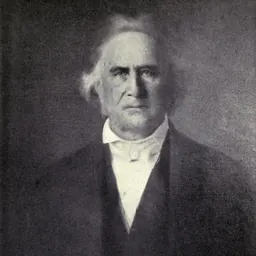
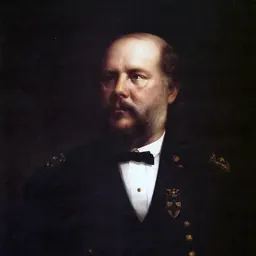
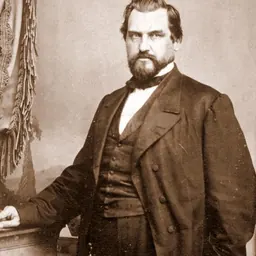
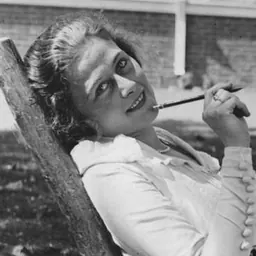
Related people
Same field, nearest in time


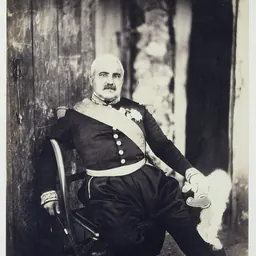
Contemporaries
People whose lives overlapped John S. Casement's




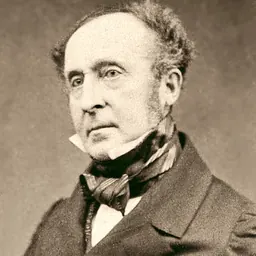
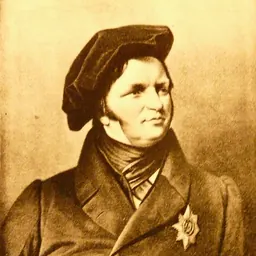
Frequently asked questions
Who was John S. Casement?
Union Army officer
When was John S. Casement born?
John S. Casement was born in 1829 in Geneva.
When did John S. Casement die?
John S. Casement died on 13 December 1909 in Painesville.
What was John S. Casement's occupation?
John S. Casement was a military officer, civil engineer and union Pacific.
What nationality was John S. Casement?
John S. Casement was American.
Sources & further reading
Cite this page
APA: Biography.guide. (2026). John S. Casement. https://biography.guide/john-s-casement/
MLA: "John S. Casement." Biography.guide, https://biography.guide/john-s-casement/.
Chicago: "John S. Casement." Biography.guide. https://biography.guide/john-s-casement/.
Data last updated: 2026-09-20 · Spot an error? Report a correction.
Page generated 2026-09-27 05:28 UTC