
About John Rassias
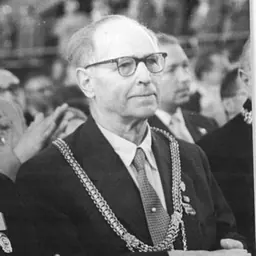
Lived 1925 – 2015 (aged 90). John Rassias was an American university teacher, philologist and romanist.
John A. Rassias, professor and creator of the Rassias Method for language instruction John Arthur Rassias (August 20, 1925 – December 2, 2015) was an American professor who developed a method for the teaching of foreign languages, the Rassias Method, also known as the Dartmouth Intensive Language Model.
Early life John A. Rassias was born in Manchester, New Hampshire
Education Rassias graduated summa cum laude from the University of Bridgeport, and later obtained a doctorat d’Etat at the University of Dijon, Dijon, France. He continued with further research at the Sorbonne and also studied at and performed with the Cours Réné Simon in Paris in the 1950s. Rassias also received a certificate from the Institut de Phonétique in Paris and completed additional study at Laval University in Québec.
Work In 1964 John Rassias became a consultant for Peace Corps language education programs throughout the world. He also served as Director of the first pilot program of languages for the Peace Corps in Africa and as Director of Language Programs at Dartmouth. This work initiated his development of the Rassias teaching method.
From 1965 to 2015 Rassias was William R. Kenan Professor of French and Italian at Dartmouth College, where the Rassias Center uses his method. At Dartmouth, he was the founder and director of Dartmouth’s Language Study Abroad (LSA) program, through which Dartmouth students may complete their language requirement in a foreign country.
Rassias "put the teacher in the role of the performer, acting out words and expressions in imaginary real-life settings and inculcating vocabulary and grammar through rapid-fire drills that gave students no time to think in English." He believed that every class was to be treated like the first class, and for this reason gained appreciation from his students.
In 1978 Rassias was appointed to President Jimmy Carter's Commission on Foreign Language and International Studies. In 1994, Rassias was appointed to the Commission of the Modern Language Association of America on the study of service in the profession. He was also elected to the Division of the Teaching of Literature of the Modern Language Association in 1995, which he chaired in 1998. In addition, Rassias served as a member of the Advisory Committee on Foreign Languages to the Connecticut State Board of Education.
In 1998, Rassias was appointed as head of a commission focused on preserving the Greek language among Americans of Greek heritage by the Archbishop of the Greek Orthodox Archdiocese of America.
In 2006, Rassias participated in the creation of a March 2007 pilot program for Intensive English (IE) education outside of Mexico City. This pilot program was called the Inter-American Partnership for Education (IAPE). Between 2007 and 2020 IAPE worked with thousands of Mexican teachers.
The Rassias Method The method aims to "make the participant feel comfortable and natural with the language in a short period of time" and involves "teaching procedures and dramatic techniques which seek to eliminate inhibitions and create an atmosphere of free expression from the very first day of class".
The emphasis of the Rassias Method is on spoken language while interweaving written work. All 50 techniques stress theatrical elements as well as immediate positive reinforcement and error correction.
The Rassias Method relies heavily on experience as the teacher, supporting the idea that “the best way to learn a second language is to speak it and live it.” Because of this, language instructors attempt to primarily speak in the target language in order to encourage students to participate through the new medium. Creating an environment in which the student feels comfortable being themselves allows for the maximum amount of growth opportunities. Thus, many different styles of teaching and teaching techniques are employed around the world as subsets of this method. Activities may include group work or acting out situations that a student might run into in real life.
Personal life Rassias was married to Mary Ann Evanstock (1928–2012) from 1954 to 2012 and had three children, nine grandchildren, and three great-grandchildren. He died in Norwich, Vermont, on December 2, 2015, at the age of 90. An innovative language curriculum designer, Rassias started, in the early 1980s, immersion language programs for continuing education purposes. These highly efficient 10-day summer programs have enabled adult language learners to make significant gains in their command of the oral and written foreign language in a short period of time. Some rank beginners have even been able to reach the Intermediate-Low level (ACTFL scale) during the program, an achievement which usually requires three to four semesters in college curricula. At Dartmouth and other U.S. post-secondary institutions, the Rassias Method has been used to teach more than 25,000 students in language acquisition courses. Through the Inter-American Partnership for Education (IAPE) over 1.5 million students of all ages in Mexico have been impacted by faculty trained in the Rassias Method. Finally, language learners worldwide continue to receive instruction in the method through workshops and classes offered through the Rassias Center.
Don’t just read it —
keep it.
Full-length biographies made to live with: read them, listen on the way to work, watch them tonight.
- E-book
- Audio
- Video
Instant download · yours to keep · every purchase keeps this site free
Important facts
People in John Rassias's life
Named in this biography and alive at the same time



Related people
Same field, nearest in time



Contemporaries
People whose lives overlapped John Rassias's



Frequently asked questions
Who was John Rassias?
American language teacher (1925-2015)
When was John Rassias born?
John Rassias was born on 20 August 1925 in Manchester.
When did John Rassias die?
John Rassias died on 2 December 2015 in Vermont.
What was John Rassias's occupation?
John Rassias was a university teacher, philologist and romanist.
What nationality was John Rassias?
John Rassias was American.
Sources & further reading
Cite this page
APA: Biography.guide. (2026). John Rassias. https://biography.guide/john-rassias/
MLA: "John Rassias." Biography.guide, https://biography.guide/john-rassias/.
Chicago: "John Rassias." Biography.guide. https://biography.guide/john-rassias/.
Data last updated: 2026-09-24 · Spot an error? Report a correction.
Portrait: Wikimedia Commons · author & licence
Page generated 2026-09-27 05:09 UTC