
About John Pierpont
Lived 1785 – 1866 (aged 81). John Pierpont was an American poet, teacher, merchant, priest and writer.
John Pierpont (April 6, 1785 – August 27, 1866) was an American poet, who was also successively a teacher, lawyer, merchant, and Unitarian minister. His poem The Airs of Palestine made him one of the best-known poets in the U.S. in his day. He was the maternal grandfather of J. P. Morgan.
Early life Born in 1785 in the South Farms section of Litchfield, Connecticut later incorporated as the town of Morris. He was the son of Elizabeth ( Collins) Pierpont and James Pierpont (1761–1840).
He graduated in 1804 from Yale College, and later from Litchfield Law School.
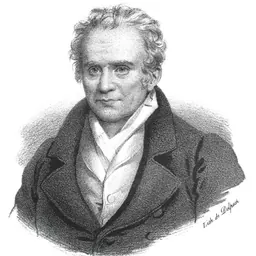
Career alt=Simple portrait in pencil on cream colored paper of a young white man in minister's clothing. Caption at the bottom reads "Rev. John Pierpont: "Airs of Palestine." In 1814 he started a dry goods business with his brother in-law, Joseph Lord, and lifelong friend, John Neal. After a stint in debtor's prison as a result of the failure of the "Pierpont, Lord, and Neal" dry goods store chain in 1815, Pierpont sent his wife and children to live with her family in Connecticut, pawned the family silver, and isolated himself in Baltimore until he had produced The Airs of Palestine. This poem made him one of America's best-known poets in 1816, the same year he cofounded a literary society called the Delphian Club. Selling the poem's copyright paid for his move to Cambridge, Massachusetts. Neal gave the poem a poor review in his 1824–25 critical work American Writers and the two men stopped corresponding for a year afterward.
Pierpont began his religious work as a theology student in 1816, first in Baltimore and then at Harvard, afterwards accepting an appointment as pastor at the Hollis Street Church in Boston (1819-1845). During his tenure, Pierpont was instrumental in establishing Boston's English Classical School in 1821 and gained national recognition as an educator. He published two of the better-known early school readers in the United States, The American First Class Book (1823) and The National Reader (1827). However, Pierpont's latter years at the Hollis Street Church were characterized by controversy. His social activism for temperance and abolition angered some parishioners, and after a long public battle, he resigned in 1845.
After his resignation, Pierpont served as pastor of a Unitarian church in Troy, New York from 1845 to 1849, and then led the First Parish Church (Unitarian), Medford, Massachusetts from 1849 to 1856. He ran for Massachusetts governor during the 1840s as a Liberty Party candidate, and in 1850 as a Free Soil Party candidate for the U.S. House of Representatives.
On September 12, 1861, during the Civil War, 76-year-old Pierpont enlisted as the Chaplain of the 22nd Massachusetts Volunteer Infantry at Camp Schouler. He was commissioned on the staff of the regiment on October 8, and they moved by train to Washington. Pierpont and the 22nd Massachusetts served on duty at Hall's Hill, Virginia, as part of the Defenses of Washington. He resigned his commission on November 5, 1861 due to poor health, and was given an appointment in the Treasury Department in Washington, which he held from the end of 1861 until his death.
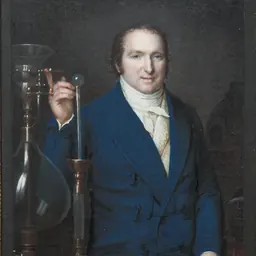
Literary works alt=Color oil painting of the bust of a young white man with light brown short wavy hair and a plain countenance, looking at the viewer. The raised color of a white shirt is visible beneath a dark jacket and cloak. He stands before a plain brown-green background. Pierpont gained a literary reputation with his book Airs of Palestine: A Poem (1816), re-published in an anthology by the same name in 1840. He also published moral literature, such as Cold Water Melodies and Washingtonian Songster (comp. 1842). In addition, he is probably the anonymous "gentleman" who co-authored The Drunkard; or, The Fallen Saved (1844), attributed to W. H. Smith, an actor and stage manager at Moses Kimball's Boston Museum (theatre). The Drunkard quickly became one of the most popular temperance plays in America.
Pierpont's many published sermons include, among others, The Burning of the Ephesian Letters (1833), Jesus Christ Not a Literal Sacrifice (1834), New Heavens and a New Earth (1837), Moral Rule of Political Action (1839), National Humiliation (1840), and A Discourse on the Covenant with Judas (1842). With publication of Phrenology and the Scriptures (1850), Pierpont became known not only as a reform lecturer, but also as an expert on phrenology and spiritualism.
Pierpont was an important influence on reform-minded antebellum poets. Along with John Greenleaf Whittier’s verse, Pierpont’s poems were frequently recited at public antislavery meetings. Oliver Johnson, a leading antislavery publisher and Garrison associate, published Pierpont’s Anti-Slavery Poems in 1843. The collection contains poems that had appeared mostly in the poetry columns of The Liberator and The National Anti-Slavery Standard. Pierpont’s writings were also anthologized widely in antislavery poetry collections, such as William Allen’s Autographs of Freedom (1853).
John Pierpont did not write the song "Jingle Bells" as erroneously claimed by Robert Fulghum in his collection of essays It Was on Fire When I Lay Down on It (1989). "Jingle Bells" was composed by his son James Lord Pierpont, who lived in Savannah, Georgia, and who was a Confederate soldier during the Civil War, composing songs for the Confederate States of America, including "Our Battle Flag", "Strike for the South", and "We Conquer or Die." He did, however, compose a hymn for the 250th anniversary of the incorporation of the town of Dedham, Massachusetts.
Activism Pierpont may be called "the poet of the abolition movement". His poem "The Tocsin", written just after the destruction of Pennsylvania Hall (Philadelphia), was published in The Liberator, the country's leading anti-slavery paper.
Pierpont was also involved in women's rights issues and spoke about women's suffrage.
Personal life In 1810, Pierpont was married to Mary Sheldon Lord (1787–1855), a daughter of Mary ( Lyman) Lord and Lynde Lord. Together, they had six children, including:
William Alston Pierpont (1811–1860), who married Mary Cecelia Ridgeway and Sara Turelle. Pierpont's sixteen-page obituary on the front page of the Atlantic Monthly was written by John Neal, his ex-business partner of fifty years earlier who later became an influential critic, writer, and lecturer, and who had named his second-oldest son (John Pierpont Neal) after Pierpont in 1847.
Don’t just read it —
keep it.
Full-length biographies made to live with: read them, listen on the way to work, watch them tonight.
- E-book
- Audio
- Video
Instant download · yours to keep · every purchase keeps this site free
Important facts
Family & relationships
People in John Pierpont's life
Named in this biography and alive at the same time



Related people
Same field, nearest in time

Contemporaries
People whose lives overlapped John Pierpont's

Frequently asked questions
Who was John Pierpont?
American poet, teacher, lawyer, merchant, Unitarian minister
When was John Pierpont born?
John Pierpont was born on 6 April 1785 in Litchfield.
When did John Pierpont die?
John Pierpont died on 27 August 1866 in Medford.
What was John Pierpont's occupation?
John Pierpont was a poet, teacher, merchant, priest and writer.
What nationality was John Pierpont?
John Pierpont was American.
Sources & further reading
Cite this page
APA: Biography.guide. (2026). John Pierpont. https://biography.guide/john-pierpont/
MLA: "John Pierpont." Biography.guide, https://biography.guide/john-pierpont/.
Chicago: "John Pierpont." Biography.guide. https://biography.guide/john-pierpont/.
Data last updated: 2026-09-22 · Spot an error? Report a correction.
Page generated 2026-09-27 05:26 UTC