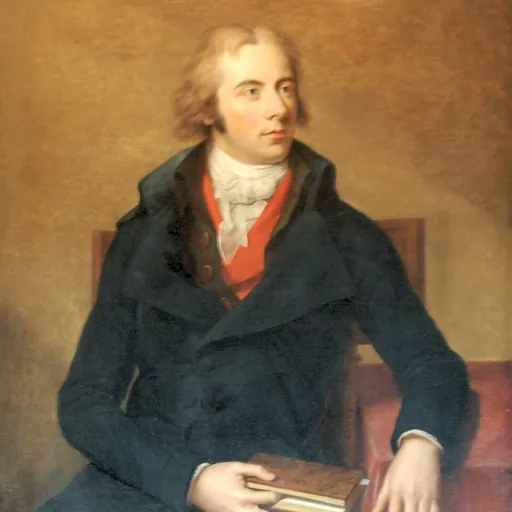
About John Petty, 2nd Marquess of Lansdowne
Lived 1765 – 1809 (aged 44). John Petty, 2nd Marquess of Lansdowne was a British politician.
John Henry Petty, 2nd Marquess of Lansdowne (6 December 1765 – 15 November 1809), known as Earl Wycombe between 1784 and 1805, was a British Whig politician who in Ireland was suspected of complicity in a republican conspiracy.
In 1786, his father, the former British Prime Minister Lord Shelbourne, secured him an English seat in the House of Commons. After witnessing revolutionary events in Paris, he began to establish an independent reputation as a friend of reform, critical of the war with France and of the suppression of democratic agitation at home. In 1797 he repaired to his father's estates in Ireland where his political associations brought him under government surveillance.
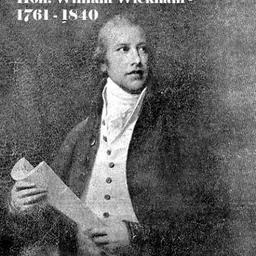
After the United Irish rebellion of 1798, he was seen in the company of Robert Emmet and his confederates and was suspected by the Irish administration of being party to his plans in 1803 for a rising in Dublin. Assured of his liberty by the Irish Chief Secretary, William Wickham, who privately confessed to his own sympathy for Emmet and his cause, Petty retired in ill health to England where, in possession of his father's title Marquess of Lansdowne, he died aged 43.
Early life
Petty was born in London, the eldest son of William Petty, 2nd Earl of Shelburne, and Lady Sophia Carteret, daughter of John Carteret, 2nd Earl Granville. He was baptised on the day of his birth at St George's, Hanover Square in Mayfair.
Disaffected Whig MP His father was the British Prime Minister who in 1782 acknowledged the independence of the Irish Parliament, and the independence of the United States in 1783. His father fell out of favour after this, but was elevated as Marquess of Lansdowne in 1784.
Petty was educated at Christ Church, Oxford, matriculating in 1783 aged 17, graduating M.A. in 1785.
In 1786, Petty, now with the courtesy title of Earl Wycombe, returned to the Commons from his father's old seat, Chipping Wycombe. While he urged his son to "take a manly part in politics, be it aristocrat or democrat", "Wycombe" was frustrated by his continued dependence on his father's favour. He befriended Jeremy Bentham who, in 1798, described Wycombe as a man who had "begun to feel his ground by taking some novel propositions". He escaped his father's supervision by travelling in the winter of 1789–90 to the continent, where he experienced the first reverberations of the French Revolution. In 1791, he visited the new American republic and then journeyed to Paris where he witnessed the humiliation of the King following his Flight to Varennes.
Wycombe began to establish an independent reputation on his return to England late in 1792, joining Charles Fox as an outspoken critic of his father's former protégé, William Pitt, now Tory prime minister. Dismissing talk of an imminent insurrection, he decried the government's suppression of democratic agitation. He did acquiesce in a motion for an inquiry into the radical corresponding societies, but claimed to be "much inclined to defend those who are desirous of obtaining a parliamentary reform". He was not again to appear in the House, but resigned his seat only at the dissolution of 1802. Among his sources were United Irishmen. Despairing of parliamentary reform in Ireland and in the hope of French assistance, under the leadership of the scion of another leading Anglo-Irish family, Edward Fitzgerald, they were preparing a republican insurrection. Such were Petty's associations that, according to one account, "the government thought it necessary to inform his lordship that if he did not quit Ireland he would be taken up". Despite the threat Petty remained.
To Henry Vassall-Fox, Lord Holland, Petty reported on the martial-law reign of terror that marked the suppression of the United Irish risings in the summer of 1798: pillaging, floggings and summary executions. Travelling on the road into Dublin he himself was fired upon by a soldier.
Wycombe is one a number of "persons of respectability" that the early historian of the United Irishmen, Richard Madden, records as subsequently coming under the "usual power of fascinating" exercised by Robert Emmet. Emmet had constituted a new United Irish directory and was renewing contacts not only with Paris but also (as advertised in the Despard Plot) with radical groups in Britain. James Hope, one of Emmet's principal lieutenants, recalls seeing Wycombe at rebel arms depot in Marshall Lane in Dublin and had no doubt that Petty was "privy to the plans for insurrection while they were carrying on at the [arms] depot at Thomas Street." It was here that, in July 1803, Emmet's men felt obliged to make a stand after an accidental explosion at a third depot, in Patrick Street, exposed their designs.
After the aborted rising, Wycombe offered to help Hope, escape the country. But he also felt to be himself exposed. On 10 December 1803, he wrote to the Irish Chief Secretary William Wickham asking if a warrant of arrest had been issued in his name and was relieved to discover that this was "utterly unfounded". Francis Higgins was determined that Wycombe be unmasked as a covert traitor, informing Wickham that while, at its climax, Wycombe became "timorous and retreated", he had "entered deep into the virus of the conspiracy". Wickham may have believed it was impolitic to prosecute the son and heir of a former British prime minister on limited evidence,
Last years
Returning to Britain, Wycombe succeeded his father as Marquess of Lansdowne on 7 May 1805. Immediately he married his latest mistress, Maria Arabella Gifford (née Maddock), the daughter of Rev. Hinton Maddox and widow of Duke Gifford of Castle Jordan, County Meath; they had no children. Wycombe spent his final years at Southampton, where he offered the government, now facing the growing empire of Napoleon, his support. Wycombe's letters to Lady Frances reveal that he continued to entertain criticism of government policy in Ireland, including the Acts of Union 1800 (which her step son, Lord Castlereagh, helped push though the Irish Parliament); of the Anglican church establishment with its tithes levied atop rack rents; of the Navigation Acts; and of religion ("a bad substitute for common sense").
On his death in 1809, he was succeeded as Marquess of Lansdowne by his half-brother Henry Petty-Fitzmaurice, who in the ministry of "All the Talents" under Lord Grenville had three years previously been made Chancellor of the Exchequer at the age of twenty-five.
Arms
Don’t just read it —
keep it.
Full-length biographies made to live with: read them, listen on the way to work, watch them tonight.
- E-book
- Audio
- Video
Instant download · yours to keep · every purchase keeps this site free
Important facts
People in John Petty, 2nd Marquess of Lansdowne's life
Named in this biography and alive at the same time



Related people
Same field, nearest in time



Contemporaries
People whose lives overlapped John Petty, 2nd Marquess of Lansdowne's



Frequently asked questions
Who was John Petty, 2nd Marquess of Lansdowne?
British politician (1765-1809)
When was John Petty, 2nd Marquess of Lansdowne born?
John Petty, 2nd Marquess of Lansdowne was born on 2 May 1765.
When did John Petty, 2nd Marquess of Lansdowne die?
John Petty, 2nd Marquess of Lansdowne died on 15 November 1809.
What was John Petty, 2nd Marquess of Lansdowne's occupation?
John Petty, 2nd Marquess of Lansdowne was a politician.
What nationality was John Petty, 2nd Marquess of Lansdowne?
John Petty, 2nd Marquess of Lansdowne was British.
Sources & further reading
· Wikipedia: John Petty, 2nd Marquess of Lansdowne
· DBpedia: John Petty, 2nd Marquess of Lansdowne
Cite this page
APA: Biography.guide. (2026). John Petty, 2nd Marquess of Lansdowne. https://biography.guide/john-petty-2nd-marquess-of-lansdowne/
MLA: "John Petty, 2nd Marquess of Lansdowne." Biography.guide, https://biography.guide/john-petty-2nd-marquess-of-lansdowne/.
Chicago: "John Petty, 2nd Marquess of Lansdowne." Biography.guide. https://biography.guide/john-petty-2nd-marquess-of-lansdowne/.
Data last updated: 2026-09-21 · Spot an error? Report a correction.
Portrait: Wikimedia Commons · author & licence
Page generated 2026-09-27 05:00 UTC