
About John Pasta
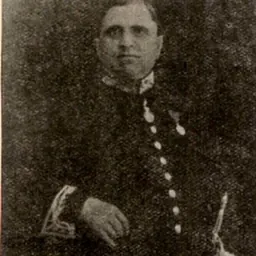
Lived 1918 – 1981 (aged 62). John Pasta was an American physicist, computer scientist, engineer, university teacher and mathematician, known for Fermi–Pasta–Ulam–Tsingou experiment.
John Robert Pasta (October 22, 1918 – June 5, 1981) was an American computational physicist and computer scientist who is remembered today for the Fermi–Pasta–Ulam–Tsingou experiment, the result of which was much discussed among physicists and researchers in the fields of dynamical systems and chaos theory. He was the head of the department of Computer Science at the University of Illinois at Urbana-Champaign from 1964 to 1970.
Early life Pasta was born in New York City in 1918, the eldest of four children, and grew up in Queens. He attended the New York public schools.
He became interested in physics at an early age when an uncle gave him some of his old college books. After graduating from Townsend Harris High School, he entered City College of New York in 1935 and completed three years. The Depression forced him to drop out and to take a job as a real estate title examiner. In August 1941, he became a patrolman for the New York City Police Department. In 1942, he was drafted into the US Army, became an officer in the Signal Corps, and took courses on electronics and radar at Harvard and MIT.
He married Betty Ann Bentzen at the Little Church Around the Corner in New York City in May 1943.
During World War II, Pasta served in Europe, mostly as cryptographical security officer and radar officer, for which he was awarded the Bronze Star and the Belgian . After being discharged in 1946, he took advantage of the G.I. Bill to finish his undergraduate work at City College that same year and enter graduate school at New York University to study mathematics and physics. As a graduate student he became a research fellow in the department of physics at Brookhaven National Laboratory, and completed his thesis on "Limiting Procedures in Quantum Electrodynamics" in 1951 under the guidance of Hartland Snyder. He became a staff member of the Los Alamos Laboratory in August 1951.
1951–1963 At Los Alamos National Laboratory, Pasta began his work on his most famous projects.
In 1952, working under Nicholas Metropolis on the MANIAC I, Pasta aided in the construction of an early computer that specialized in calculations around weapons design.
After working on the MANIAC I, he continued on to work in the project he is most known for, the Fermi–Pasta–Ulam–Tsingou problem.
After working alongside Enrico Fermi, Stanislaw Ulam, and Mary Tsingou, Pasta went on to work for the Atomic Energy Commission as the only computer expert, eventually developing the branch of mathematics and computers to an entire division.
1964–1981 In 1964, Pasta became a research professor of physics at the Department of Computer Science at the University of Illinois, and later became the head of the department.
He died in 1981, in Washington, DC.
Don’t just read it —
keep it.
Full-length biographies made to live with: read them, listen on the way to work, watch them tonight.
- E-book
- Audio
- Video
Instant download · yours to keep · every purchase keeps this site free
Important facts
People in John Pasta's life
Named in this biography and alive at the same time



Related people
Same field, nearest in time


Contemporaries
People whose lives overlapped John Pasta's


Frequently asked questions
Who was John Pasta?
American physicist (1918–1981)
When was John Pasta born?
John Pasta was born on 22 October 1918 in New York City.
When did John Pasta die?
John Pasta died on 5 June 1981 in Washington, D.C..
What was John Pasta's occupation?
John Pasta was a physicist, computer scientist, engineer, university teacher and mathematician.
What was John Pasta known for?
John Pasta was known for Fermi–Pasta–Ulam–Tsingou experiment.
What nationality was John Pasta?
John Pasta was American.
Sources & further reading
Cite this page
APA: Biography.guide. (2026). John Pasta. https://biography.guide/john-pasta/
MLA: "John Pasta." Biography.guide, https://biography.guide/john-pasta/.
Chicago: "John Pasta." Biography.guide. https://biography.guide/john-pasta/.
Data last updated: 2026-09-20 · Spot an error? Report a correction.
Page generated 2026-09-27 05:19 UTC