
About John Nixon
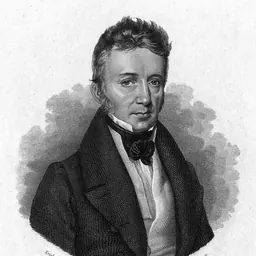
Lived 1815 – 1899 (aged 84). John Nixon was an engineer, mining engineer and businessperson.
John Nixon (10 May 1815 – 3 June 1899) was an English mining engineer and colliery proprietor and an influential figure in the development of the South Wales coalfield and export business.
Life He was born at Barlow, Gateshead, the only son of a tenant farmer of that village. He was educated at the village school and at Dr. Bruce's academy at Newcastle-on-Tyne, famous as the training-place of many great engineers. Leaving school at the age of fourteen, Nixon was set to farmwork for a time, and shortly after was apprenticed to Joseph Gray of Garesfield, the Marquis of Bute's chief mining engineer. On the expiry of his indentures he became for two years overman at the Garesfield colliery. At the end of this time, in 1839, he undertook a survey of the underground workings of the Dowlais Company in South Wales. Some years later he accepted the appointment of mining engineer to an English company working a coal and iron field at Languin near Nantes. He perceived, however, that the enterprise was destined to fail, and did not hesitate to inform his employers of his opinion. After labouring for some time to carry on a hopeless concern he returned to England.
During his first visit to Wales, Nixon had been impressed by the natural advantages of Welsh coal for use in furnaces. On his return from France he found that it was beginning to be used by the Thames steamers. He perceived that there was a great opening for it on the Loire, where coal was already imported by sea. At the time, however, he was unable to obtain a supply with which to commence a trade. Lucy Thomas of the Graig colliery at Merthyr, who supplied the Thames steamers, was disinclined to extend her operations, and Nixon was compelled to return to the north of England. However, business again taking him to South Wales, he chartered a small vessel, took a cargo of hundreds of tons of coal to Nantes, and distributed it gratuitously among the sugar refineries, which had been using Newcastle coal. and in 1897 the output of the Nixon group was 1,250,000 tons a year. Nixon succeeded, after a long struggle, in inducing the railway companies of Great Britain to adopt Welsh coal for consumption in their locomotives. He had great difficulty also in persuading the Great Western Railway to patronise the coal traffic, which came to form so large a part of their freight business.
Much of Nixon's success was due to his improvements in the art of mining. He introduced the 'long wall' system of working in place of the wasteful 'pillar and stall' system, and invented the machine known as 'Billy Fairplay' for measuring accurately the proportion between large coal and small, which came into universal use. He also made improvements in ventilating and in winding machinery. He was one of the original movers in establishing the sliding-scale system, and one of the founders of the Monmouthshire and South Wales Coalowners' Association. He was for fifteen years chairman of the earlier South Wales Coal Association, and for many years represented Wales in the Mining Association of Great Britain. Nixon materially contributed to the growth of Cardiff by inducing leading persons in South Wales to petition the trustees of the Marquis of Bute in 1853 for increased dock accommodation, and by persuading the trustees, in spite of the objections of their engineer, Sir John Rennie, to increase the depth of the East Dock.
He died in London, on 3 June 1899 at 117 Westbourne Terrace, Hyde Park, and was buried on 8 June in the Mountain Ash cemetery, Aberdare valley.
Don’t just read it —
keep it.
Full-length biographies made to live with: read them, listen on the way to work, watch them tonight.
- E-book
- Audio
- Video
Instant download · yours to keep · every purchase keeps this site free
Important facts
People in John Nixon's life
Named in this biography and alive at the same time



Related people
Same field, nearest in time


Contemporaries
People whose lives overlapped John Nixon's




Frequently asked questions
Who was John Nixon?
British mining engineer (1815-1899)
When was John Nixon born?
John Nixon was born on 10 May 1815.
When did John Nixon die?
John Nixon died on 3 June 1899.
What was John Nixon's occupation?
John Nixon was an engineer, mining engineer and businessperson.
Sources & further reading
· DBpedia: John Nixon (mining engineer)
Cite this page
APA: Biography.guide. (2026). John Nixon. https://biography.guide/john-nixon-engineer/
MLA: "John Nixon." Biography.guide, https://biography.guide/john-nixon-engineer/.
Chicago: "John Nixon." Biography.guide. https://biography.guide/john-nixon-engineer/.
Data last updated: 2026-09-20 · Spot an error? Report a correction.
Page generated 2026-09-27 05:20 UTC