
About John N. Bahcall
Lived 1934 – 2005 (aged 70). John N. Bahcall was an American astronomer, astrophysicist, physicist and university teacher, known for Hubble Space Telescope and Solar neutrino problem.
John Norris Bahcall (December 30, 1934 – August 17, 2005) was an American astrophysicist and the Richard Black Professor for Astrophysics at the Institute for Advanced Study. He was known for a wide range of contributions to solar, galactic and extragalactic astrophysics, including the solar neutrino problem, the development of the Hubble Space Telescope, and his leadership and development of the Institute for Advanced Study in Princeton.
Early life and education Bahcall was born into a Jewish family in Shreveport, Louisiana on December 30, 1934, and would later describe an early aspiration to become a Reform rabbi. He did not take science classes at high school.
Bahcall became a member of the National Academy of Sciences in 1976.
He was president of the American Astronomical Society from 1990 to 1992, and was president-elect of the American Physical Society at the date of his death.
Research Bahcall published over six hundred scientific papers Bahcall's ongoing research in this area resulted in publication of his book Neutrino Astrophysics (1989), considered a standard reference on solar neutrinos.
The 2002 Nobel Prize in physics was awarded to Davis and Masatoshi Koshiba for their pioneering work in observing the neutrinos predicted from Bahcall's solar model, thereby vindicating Bahcall's prediction.
In addition to his work on solar neutrinos, Bahcall collaborated with Eli Waxman on the Waxman-Bahcall bound for high energy neutrinos. This bound sets a limit on high energy neutrino flux based on the observed flux of high energy cosmic rays. It was not possible to verify this prediction until after his death, with the construction of neutrino telescopes capable of detecting very high energy neutrinos, such as the IceCube Neutrino Observatory.
Another contribution of Bahcall to astrophysics was the development and implementation of the Hubble Space Telescope, in collaboration with Lyman Spitzer, Jr., from the 1970s through to the period after the telescope was launched in 1990. He reintroduced the traditional method of star counts, as a quantitative tool for assessing galactic structure.
The standard model of a galaxy, with a massive black hole surrounded by stars, is known as the Bahcall-Wolf model. The Bahcall-Soneira model was for many years the standard model for the structure of the Milky Way. He also contributed to accurate astrophysical models of stellar interiors. 2004, Academy of Achievement, Golden Plate Award 2004, Comstock Prize in Physics from the National Academy of Sciences 2003, Gold Medal of the Royal Astronomical Society 2003, Benjamin Franklin Medal (with Raymond Davis, Jr. and Masatoshi Koshiba) 2003, Dan David Prize 2003, Fermi Award (with Raymond Davis, Jr) 2001, Member of the American Philosophical Society 1999, Henry Norris Russell Lectureship 1998, National Medal of Science 1998, Hans Bethe Prize 1994, Heineman Prize 1992, NASA Distinguished Public Service Medal, NASA 1970, Helen B. Warner Prize
Don’t just read it —
keep it.
Full-length biographies made to live with: read them, listen on the way to work, watch them tonight.
- E-book
- Audio
- Video
Instant download · yours to keep · every purchase keeps this site free
Important facts
People in John N. Bahcall's life
Named in this biography and alive at the same time

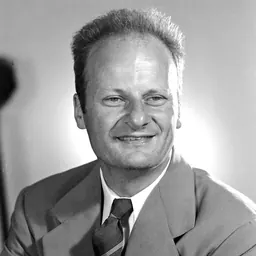
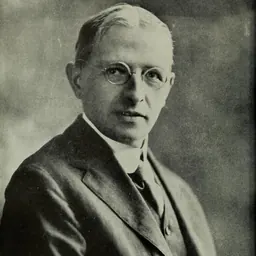



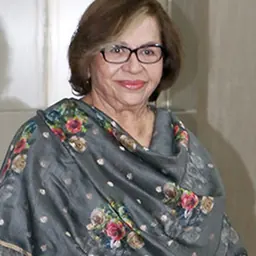

Related people
Same field, nearest in time

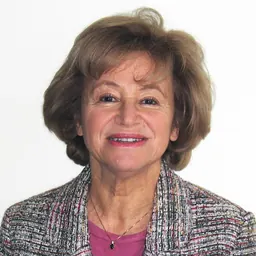

Contemporaries
People whose lives overlapped John N. Bahcall's




Frequently asked questions
Who was John N. Bahcall?
American physicist (1934–2005)
When was John N. Bahcall born?
John N. Bahcall was born on 30 December 1934 in Shreveport.
When did John N. Bahcall die?
John N. Bahcall died on 17 August 2005 in New York City.
What was John N. Bahcall's occupation?
John N. Bahcall was an astronomer, astrophysicist, physicist and university teacher.
What was John N. Bahcall known for?
John N. Bahcall was known for Hubble Space Telescope and Solar neutrino problem.
What nationality was John N. Bahcall?
John N. Bahcall was American.
Sources & further reading
Cite this page
APA: Biography.guide. (2026). John N. Bahcall. https://biography.guide/john-n-bahcall/
MLA: "John N. Bahcall." Biography.guide, https://biography.guide/john-n-bahcall/.
Chicago: "John N. Bahcall." Biography.guide. https://biography.guide/john-n-bahcall/.
Data last updated: 2026-09-20 · Spot an error? Report a correction.
Page generated 2026-09-27 05:21 UTC