
About John Morton
Lived 1725 – 1777 (aged 51–52). John Morton was an American lawyer, judge, farmer and politician.
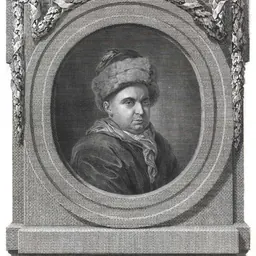
John Morton (1725 – April 1, 1777) was an American farmer, surveyor, and jurist from the Province of Pennsylvania and a Founding Father of the United States. As a delegate to the Continental Congress during the American Revolution, he was a signatory to the Continental Association and Declaration of Independence. Morton provided the swing vote that allowed Pennsylvania to vote in favor of the Declaration. Morton chaired the committee that wrote the Articles of Confederation, though he died before signing.
Early life
Morton was born in Ridley, in Chester County, present-day Delaware County, Pennsylvania, in 1724 or 1725. His father, also named John Morton, died before his birth. His mother, Mary Archer, later married John Sketchley, a land surveyor of English ancestry. Sketchley raised and educated Morton, also training him in surveying.
Both of Morton's parents were of Finnish descent. His family background can be traced to the Forest Finns, settlers from eastern Finland who moved to central Sweden in the 16th and 17th centuries to practice slash-and-burn farming. Although his family roots have traditionally been traced to Rautalampi in northern Savo, DNA research suggests that they may have originally come from Kangasniemi parish in southern Savo. In 1654, Morton's great-grandfather emigrated with his family to the Swedish colony of New Sweden on the Delaware River. After New Sweden became English territory, his descendants anglicized their name to Morton.
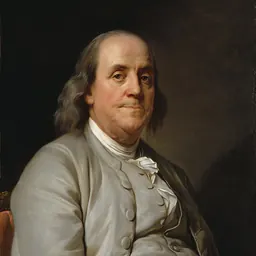
Morton was elected to the First Continental Congress in 1774 and the Second Continental Congress in 1775. He cautiously helped move Pennsylvania towards independence, though he opposed the radical Pennsylvania Constitution of 1776. When in June 1776 Congress began the debate on a resolution of independence, the Pennsylvania delegation was split, with Benjamin Franklin and James Wilson in favor of declaring independence, and John Dickinson, Robert Morris, Charles Humphreys and Thomas Willing opposed. Morton was uncommitted until July 1, when he sided with Franklin and Wilson. When the final vote was taken on July 2, Dickinson and Morris absented themselves, allowing the Pennsylvania delegation to support the resolution of independence. Morton signed the Declaration on August 2 with most of the other delegates.
Morton was chairman of the committee that wrote the Articles of Confederation, although he died, probably from tuberculosis, before the Articles were ratified. He was the first signer of the Declaration of Independence (and writer of the Articles of Confederation) to die, barely nine months after the Declaration's signing on July 4, 1776.
Legacy John Morton's grave in the Old St. Paul's Church Burial Ground, Chester, Pennsylvania. Morton was the first signer of the Declaration of Independence to die and was buried in Old St. Paul's Church Burial Ground (also known as the Old Swedish Burial Ground) in Chester, Pennsylvania. Morton's grave remained unmarked until October 1845, when the present-day 11-foot marble obelisk was erected by his descendants.
The inscription on the west side of the memorial reads:
The inscription of the east side of the memorial reads:
The inscription on the south side of the memorial reads:
The inscription on the north side of the memorial reads:
John Morton's role in signing the Declaration of Independence has been important for the identity of Finnish Americans. In the early 20th century, Finnish immigrants asserted their place among the "founding nationalities" of the United States through Morton and the Delaware colony. Amateur historian Reverend Salomon Ilmonen helped promote this connection during Delaware's 300th anniversary. Celebrations of the New Sweden colony and Morton's legacy in 1938 and in 1988 boosted Finnish Americans' pride in their heritage.
Personal life In 1754, Morton married Ann Justis of Chester County, and together they had three sons and five daughters; Aaron, Sketchley, John, Mary, Sarah, Lydia, Ann and Elizabeth. Like Morton, Ann Justis was of Finnish or Swedish descent.
Don’t just read it —
keep it.
Full-length biographies made to live with: read them, listen on the way to work, watch them tonight.
- E-book
- Audio
- Video
Instant download · yours to keep · every purchase keeps this site free
Important facts
People in John Morton's life
Named in this biography and alive at the same time



Related people
Same field, nearest in time


Contemporaries
People whose lives overlapped John Morton's




Frequently asked questions
Who was John Morton?
farmer, surveyor, and jurist from the Province of Pennsylvania (1725–1777)
When was John Morton born?
John Morton was born in 1725 in Chester County.
When did John Morton die?
John Morton died on 1 April 1777 in Delaware County.
What was John Morton's occupation?
John Morton was a lawyer, judge, farmer and politician.
What nationality was John Morton?
John Morton was American.
Sources & further reading
· DBpedia: John Morton (American politician)
Cite this page
APA: Biography.guide. (2026). John Morton. https://biography.guide/john-morton-lawyer/
MLA: "John Morton." Biography.guide, https://biography.guide/john-morton-lawyer/.
Chicago: "John Morton." Biography.guide. https://biography.guide/john-morton-lawyer/.
Data last updated: 2026-09-20 · Spot an error? Report a correction.
Page generated 2026-09-27 05:20 UTC