
John Montgomery Ward
American Major League Baseball pitcher, shortstop and manager
About John Montgomery Ward
Lived 1860 – 1925 (aged 65). John Montgomery Ward was an American baseball player and trade unionist.
John Montgomery Ward (March 3, 1860 – March 4, 1925), also known as Monte Ward, was an American professional baseball player, manager, executive, union organizer, owner and author. Ward, of English descent, was born in Bellefonte, Pennsylvania and grew up in Renovo, Pennsylvania. He led the formation of the first professional sports players union and a new baseball league, the Players' League.
Early life Ward attended the Bellefonte Academy in the early 1870s, and at 13 years of age, he was sent to Pennsylvania State University. In his short time there, he helped jumpstart a baseball program and is often credited for developing the first curveball. However, he was kicked out of school for pushing an upperclassman who attempted to haze him down a flight of stairs, and stealing chickens. died. He tried to make it as a travelling salesman, but when that proved unsuccessful, he returned to his hometown. There, he rediscovered baseball.
In , he began to play other positions. On June 17, 1880, Ward pitched the second perfect game in baseball history, defeating future Hall of Famer Pud Galvin and the Buffalo Bisons, 5–0. Ward also expanded his leadership role to include managing when he became a player-manager for the team's final 32 games, winning 18 of them, as the Grays finished in second place.
The seasons of and were the first in which he played more games in the outfield than he pitched. This was due to a nagging arm injury he originally incurred sliding into a base. He replaced Jim Price as the Giants' manager for the final 16 games of the 1884 season.
Ward graduated from Columbia Law School in 1885 and led the players in forming the Brotherhood of Professional Base Ball Players, the first sports labor union. Ward and the players had become frustrated with the owners' reserve clause, which allowed them to sign players to one-year contracts and then not allow them to negotiate with other teams when those contracts expired. The players felt that the owners had absolute power. At first, the players had some success, gaining the freedom to negotiate with other teams when they were asked to take a pay cut by their current team. and had won a playoff series known today as a "World Series", they played the St. Louis Browns of the American Association for the "Dauvray Cup", which was named after Ward's wife. Ward then captained an All-Star team which, paired with Cap Anson's Chicago club, headed off on a barnstorming world tour organized by Albert Spalding that visited Australia, Egypt, and Europe. The owners held their winter meetings, and created a classification system that would determine a player's salary. Under the system, the most a player could earn was $2,500 . The Giants then sold Ward to the Washington Nationals for a record price of $12,000. Ward was furious and left the tour early. He then demanded a meeting with the owners, and said he would refuse to play for Washington unless he received a large portion of his record sale price. Washington eventually refused payment on the transaction, nullifying the deal.
Amidst Ward's commitments as a ballplayer and union organizer, he still found time for a third occupation, that of author. His 1888 book, Base-Ball: How to Become a Player, with the Origin, History and Explanation of the Game was the first published effort to explore baseball's development from its early roots.
The Players' League Ward realized that negotiations with the owners were going nowhere and threatened to create a Players' League. The owners thought of it as nothing more than an idle threat but had failed to realize Ward's connections in the business community, and he began to launch the new league. This new Players' League included a profit sharing system for the players and had no reserve clause or classification plan. and is interred in Greenfield Cemetery in Hempstead, Long Island, New York. Named in the Honor Rolls of Baseball in 1946, Ward was elected to the Baseball Hall of Fame by the Veterans Committee in 1964. He was inducted into the Suffolk Sports Hall of Fame on Long Island in the Baseball and Historic Recognition Categories with the Class of 2000.
Don’t just read it —
keep it.
Full-length biographies made to live with: read them, listen on the way to work, watch them tonight.
- E-book
- Audio
- Video
Instant download · yours to keep · every purchase keeps this site free
Important facts
People in John Montgomery Ward's life
Named in this biography and alive at the same time



Related people
Same field, nearest in time

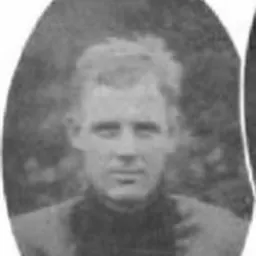

Contemporaries
People whose lives overlapped John Montgomery Ward's

Frequently asked questions
Who was John Montgomery Ward?
American Major League Baseball pitcher, shortstop and manager (1860-1925)
When was John Montgomery Ward born?
John Montgomery Ward was born on 3 March 1860 in Bellefonte.
When did John Montgomery Ward die?
John Montgomery Ward died on 4 March 1925 in Augusta.
What was John Montgomery Ward's occupation?
John Montgomery Ward was a baseball player and trade unionist.
What nationality was John Montgomery Ward?
John Montgomery Ward was American.
Sources & further reading
· Wikipedia: John Montgomery Ward
· DBpedia: John Montgomery Ward
Cite this page
APA: Biography.guide. (2026). John Montgomery Ward. https://biography.guide/john-montgomery-ward/
MLA: "John Montgomery Ward." Biography.guide, https://biography.guide/john-montgomery-ward/.
Chicago: "John Montgomery Ward." Biography.guide. https://biography.guide/john-montgomery-ward/.
Data last updated: 2026-09-26 · Spot an error? Report a correction.
Page generated 2026-09-27 05:16 UTC