
About John Minton
Lived 1917 – 1957 (aged 39). John Minton was a British painter, illustrator, scenographer and teacher.
Francis John Minton (25 December 1917 – 20 January 1957) was an English painter, illustrator, stage designer and teacher. After studying in France, he became a teacher in London, and at the same time maintained a consistently large output of works. In addition to landscapes, portraits and other paintings, some of them on an unusually large scale, he built up a reputation as an illustrator of books.
In the mid-1950s, Minton found himself out of sympathy with the abstract trend that was then becoming fashionable, and felt increasingly sidelined. He suffered psychological problems, self-medicated with alcohol, and in 1957 died by suicide.
Life and career
Early years Minton was born in Great Shelford, Cambridgeshire, the second of three sons of Francis Minton, a solicitor, and his wife, Kate, née Webb. From 1925 to 1932, he was educated at Northcliff House, Bognor Regis, Sussex, and then from 1932 to 1935 at Reading School. and was greatly influenced by his fellow student Michael Ayrton, who enthused him with the work of French neo-romantic painters. The Manchester Guardian wrote that they "should be long remembered". Minton's early penchant for dark colour schemes can be seen in his 1939 Landscape at Les Baux, in the Tate Gallery.
Teacher, painter and illustrator From 1943 to 1946 Minton taught illustration at the Camberwell College of Arts, and from 1946 to 1948 he was in charge of drawing and illustration at the Central School of Art and Design. At the same time he continued to draw and paint, sharing a studio for some years with Robert Colquhoun and Robert MacBryde, and later with Keith Vaughan. something frequently remarked on by later critics. as well as in self-portraits. In the 1940s he, Freud and fellow artist Adrian Ryan had been in a homosexual love triangle.
Minton's range was wide. Although he is best remembered as an illustrator, he also worked on a very large scale, with unusually big paintings for the Dome of Discovery at the Festival of Britain and "two vast set-pieces" for the Royal College of Art, He painted scenes of Britain, from rural beauty to urban decay, and travelled overseas, producing scenes of the West Indies, Spain and Morocco. The Times wrote, "Even when they were ostensibly of Spain and Jamaica, Minton's landscapes looked back to Samuel Palmer for their mood. They were densely patterned and luxuriantly coloured, and it was always the fullness and richness of the scene which attracted his eye and which he painted with such evident enjoyment." For Lehmann, Minton illustrated A Book of Mediterranean Food and French Country Cooking (the first two books by the food writer Elizabeth David), travel books such as Time was Away – A Notebook in Corsica, by Alan Ross, and fiction, including Treasure Island by Robert Louis Stevenson. He also produced dustwrappers for many publishers including Michael Joseph, Secker and Warburg and Rupert Hart-Davis. One such notable book jacket was for H. E. Bates The Country Heart (Michael Joseph 1949).
Although Minton was respected both by the conservative Royal Academy and the modernist London Group,
Minton was the subject of the song "The Ghost of Mr. Minton" by London-based pop group Would-Be-Goods on their 2008 album Eventyr. A quote from Minton, "We're all awash in a sea of blood, and the least we can do is wave to each other" inspired the title of the Van der Graaf Generator album The Least We Can Do Is Wave to Each Other.
In the Oxford Dictionary of National Biography's entry on Minton, Michael Middleton writes:
Don’t just read it —
keep it.
Full-length biographies made to live with: read them, listen on the way to work, watch them tonight.
- E-book
- Audio
- Video
Instant download · yours to keep · every purchase keeps this site free
Important facts
People in John Minton's life
Named in this biography and alive at the same time




Related people
Same field, nearest in time

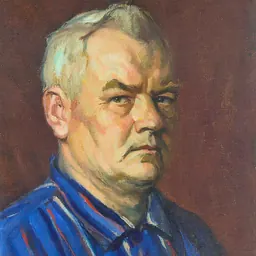
Contemporaries
People whose lives overlapped John Minton's

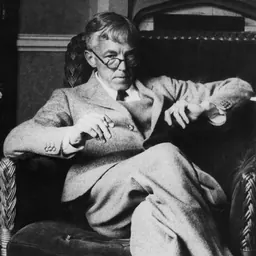
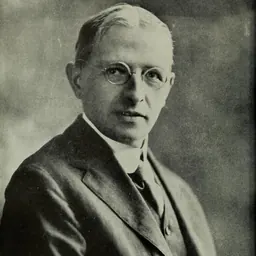
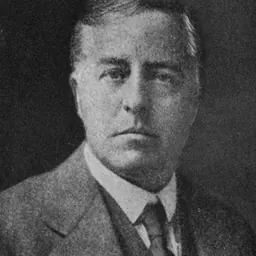
Frequently asked questions
Who was John Minton?
painter and illustrator (1917-1957)
When was John Minton born?
John Minton was born on 25 December 1917 in Great Shelford.
When did John Minton die?
John Minton died on 20 January 1957 in London.
What was John Minton's occupation?
John Minton was a painter, illustrator, scenographer and teacher.
What nationality was John Minton?
John Minton was British.
Sources & further reading
· DBpedia: John Minton (artist)
Cite this page
APA: Biography.guide. (2026). John Minton. https://biography.guide/john-minton/
MLA: "John Minton." Biography.guide, https://biography.guide/john-minton/.
Chicago: "John Minton." Biography.guide. https://biography.guide/john-minton/.
Data last updated: 2026-09-20 · Spot an error? Report a correction.
Page generated 2026-09-27 05:20 UTC