
About John Leonard Knapp
Lived 1767 – 1845 (aged 77). John Leonard Knapp was a British botanist and agrostologist.
John Leonard Knapp (9 May 1767 – 29 April 1845) was an English botanist and naturalist. He is best known for his Journal of a Naturalist, and his work on British grasses.
History Born at Shenley, Buckinghamshire, John Leonard Knapp was the son of Primatt Knapp, rector of Shenley.
Educated at Thame grammar school, Knapp entered the navy, but finding the sea unsuited to his health, he resigned and served successively in the Herefordshire and Northamptonshire militia, becoming a captain in the latter.
He lived for a time at Powick, near Worcester, and was then in the habit of making long summer botanical excursions. On one of these he visited Scotland in company with Scottish botanist George Don and collected several of the rarest species of British native grasses.
Publications In 1804 he published Gramina Britannica, or Representations of the British Grasses on 119 coloured plates, with Descriptions, in quarto, the figures being executed by himself. This edition was, with the exception of a hundred copies, destroyed by a fire at Bensley's, the printers, and the book was not reissued until 1842.
In 1818 Knapp published anonymously a poem entitled "Arthur, or the Pastor of the Village," and between 1820 and 1830 a series of articles, under the title of ‘The Naturalist's Diary,’ in the almanac series ‘Time's Telescope.’
These formed the germ of his most successful work, the Journal of a Naturalist, published anonymously in 1829, which went through three editions during his lifetime. It was published in America in 1853 as Country Rambles in England with an introduction and notes by Susan Fenimore Cooper. Knapp viewed it as a botanical companion to Gilbert White's ‘Selborne.’
Personal life He lived till 1813 at Llanfoist, near Abergavenny, and subsequently at Alveston, near Bristol, where he died.
In 1804 he married Lydia Frances Freeman (1772-1838), daughter of Arthur Freeman of Antigua, by whom he had seven children; two sons and a daughter survived him. His son Arthur John Knapp (d. 1883) was a Bristol solicitor and one of the original promoters of the Great Western Railway.
Commemoration Knapp became in 1796 a fellow of the Linnean Society, and was also a fellow of the Society of Antiquaries.
The genus of grasses previously named Mibora by Michel Adanson was renamed Knappia by Smith, although the original name is now used. Rhynchoglossum, originally named by Carl Ludwig Blume, was similarly unsuccessfully renamed Knappia by Franz Bauer in 1840.
Taxonomy
Don’t just read it —
keep it.
Full-length biographies made to live with: read them, listen on the way to work, watch them tonight.
- E-book
- Audio
- Video
Instant download · yours to keep · every purchase keeps this site free
Important facts
People in John Leonard Knapp's life
Named in this biography and alive at the same time

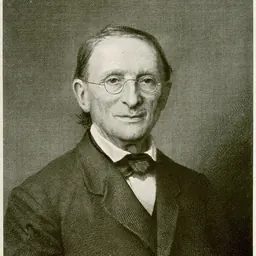

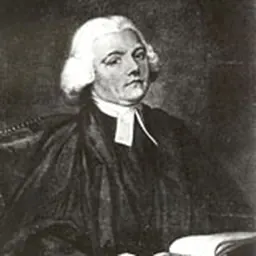


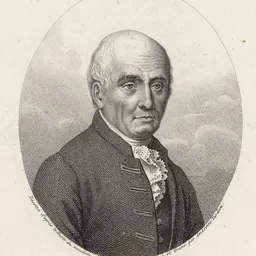
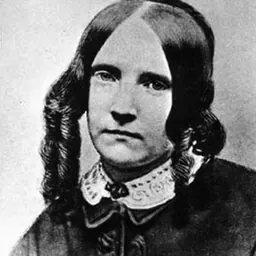
Related people
Same field, nearest in time



Contemporaries
People whose lives overlapped John Leonard Knapp's




Frequently asked questions
Who was John Leonard Knapp?
English botanist (1767-1845)
When was John Leonard Knapp born?
John Leonard Knapp was born on 9 May 1767 in Shenley.
When did John Leonard Knapp die?
John Leonard Knapp died on 29 April 1845 in Alveston.
What was John Leonard Knapp's occupation?
John Leonard Knapp was a botanist and agrostologist.
What nationality was John Leonard Knapp?
John Leonard Knapp was British.
Sources & further reading
· Wikipedia: John Leonard Knapp
Cite this page
APA: Biography.guide. (2026). John Leonard Knapp. https://biography.guide/john-leonard-knapp/
MLA: "John Leonard Knapp." Biography.guide, https://biography.guide/john-leonard-knapp/.
Chicago: "John Leonard Knapp." Biography.guide. https://biography.guide/john-leonard-knapp/.
Data last updated: 2026-09-20 · Spot an error? Report a correction.
Page generated 2026-09-27 05:20 UTC