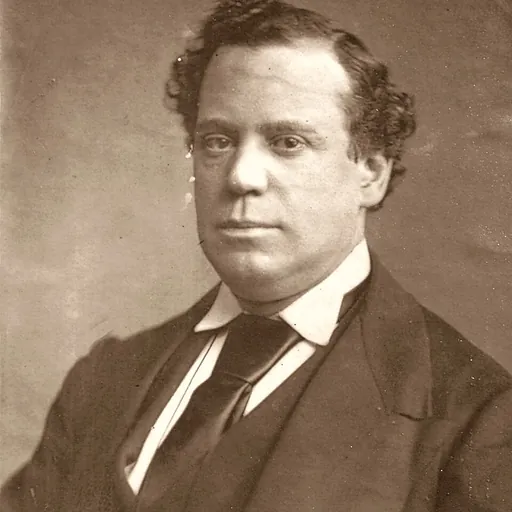
About John Lawrence Toole
Lived 1830 – 1906 (aged 76). John Lawrence Toole was a British comedian, stage actor and theatre director.
John Lawrence Toole (12 March 1830 – 30 July 1906) was an English comic actor, actor-manager and theatrical producer. He was famous for his roles in farce and in serio-comic melodramas, in a career that spanned more than four decades, and the first actor to have a West End theatre named after him.
Life and career Toole was born in London, the younger son of James Toole and his wife, Elizabeth. His father was a messenger for the East India Company and for some years an usher at the Old Bailey, who for many years in the 1840s acted as toastmaster in the City of London.
He was educated at the City of London School from 1841 to 1845, and started work as a clerk in a wine merchant's office.
Early career Toole began his acting career by training as an amateur with the City Histrionic Club, beginning in 1850 and by performing in other amateur theatricals and in comic sketches. He earned good notices, particularly as Jacob Earwig in Boots at the Swan, and soon met Charles Dickens, who had heard of him and came to see him act. His role as Simmons in The Spitalfields Weaver by Thomas Haynes Bayly at the Haymarket Theatre, on 22 July 1852 was billed as his "first appearance" on stage. Encouraged by Dickens, he appeared later that year at the Queen's Theatre in Dublin, under the management of Charles Dillon, and by 1853 became the principal "low comedian" at the Theatre Royale in Edinburgh. His older brother, Francis, acted as his manager throughout his early career. Toole made his first professional appearance in London at the St. James's Theatre, acting as Samuel Pepys in The King's Rival, by Tom Taylor and Charles Reade, and Weazel in My Friend the Major by Charles Selby. He returned to the provinces, but by 1856 was engaged in London at the Lyceum Theatre, including as Hilarion Fanfaronade in Belphegor, in which Marie Wilton made her first London appearance. Thereafter, he frequently performed with Wilton. Augustus de Rosherville in The Willow Copse by Boucicault, in Birthplace of Podgers, Tom Dibbles in Good for Nothing by J. B. Buckstone, and in Bengal Tiger. Peter Familias in The Census by William Brough (among many pieces by Brough), Milwood in George de Barnwell by H. J. Byron (1862), Caleb Plummer in Dot (1862), by Dion Boucicault, and Prudent in The Fast Family by B. Webster, Jr. His other great successes there were as Mr. Tetterby in an adaptation of Dickens' The Haunted Man and of a frightened servant in Boucicault's The Phantom. the Irishman Brulgruddery in John Bull by George Colman the Younger; Bob Acres in The Rivals by Richard Brinsley Sheridan, together with Charles James Mathews and Samuel Phelps; the title role in a Robert Reece burlesque called Don Giovanni in Venice; another title role in Guy Fawkes by H. J. Byron, and created the role of the barrister Hammond Coote in Wig and Gown by James Albery. Toole's fame was at its height in 1874, when he went on tour to America, but he failed to reproduce there the success he had found in England.
In 1878, Toole created the role of Charles Liquorpond in A Fool and his Money by H. J. Byron. Liquorpond was a retired footman unexpectedly overtaken by wealth, and Toole's affectedly superior pronunciation, particularly of his own name, was a tremendous success. In his prime, Toole achieved wide popularity as a comic actor, being noted for his comic delivery of words, but he did not confine himself exclusively to comedy. He also excelled in domestic melodramas (adaptations by Dion Boucicault and others of Charles Dickens and similar writers), playing "tender-hearted victims of fate", where he was famously able to combine humour and pathos. The Times said of his performance in Dearer than Life by Henry James Byron:
Later years In 1879, Toole realised a lifelong ambition by taking over the management of the Folly Theatre in London. He renovated the building and renamed it Toole's Theatre in 1881, becoming the first actor to have a West End theatre named after him. Arthur Wing Pinero's Hester's Mystery (1880) Byron's Upper Crust (1880) and Auntie (1882) A. W. Pinero's Girls and Boys: a Nursery Tale (1882) starring Toole as Solomon Prothero F. C. Burnand's Stage Dora; or, Who Killed Cock Robin (1883), a burlesque of Sardou's Fédora, starring Toole Burnand's Paw Claudian (1884), a burlesque of the 1883 costume (Byzantine) drama 'Claudian' by Henry Herman and W. G. Wills Pinero's Girls and Boys (1885) Mr. Guffin's Elopement and The Great Tay-Kin, both with words by Arthur Law and music by George Grossmith, starring Toole (1885) A revival of Billee Taylor (1886) The Butler, by Herman Charles Merivale, starring Toole (1886) Pepita, an operetta by Charles Lecocq (1888) The Don, by Merivale, starring Toole (1888). The Bungalow, by Fred Horner (1890) J. M. Barrie's Ibsen's Ghost, or, Toole up to Date, a one-act satire on London productions of Ibsen, including Hedda Gabler, starring Irene Vanbrugh and Toole (1891) Barrie's Walker, London, a highly successful farce, directed by Toole (1892)
By the 1880s Toole suffered frequently from gout, which made it difficult for him to walk and affected his ability to perform. His health declined further following a string of family tragedies that left him disconsolate: his son died in 1879 after a football injury, his daughter in 1888 of typhoid fever, and his wife three months later in 1889. By this time, his acting had become unfashionable: he began to be seen as the last of the line of old-fashioned low comic actors who had been popular earlier in the century, including Buckstone, John Liston and Edward Richard Wright. Nevertheless, he toured Australia and New Zealand in 1890. He published his reminiscences in 1888, and his stage appearances gradually became fewer. After an 1893 illness during Thoroughbred by Ralph Lumley, he retired from the London stage, although he made occasional appearances in the provinces until about 1896. His theatre was demolished in 1895 for an extension of Charing Cross Hospital, and he dissolved his theatre company after an 1896 tour.
The critic Clement Scott called Toole "one of the kindest and most genial men who ever drew breath. ... No one acted with more spirit or enjoyed so thoroughly the mere pleasure of acting." His genial and sympathetic nature was conspicuous off the stage as well as on it, and he was known as a great practical joker.
Ultimately he retired to Brighton, where, after a long struggle with Bright's disease and a degenerative spinal illness, he died in 1906 at the age of 76. He is buried at Kensal Green Cemetery in London, next to his wife and children. Toole was a good businessman and left a considerable fortune of over £81,000, out of which he made a number of bequests to charity, to needy actors and to his friends.
Don’t just read it —
keep it.
Full-length biographies made to live with: read them, listen on the way to work, watch them tonight.
- E-book
- Audio
- Video
Instant download · yours to keep · every purchase keeps this site free
Important facts
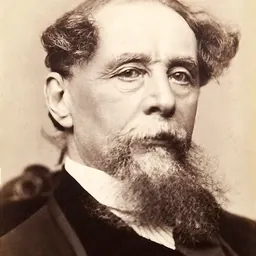
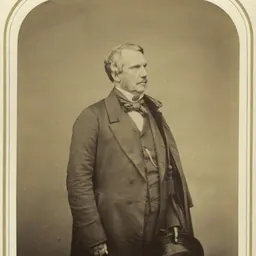
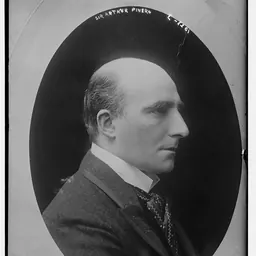
People in John Lawrence Toole's life
Named in this biography and alive at the same time




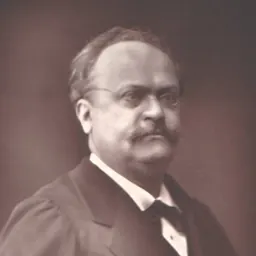
Related people
Same field, nearest in time
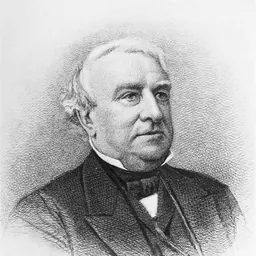

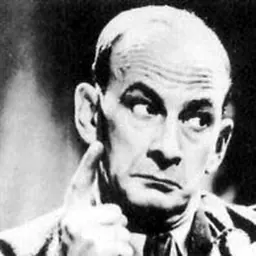
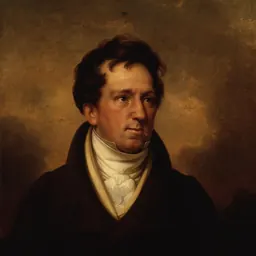

Contemporaries
People whose lives overlapped John Lawrence Toole's



Frequently asked questions
Who was John Lawrence Toole?
English actor (1830–1906)
When was John Lawrence Toole born?
John Lawrence Toole was born on 12 March 1830 in City of London.
When did John Lawrence Toole die?
John Lawrence Toole died on 30 July 1906 in Brighton.
What was John Lawrence Toole's occupation?
John Lawrence Toole was a comedian, stage actor and theatre director.
What nationality was John Lawrence Toole?
John Lawrence Toole was British.
Sources & further reading
· Wikipedia: John Lawrence Toole
Cite this page
APA: Biography.guide. (2026). John Lawrence Toole. https://biography.guide/john-lawrence-toole/
MLA: "John Lawrence Toole." Biography.guide, https://biography.guide/john-lawrence-toole/.
Chicago: "John Lawrence Toole." Biography.guide. https://biography.guide/john-lawrence-toole/.
Data last updated: 2026-09-21 · Spot an error? Report a correction.
Portrait: Wikimedia Commons · author & licence
Page generated 2026-09-27 04:58 UTC