
About John Lansing Jr.
Lived 1754 – 1829 (aged 75). John Lansing Jr. was an American lawyer, politician, judge and jurist.
John Ten Eyck Lansing Jr. (January 30, 1754 – vanished December 12, 1829), a Founding Father of the United States, was an attorney, jurist, and politician.
Born and raised in Albany, New York, Lansing was trained as a lawyer, and was long involved in politics and government. During the American Revolution he was military secretary to General Philip Schuyler. Lansing served in the New York State Assembly from 1781 to 1784, in 1786, and in 1789; served as Speaker of the Assembly in 1786 and 1789; served as a member of the Congress of the Confederation in 1785; and served as mayor of Albany from 1786 to 1790. He was a delegate to the federal Constitutional Convention in 1787, but withdrew from the body in July because he opposed the proposed United States Constitution as infringing on state and individual rights. He was a delegate to the New York ratification convention in June 1788, but was unable to prevent the Constitution from being approved.
In 1790, Lansing was a member of the commission that settled the New York-Vermont boundary as part of Vermont's admission to the Union as the fourteenth state in 1791. He was a justice of the New York Supreme Court from 1790 to 1798, and chief justice from 1798 to 1801. He was also Chancellor of New York from 1801 to 1814, and in 1817 was a special commissioner to resolve New York City and New York County claims to land in Vermont. From 1817 until his death, he was regent of the University of the State of New York. Lansing disappeared in December 1829, after leaving his New York City hotel room to mail a letter. No trace was ever found, and what happened to Lansing remains unknown.
Early life John Ten Eyck Lansing Jr. was born on January 30, 1754, in Albany, New York. He was the son of Gerrit Jacob Lansing (b. 1711) and Jannetje "Jane" (née Waters) Lansing (1728–1810). His younger brother was Abraham Gerritse Lansing (1756–1834), New York State Treasurer who married Susanna Yates, the daughter of Abraham Yates.
Through his brother Abraham, Lansing was the uncle of Gerrit Yates Lansing (1783–1862), a member of the U.S. House of Representatives, Through his brother Sanders, he was the uncle of Robert Lansing (1799–1878), a New York State Senator and the grandfather of U.S. Secretary of State Robert Lansing. From 1776 until 1777 during the Revolutionary War, Lansing served as a military secretary to General Philip Schuyler.
In 1786, Lansing was appointed Mayor of Albany. He represented New York as one of three representatives at the Constitutional Convention in 1787, where he intended to follow the wishes of the New York Legislature and only amend the existing Articles of Confederation. However, as the convention progressed he became dismayed that the convention was, in his view, exceeding of its mandate by writing an entirely new constitution. Lansing's desire was to see the Articles strengthened by giving it a source of revenue, the power to regulate commerce, and to enforce treaties. He joined other prominent Anti-Federalists that strongly opposed Alexander Hamilton, James Wilson, and James Madison's notions of a strong centralized national government to replace the Articles. Neither man signed the constitution. At the New York Ratifying Convention that followed, Lansing, along with Melancton Smith, took the lead in the debates as the leaders of the Anti-Federalist majority. Their attempts to prevent ratification ultimately failed by a narrow vote of 30 to 27.
Lansing was appointed a justice of the New York State Supreme Court in 1790, and on February 15, 1798, he was elevated to the post of chief justice.
Disappearance On the evening of December 12, 1829, Lansing left his Manhattan hotel to mail a letter at a dock in New York City, never to be seen again. Together, they were the parents of ten children, five of whom died young. Their children included: Cornelia Lansing (1795–1877) Sarah Ray Lansing (1797–1848), who married Edward Livingston (1796–1840) in 1819.
Lansing's widow died in January 1834 and is buried at Albany Rural Cemetery. The name of the capital city of Michigan, "Lansing", is derived from the name of the same Lansing Charter Township, out of whose original territory it was created and which it has almost completely annexed to itself. Thus both the capital of Michigan and the township which it has nearly replaced originally were and remain named, albeit indirectly, for John Lansing.
Don’t just read it —
keep it.
Full-length biographies made to live with: read them, listen on the way to work, watch them tonight.
- E-book
- Audio
- Video
Instant download · yours to keep · every purchase keeps this site free
Important facts
People in John Lansing Jr.'s life
Named in this biography and alive at the same time
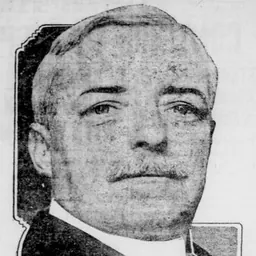

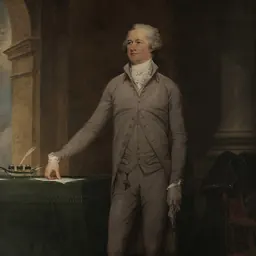

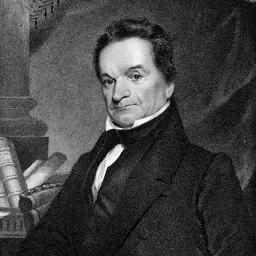

Related people
Same field, nearest in time

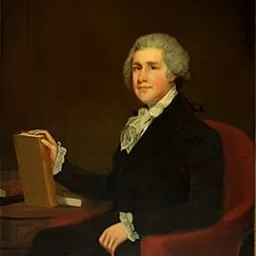

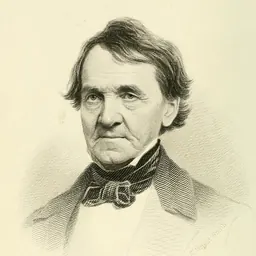
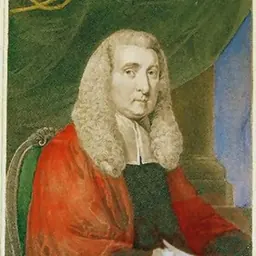
Contemporaries
People whose lives overlapped John Lansing Jr.'s




Frequently asked questions
Who was John Lansing Jr.?
American politician (1754-1829)
When was John Lansing Jr. born?
John Lansing Jr. was born on 30 January 1754 in Albany.
When did John Lansing Jr. die?
John Lansing Jr. died on 12 December 1829 in New York City.
What was John Lansing Jr.'s occupation?
John Lansing Jr. was a lawyer, politician, judge and jurist.
What nationality was John Lansing Jr.?
John Lansing Jr. was American.
Sources & further reading
Cite this page
APA: Biography.guide. (2026). John Lansing Jr.. https://biography.guide/john-lansing-jr/
MLA: "John Lansing Jr.." Biography.guide, https://biography.guide/john-lansing-jr/.
Chicago: "John Lansing Jr.." Biography.guide. https://biography.guide/john-lansing-jr/.
Data last updated: 2026-09-20 · Spot an error? Report a correction.
Page generated 2026-09-27 05:26 UTC