
About John Langdon
Lived 1741 – 1819 (aged 78). John Langdon was an American politician.
John Langdon Jr. (June 26, 1741 – September 18, 1819) was an American politician and Founding Father from New Hampshire. He served as a delegate to the Constitutional Convention, signed the United States Constitution, and was one of the first two United States senators from New Hampshire.
As a member of the Continental Congress, Langdon was an early supporter of the Revolutionary War. He later served in the United States Congress for 12 years, including as the first president pro tempore of the Senate, before becoming president and later governor of New Hampshire. He turned down a nomination for U.S. vice presidential candidate in 1812.
Ancestry and early life Although information about John Langdon's specific ancestry is not widely available, it is known that he was a sixth generation American and his family had roots in England. His father, John Langdon Sr., was a descendant of English settlers who had come to the American colonies. The Langdon family was part of the early wave of European settlers who arrived in New England in the 17th century, seeking new opportunities and religious freedom.
The Langdon surname is of Anglo-Saxon origin and is believed to have originated from multiple places in England. In the 17th century, the Langdon last name was particularly common in the southwestern counties of England, specifically in Cornwall and Devon. The name is derived from Old English words "lang" (meaning long) and "dūn" (meaning hill). It is a toponymic surname, meaning it was likely given to individuals who lived near a long hill or a similar geographical feature. In heraldic terms, this description indicates a silver or white shield (argent) featuring a black chevron (chevron sable) with three black scallop shells (escallops sable) placed above and below the chevron.
Langdon's father was a prosperous farmer and local shipbuilder whose family had emigrated to America before 1660 from Sheviock, Caradon, Cornwall. The Langdons were among the first of New England's major seaports. By age 22, Langdon was captain of the cargo ship Andromache, sailing to the West Indies. Four years later he owned his first merchantman and would continue over time to acquire a small fleet of vessels engaging in the triangle trade between Portsmouth, the Caribbean, and London. and also served as president pro tempore during the Second Congress.
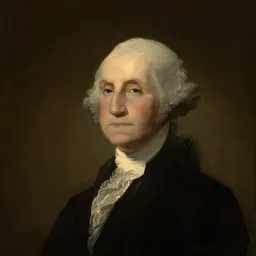
During the 1787 constitutional debates in Philadelphia, Langdon spoke out against James Madison's proposed "negative" on state laws simply because he felt that should the Senate be granted this power and not the House of Representatives, it would "hurt the feelings" of House members. Langdon was an ardent supporter of the drive to ratify the Constitution of the United States in New Hampshire. On June 21, 1788, it was ratified by New Hampshire by a vote of 57-47. He immediately wrote to George Washington to inform him that New Hampshire had become the ninth state which he described as the "Key Stone in the Great Arch. Joshua Atherton, who campaigned against ratification, accepted the result and stated, 'It's adopted. Let’s try it'”.
In April 1789, Langdon served as president pro tempore of the U.S. Senate, prior to John Adams' election as vice president, and counted the votes of the electoral college in the first presidential election.
In 1798, Langdon assisted Oney Judge to evade Burwell Bassett, the nephew of George and Martha Washington, who had intended to kidnap Judge and return her to slavery with the Washingtons. That July, he was one of four senators to oppose military force in the Quasi-War.
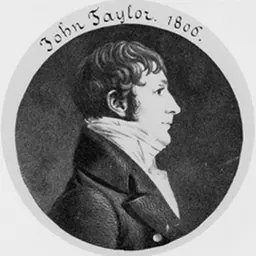
Langdon served as a member of the New Hampshire Legislature from 1801 to 1805; he served as governor of New Hampshire from 1805 to 1812, except for a year between 1809 and 1810 when he lost to Jeremiah Smith. Prior to again winning election as governor, Langdon unsuccessfully ran for governor in 1802, 1803, and 1804, losing each time to John Taylor Gilman, whom he defeated in 1805. In 1808, his niece, Catherine Whipple Langdon, married Edmund Roberts. Langdon declined the nomination to be a candidate for vice president with James Madison in 1812.
Death and legacy Langdon died in Portsmouth in 1819 and was interred at the Langdon Tomb in the North Cemetery. The town of Langdon, New Hampshire, is named after him, as is Langdon Street in Madison, Wisconsin, a city with numerous streets named after Founding Fathers.
His nephew, Henry Sherburne Langdon, married Ann Eustis and had a son named John Agustine Langdon Eustis. The latter emigrated to Argentina and died in Buenos Aires in 1876. He had many descendants, who in turn married into the high society of Argentina, such as the Saenz Valiente, Pueyrredon, Obarrio and Beccar Varela families.
Don’t just read it —
keep it.
Full-length biographies made to live with: read them, listen on the way to work, watch them tonight.
- E-book
- Audio
- Video
Instant download · yours to keep · every purchase keeps this site free
Important facts
People in John Langdon's life
Named in this biography and alive at the same time


Related people
Same field, nearest in time



Contemporaries
People whose lives overlapped John Langdon's





Frequently asked questions
Who was John Langdon?
American politician and Founding Father (1741-1819)
When was John Langdon born?
John Langdon was born on 26 June 1741 in Portsmouth.
When did John Langdon die?
John Langdon died on 18 September 1819 in Portsmouth.
What was John Langdon's occupation?
John Langdon was a politician.
What nationality was John Langdon?
John Langdon was American.
Sources & further reading
· DBpedia: John Langdon (politician)
Cite this page
APA: Biography.guide. (2026). John Langdon. https://biography.guide/john-langdon-politician/
MLA: "John Langdon." Biography.guide, https://biography.guide/john-langdon-politician/.
Chicago: "John Langdon." Biography.guide. https://biography.guide/john-langdon-politician/.
Data last updated: 2026-09-20 · Spot an error? Report a correction.
Page generated 2026-09-27 05:29 UTC