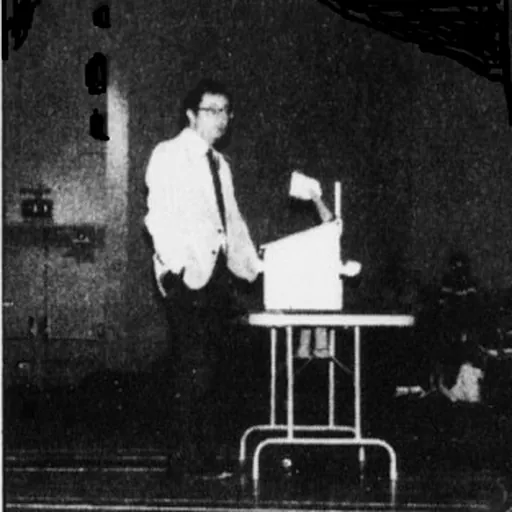
About John Kaplan
Lived 1929 – 1989 (aged 59–60). John Kaplan was an American lawyer, legal scholar, law professor and jurist.
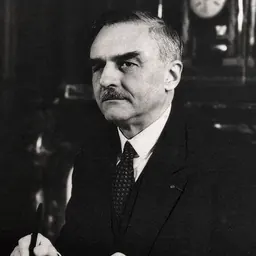
John Kaplan (1929 – November 25, 1989) was an American legal scholar, social scientist, social justice advocate, popular law professor, and author. He was a leading authority in the field of criminal law, and was widely known for his legal analyses of some of the deepest social problems in the United States. He was known for his work linking sociological research with legal policies, and limiting academic legal theory with real-world sociological data.
In Of Babies and Bathwater (1977), Kaplan asserted that jurors mistrust the accuracy of press reports, and assumed their own knowledge of the facts of the case was superior to that of any newspaper reporter.
The Problem of Capital Punishment (1983) was cited by United States Supreme Court Justice Byron White in Pulley v. Harris, as neatly summarizing the problem in which defendants who are charged and convicted for similar crimes often receive vastly different sentences.
Books His 1972 textbook, Criminal Justice was adopted at more than 100 colleges nationally. The student press wrote, "hundreds of students in his undergraduate and law school classes have loved him for are his humorous and informative lectures, his caring and open attitude, and his lively personality in and out of class." He received the John Bingham Hurlbut Award for teaching excellence. Kaplan's report was critical of the police hold method, and commended campus security for rapidly changing methods for handling limp protesters. He often appeared in the media, where he was described as "pithy, humorous, and incisive" and as having a "quick wit and exhaustive knowledge of criminal law. Harvard law professor James Q. Wilson said Kaplan was "one of the ablest and brightest people I know in the field of criminal justice", and additionally was one of the best "conversationalists" he knew. ... punctuating his lectures with emphatic gestures, pantomiming questions, answers and comments while speaking them, and immediately communicating his opinion of any issue. His colleague commented that Kaplan provided "the sense of irreverence that we desperately need around the law school."
Personal life Kaplan was born in New York City to Mr. Kaplan and Dorothy Kaplan. He married Elizabeth Kaplan and they fathered three children in Palo Alto, California, Carolyn Springer Kaplan, Jonathan Edward Kaplan, and Jessica Baron Kaplan.
He died of cancer after aggressively trying to fight it, undergoing experimental therapy to treat the brain tumor that eventually killed him. Doctors infected Kaplan with a bacterium, in conjunction with other chemicals, to stimulate his immune system in an effort to fight off the cancerous cells, based on experiments on mice showing an 80 percent elimination of brain tumors for a type of tumor that was a different from Kaplan's. Colleague Robert Weisberg commented that Kaplan's motives for undergoing experimental treatment derived from his "selfless interest in seeing whether this therapy might work" for others.
Selected publications
before 1970 Suits Against Unincorporated Associations Under the Federal Rules of Civil Procedure (1954) Search and Seizure: A No-Man's Land in the Criminal Law (1961) Segregation Litigation and the Schools-Part I: The New Rochelle Experience (1963) Segregation Litigation and the Schools-Part II: The General Northern Problem (1963) Segregation Litigation and the Schools-Part III: The Gary Litigation (1964) Prosecutorial Discretion-A Comment (1965) The Trial of Jack Ruby (1965) Equal Justice in an Unequal World: Equality for the Negro-The Problem of Special Treatment (1966) "The Assassins." Reviews of Rush to Judgment by Mark Lane; Inquest by Edward Jay Epstein; Whitewash: The Report on the Warren Report by Harold Weisberg; The Oswald Affair by Léo Sauvage; The Second Oswald by Richard H. Popkin. Stanford Law Review, Vol. 19, No. 5, 1967, pp. 1110–1151. . Decision Theory and the Factfinding Process (1968)
1970–1979 Marijuana, the new prohibition (1970) The role of the law in drug control (1972) The Limits of the Exclusionary Rule (1974) American Merchandising and the Guilty Plea: Replacing the Bazaar with the Department Store (1977) Of Babies and Bathwater (1977)
1980– The wisdom of gun prohibition (1981) The Problem of Capital Punishment (1983) The Hardest Drug: Heroin and Public Policy (1983) Administering Capital Punishment (1984) Firearms and violence: Issues of public policy (1984) Defending Guilty People (1986) Taking drugs seriously (1988)
Textbooks Criminal Justice (1972) Criminal Law: Cases and Materials Evidence: Cases and Materials (1992)
Don’t just read it —
keep it.
Full-length biographies made to live with: read them, listen on the way to work, watch them tonight.
- E-book
- Audio
- Video
Instant download · yours to keep · every purchase keeps this site free
Important facts
People in John Kaplan's life
Named in this biography and alive at the same time





Related people
Same field, nearest in time


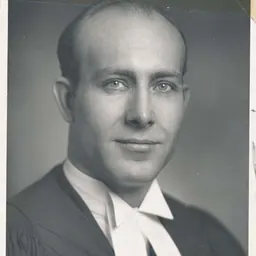
Contemporaries
People whose lives overlapped John Kaplan's

Frequently asked questions
Who was John Kaplan?
legal scholar and law professor
When was John Kaplan born?
John Kaplan was born in 1929.
When did John Kaplan die?
John Kaplan died on 25 November 1989.
What was John Kaplan's occupation?
John Kaplan was a lawyer, legal scholar, law professor and jurist.
What nationality was John Kaplan?
John Kaplan was American.
Sources & further reading
· DBpedia: John Kaplan (law professor)
Cite this page
APA: Biography.guide. (2026). John Kaplan. https://biography.guide/john-kaplan/
MLA: "John Kaplan." Biography.guide, https://biography.guide/john-kaplan/.
Chicago: "John Kaplan." Biography.guide. https://biography.guide/john-kaplan/.
Data last updated: 2026-09-23 · Spot an error? Report a correction.
Portrait: Wikimedia Commons · author & licence
Page generated 2026-09-27 05:05 UTC