
About Harold Weisberg
Lived 1913 – 2002 (aged 88). Harold Weisberg was an American writer.
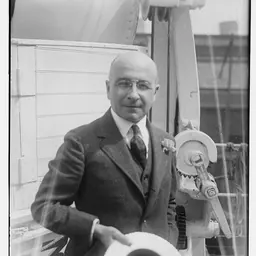
Harold Weisberg (April 8, 1913 – February 21, 2002) was a former newspaper reporter and U.S. Senate staff investigator who spent the last decades of his life researching and writing about the JFK assassination. Sometimes dubbed "the dean of the assassination researchers",
Biography Early life Harold Weisberg, the son of Russian Jewish immigrants, was born in Philadelphia in 1913. When he was in the fifth grade, his family moved to Wilmington, Delaware, where he spent the remainder of his childhood. He showed an early interest in writing and journalism, and became editor of his high school newspaper. While attending the University of Delaware, he had news articles published in the Wilmington Morning News and the Sunday supplement of the Philadelphia Ledger. Weisberg later said he suspected that anti-Semitism was a factor since nine of the ten fired employees were Jewish.
Not long after this episode, Weisberg sought to distance himself from Washington, D.C., and government work by starting a new career as a poultry farmer. He and his wife Lillian bought a tract of land on the northwestern end of Montgomery County, Maryland. Their business thrived in the 1950s, but then adversity struck when a nearby military base began flying helicopters directly over their farm. Weisberg filed lawsuits to gain relief from the noise, claiming the low-flying helicopters caused his chickens to panic and ruined his flock, but to no avail. He was in the process of dissolving the poultry business when he heard the news from Dallas that President Kennedy had been killed.
JFK assassination When the Warren Report was published in September 1964, Weisberg purchased and studied it, and he did the same with the 26-volume Warren Commission Hearings & Exhibits released two months later. Incensed by what he regarded as a shoddy, deceptive government investigation, he self-published in August 1965 an angry response, Whitewash, about which he wrote: Whitewash argues that "careful analysis of the evidence presented in the Warren Commission's report undermined the single-bullet theory and, with it, the possibility that Lee Harvey Oswald had acted alone."
Writing in the Stanford Law Review, John Kaplan was much more critical of Whitewash, calling it "the most strident, bitter, and generally irrational of all the attacks on the Commission." Time magazine likened Whitewash to Mark Lane's bestselling Rush to Judgment, stating that both books "offer no connected account of what they think occurred, Mr. Weisberg contenting himself with a ceaseless small-fire of rhetorical questions, Mr. Lane with a steady barrage of innuendo."
Whitewash was followed by Whitewash II, self-published in late 1966. The latter book gives a harsh assessment of the JFK autopsy, citing how basic autopsy documents were never made public and were missing from the Warren Commission's files. Weisberg says the president "got an autopsy unworthy of a Bowery Bum." Whitewash II also closely examines the Zapruder film and uses it to question the assassination's time sequence specified in the Warren Report (WR). Weisberg helped Garrison by testifying in April 1967 as an assassination expert in the grand jury proceedings before the Shaw trial. Garrison contributed the foreword to Weisberg's Oswald in New Orleans (1967), and later praised the Maryland researcher in his own book, On the Trail of the Assassins (1988).
King assassination Weisberg also devoted time to studying the assassination of Martin Luther King Jr. After being hired as an investigator by convicted assassin James Earl Ray, Weisberg came to believe his client had not fired the bullet that killed King.
In his review of Frame-Up, Fred J. Cook said of Weisberg:
Weisberg was a frequent user of the Freedom of Information Act (FOIA) to petition the U.S. government for assassination records. He filed multiple FOIA lawsuits to obtain copies of photographs and documents related to the King assassination.
Clashes with other critics Despite his role as a leader within the community of Warren Commission critics, Weisberg had feuds with several of his colleagues. Among his unpublished manuscripts is A Citizen's Descent, a diatribe against Mark Lane for his perceived egotism which Weisberg disapproved of.
When Richard Popkin's book The Second Oswald was published in 1966, Weisberg accused Popkin of plagiarism, because Whitewash already had a chapter about a "false Oswald" (i.e., prior to the assassination, an Oswald lookalike was seen around Dallas engaging in activities that implicated the "real" Oswald). Fellow researcher Sylvia Meagher told Weisberg in a letter that the plagiarism accusation was unfounded, given how "parallel discovery and reasoning...is widespread among critics of the WR and almost inevitable." John Kelin commented, "this was not the first time he had lashed out at other critics, and it was a cause of some concern for Sylvia; she was beginning to think Weisberg suffered from a persecution complex."
After having cooperated with Jim Garrison in the late 1960s, Weisberg developed an animus toward the former New Orleans DA, and wrote that his "proliferating conspiracy theories mislead and confuse as much or more than the faulted official conclusions." Weisberg sought to undermine Oliver Stone's 1991 JFK film about Garrison, leaking a pirated draft of the screenplay to "unfriendly" Washington Post journalist George Lardner, who used it to attack Stone's film months before it was released. Reasonable Doubt: The Single-Bullet Theory and the Assassination of John F. Kennedy (1988), and The JFK Assassination: The Jim Garrison Tapes (1992). In Season 5 of the TV series Unsolved Mysteries, Weisberg appeared as himself in an episode about the King assassination.
Harold Weisberg Archive In 1992, Weisberg decided to leave his voluminous assassination research files to Hood College in Frederick, Maryland. The documents were scanned and digitized and made available for other researchers at the Harold Weisberg Archive website.
Publications Books
Republished by Skyhorse in 2013 under the title, Whitewash III: The Photographic Whitewash of the JFK Assassination. Foreword by Jim Garrison. Republished by Carroll & Graf in 1993 with a postscript by James Earl Ray. Includes a legal analysis by Jim Lesar.
This was a reissue of Frame-Up under a new title.
Manuscripts A Citizen's Descent. 52 p.
Articles "Darken Your House for... More Docule Birds Less Cannibalism". Everybody's Poultry Magazine (October 1962): 9, 11, 36. "Hysteria in Meat-Tyoe Birds". Everybody's Poultry Magazine (December 1962): 9–10, 35.
Book reviews Review of Reinhold Niebuhr, His Religious, Social and Political Thought by Charles Kegley and Robert W. Bretall. Jewish Social Studies, vol. 18, no. 3 (1956): 224–226. .
Speeches "Looking Backward to Look Ahead." Frederick, Maryland (April 20, 1975) "New JFK Assassination Evidence." University of Maryland (June 13, 1975)
Testimony Testimony, with Jim Garrison. Grand Jury Proceedings Special Investigations. Orleans Parish Grand Jury (April 28, 1967)
Other Film script for "JFK" (1st version) by Oliver Stone and Zachary Sklar. This item has been digitized from Oliver Stone's personal copy of the first version of the film script, and it contains handwritten notes from Harold Weisberg.
Don’t just read it —
keep it.
Full-length biographies made to live with: read them, listen on the way to work, watch them tonight.
- E-book
- Audio
- Video
Instant download · yours to keep · every purchase keeps this site free
Important facts
People in Harold Weisberg's life
Named in this biography and alive at the same time


Related people
Same field, nearest in time


Contemporaries
People whose lives overlapped Harold Weisberg's




Frequently asked questions
Who was Harold Weisberg?
American writer
When was Harold Weisberg born?
Harold Weisberg was born on 8 April 1913 in Philadelphia.
When did Harold Weisberg die?
Harold Weisberg died on 21 February 2002 in Frederick.
What was Harold Weisberg's occupation?
Harold Weisberg was a writer.
What nationality was Harold Weisberg?
Harold Weisberg was American.
Sources & further reading
Cite this page
APA: Biography.guide. (2026). Harold Weisberg. https://biography.guide/harold-weisberg/
MLA: "Harold Weisberg." Biography.guide, https://biography.guide/harold-weisberg/.
Chicago: "Harold Weisberg." Biography.guide. https://biography.guide/harold-weisberg/.
Data last updated: 2026-09-20 · Spot an error? Report a correction.
Page generated 2026-09-27 05:02 UTC