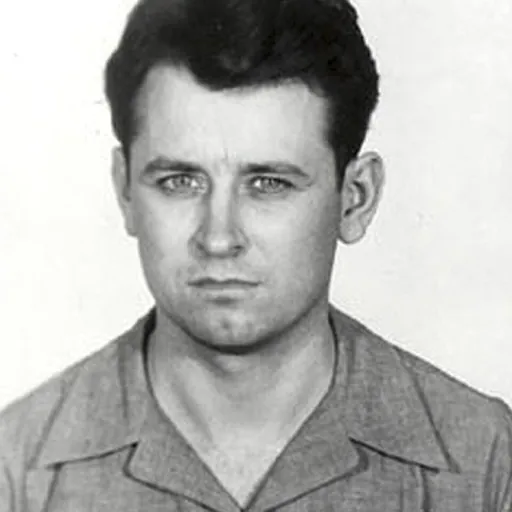
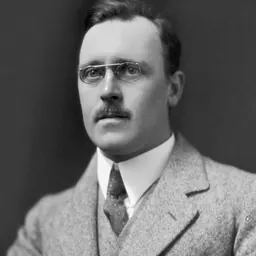
James Earl Ray
American criminal, convicted for the murder of civil rights activist and Nobel peace prize laureate Martin Luther King Jr. in 1968
About James Earl Ray
Lived 1928 – 1998 (aged 70). James Earl Ray was an American convict.
James Earl Ray (March 10, 1928 – April 23, 1998) was an American criminal who was convicted of the assassination of Martin Luther King Jr. at the Lorraine Motel in Memphis, Tennessee, on April 4, 1968.
After the assassination, Ray, who had planned on living in exile in Rhodesia (now Zimbabwe), The King family has stated that they believe the true murderer was a Memphis Police Department officer, Lieutenant Earl Clark.
Early life Ray was born on March 10, 1928, in Alton, Illinois, to George Ellis Ray and Lucille Ray (née Maher). He had Irish, Scottish and Welsh ancestry.
In February 1935, Ray's father, known by the nickname Great Dane, passed a bad check in Alton, Illinois, and then moved to Ewing, Missouri, where the family changed their name to Raynes to avoid law enforcement.
James Earl Ray was the oldest of nine children, including John Larry Ray, Franklin Ray, Jerry William Ray, Melba Ray, Carol Ray Pepper, Suzan Ray and Marjorie Ray. His sister Marjorie died in a fire as a young child in 1933. Ray left school at the age of 12. He later joined the U.S. Army at the close of World War II and served in Germany. Ray struggled to adapt to military life and in 1948 was discharged for ineptitude and lack of adaptability. He was sentenced to twenty years in prison for repeated offenses. He escaped from the Missouri State Penitentiary on April 23, 1967, by hiding in a truck transporting bread from the prison bakery.
After his first escape After his escape, Ray stayed on the move throughout the United States and Canada, going first to St. Louis and then onward to Chicago, Toronto, Montreal, and Birmingham, Alabama. He arrived in Birmingham, Alabama on August 26, 1967. While there he purchased a white 1966 Ford Mustang for $1,995 in cash on August 30 from a newspaper ad he answered the previous day.
Ray applied for and received an Alabama driver's license under the name Eric Starvo Galt with license #2848947. Also in Birmingham he bought a .38 revolver at some point which he later had with him when he was arrested in London. He then left Alabama going to Mexico, stopping in Acapulco, before settling in Puerto Vallarta on October 19.
While in Mexico, Ray using the alias Eric Starvo Galt, attempted to establish himself as a pornographic film director. Using mail-ordered equipment, he filmed and photographed local prostitutes. Frustrated with his results and jilted by the prostitute with whom he had formed a relationship, Ray left Mexico on or around November 16, 1967, arriving in Los Angeles three days later While there, Ray attended a local bartending school and took dance lessons.
His chief interest was the Democrat George Wallace presidential campaign, and Ray was quickly drawn to Wallace's segregationist platform, spending much of his time in Los Angeles volunteering at the Wallace campaign headquarters in North Hollywood.
He considered emigrating to Rhodesia (now Zimbabwe), where a predominantly white minority regime had unilaterally assumed independence from the United Kingdom in 1965. The notion of living in Rhodesia continued to appeal to Ray for several years, and it was his intended destination after King's assassination. The Rhodesian government expressed its disapproval.
Activity in early 1968 On March 5, 1968, Ray had an operation on his nose, performed by physician Russell Hadley. On March 18, 1968, Ray left Los Angeles and began a cross-country drive to Atlanta, Georgia.
Arriving in Atlanta on March 24, 1968, Ray checked into a rooming house. He bought a map of the city. FBI agents later found this map when they searched the room. On the map, the locations of the church and residence of Martin Luther King Jr. were circled.
Ray was soon on the road again and drove his Mustang to Birmingham, Alabama. There, on March 30, 1968, he bought a Remington Model 760 Gamemaster .30-06-caliber rifle and a box of 20 cartridges from the Aeromarine Supply Company. He also bought a Redfield 2x–7x scope, which he had mounted to the rifle.
He told the store owners that he was going on a hunting trip with his brother. Ray had continued using the Galt alias after his stint in Mexico, but when he made this purchase, he gave his name as Harvey Lowmeyer.
After purchasing the rifle and accessories, Ray drove back to Atlanta. An avid newspaper reader, Ray passed his time reading The Atlanta Constitution. The paper reported King's planned return trip to Memphis, Tennessee, which was scheduled for April 1, 1968. On April 2, Ray packed a bag and drove to Memphis.
Assassination of Martin Luther King Jr.
On April 3, 1968, Ray rented a room for the night at the New Rebel Motel in Memphis, Tennessee. The following day, he checked into a rooming house which was managed by Bessie Brewer across the street from the Lorraine Motel.
He rented a room under the name John Willard, initially staying in room 8, but later changing to room 5B, which had a direct view of the Lorraine Motel. That same day, he bought a pair of binoculars.
Ray locked himself in the bathroom, stood in the bathtub, opened the window and, at 6:01 PM, he fired a single shot at Martin Luther King Jr. with a Remington rifle while King was standing on the second-floor balcony of the Lorraine Motel. Ray then fled the rooming house, dropping a package that included a rifle and binoculars with Ray's fingerprints.
Apprehension and plea Ray fled to Atlanta in his white Ford Mustang, taking his belongings with him and driving for eleven hours. The trip took longer than he thought because he avoided main roads to prevent getting caught and arrived in Atlanta during "the early morning hours of April 5" leaving his car in a housing project's parking lot in Atlanta upon arriving.
While he was in Atlanta, he went to a rooming house to get his pistol and later cleaned it for prints. He also went to a laundromat to pick up clothing he had dropped off a few days prior. Then he boarded a bus bound for Cincinnati at 1:30 PM that day. The bus arrived in Cincinnati on April 6 at 1:30 AM, where he got onto another bus bound for Detroit. Once in Detroit, Ray took a cab to nearby Windsor in Canada.
He stayed briefly in Lisbon, Portugal, and returned to London on May 17.
Ray was arrested at London Heathrow Airport by a Special Branch officer, Phil Birch, as he attempted to leave the UK for Brussels. He was trying to depart the UK for Angola, Rhodesia or South Africa using the false Canadian passport.
Airport officials noticed that Ray carried another passport under a second name. The UK quickly extradited Ray to Tennessee, where he was charged with King's murder. He confessed to the crime on March 10, 1969, his 41st birthday, and after pleading guilty, he was sentenced by Judge W. Preston Battle to 99 years in prison.
Recanting of confession Three days later, Ray recanted his confession. He had entered a guilty plea on the advice of his attorney, Percy Foreman, to avoid the sentence of death by electrocution, which would have been a possible outcome of a jury trial. Unbeknownst to Ray, however, a death sentence would have been commuted as unconstitutional under the de facto moratorium in place since 1967 and following Furman v. Georgia.
Ray dismissed Foreman as his attorney and thereafter derisively called him "Percy Fourflusher". Ray began claiming that a man he had met in Montreal back in 1967, who used the alias "Raoul", had been involved in the assassination, and he asserted that he did not "personally shoot Dr. King," but may have been "partially responsible without knowing it", hinting at a conspiracy. Ray told journalist William Bradford Huie his version of the assassination and his flight during the following two months.
Huie investigated this story and discovered that Ray lied about some details. Ray told Huie that he purposely left the rifle with his fingerprints on it in plain sight at the crime scene because he wanted to become a famous criminal. He was convinced that he would escape capture because of his intelligence and cunning, and he also believed that Governor of Alabama George Wallace would soon be elected to the presidency, so that Ray would only be confined in prison for a short time, pending a presidential pardon by Wallace.
In December 1973, Ray filed a $500,000 lawsuit against Tennessee seeking his release from prison on the grounds that crucial evidence in his case was mishandled by his attorney Percy Foreman, who pressured him to plead guilty, Foreman denied Ray's allegations, saying that he "spent approximately 20 hours over 4 1/2 days cross-examing Ray… At no time did he ever implicate anything or anybody other than himself." Ray spent the remainder of his life unsuccessfully attempting to withdraw his guilty plea and secure a jury trial.
Second escape from prison On June 10, 1977, Ray and six other convicts escaped from Brushy Mountain State Penitentiary in Petros, Tennessee. They were recaptured on June 13. A year was added to Ray's previous sentence, increasing it to a full century. This escape inspired the Barkley Ultra race. It is a 100-mile race in the wilderness around the mountains which Ray had run to during this escape. This is mentioned in the Netflix Documentary by the founder of the Barkley.
Conspiracy allegations
House Select Committee on Assassinations
Ray hired Jack Kershaw as his new attorney, and Kershaw publicly argued and promoted Ray's claim that he was not responsible for the assassination of King. His claim was that the assassination was the result of a conspiracy of the otherwise unidentified man named "Raoul" who was a blond Cuban. Kershaw and his client met with representatives of the United States House Select Committee on Assassinations (HSCA) and convinced the committee to conduct ballistics tests that they believed would prove Ray had not fired the fatal shot. The tests ultimately proved inconclusive.
Kershaw claimed the prison escape was additional proof that Ray had been involved in a conspiracy that had provided him with the outside assistance he would have needed to break out of prison. Kershaw convinced Ray to submit to a polygraph test as part of an interview with Playboy. The magazine reported that the test results showed "Ray did, in fact, kill Martin Luther King Jr. and that he did so alone." Ray then fired Kershaw after discovering the attorney had been paid $11,000 (~$ in ) by the magazine in exchange for the interview and instead hired attorney Mark Lane to provide him with legal representation. William Pepper, a friend of King during the last year of his life, represented Ray in a mock trial televised by HBO in an attempt to grant him the trial he never received. In the mock trial, the prosecutor was Hickman Ewing. The mock trial jury acquitted Ray.
In 1998, and continuing into 1999, Pepper represented the King family in a wrongful death civil suit against Memphis restaurant owner Loyd Jowers, whose restaurant was near the Lorraine Motel. They sued Jowers for participation in a conspiracy to murder King. Rendering their verdict on December 8 of that year, the jury found that Jowers and others, including government agencies, had conspired to murder King, and he was therefore legally liable to pay compensation to the King family. The family accepted $100 in restitution to demonstrate they were not pursuing the case for financial gain, and they publicly stated that Ray, in their opinion, had nothing to do with the assassination. On June 9, 2000, the United States Department of Justice released a 150-page report rejecting allegations that there was a conspiracy to assassinate King, including the determination of the Memphis civil court jury.
Death In 1996, Ray was transferred to the Lois M. DeBerry Special Needs Facility in Nashville, a maximum-security prison with hospital facilities.
Ray died on April 23, 1998, at the age of 70, at the Nashville Memorial Hospital in Madison, Tennessee, from complications related to kidney disease and liver failure caused by hepatitis C, having served twenty-nine years in prison. The funeral was held at the Metropolitan Interdenominational Church in Nashville.
Ten years later, Ray's other brother, John Larry Ray, co-authored a book with Lyndon Barsten titled Truth At Last: The Untold Story Behind James Earl Ray and the Assassination of Martin Luther King Jr.
Don’t just read it —
keep it.
Full-length biographies made to live with: read them, listen on the way to work, watch them tonight.
- E-book
- Audio
- Video
Instant download · yours to keep · every purchase keeps this site free
Important facts
People in James Earl Ray's life
Named in this biography and alive at the same time







Related people
Same field, nearest in time



Contemporaries
People whose lives overlapped James Earl Ray's


Frequently asked questions
Who was James Earl Ray?
American criminal, convicted for the murder of civil rights activist and Nobel peace prize laureate Martin Luther King Jr. in 1968
When was James Earl Ray born?
James Earl Ray was born on 10 March 1928 in Alton.
When did James Earl Ray die?
James Earl Ray died on 23 April 1998 in Nashville.
What was James Earl Ray's occupation?
James Earl Ray was a convict.
What nationality was James Earl Ray?
James Earl Ray was American.
Sources & further reading
Cite this page
APA: Biography.guide. (2026). James Earl Ray. https://biography.guide/james-earl-ray/
MLA: "James Earl Ray." Biography.guide, https://biography.guide/james-earl-ray/.
Chicago: "James Earl Ray." Biography.guide. https://biography.guide/james-earl-ray/.
Data last updated: 2026-09-23 · Spot an error? Report a correction.
Portrait: Wikimedia Commons · author & licence
Page generated 2026-09-27 05:07 UTC