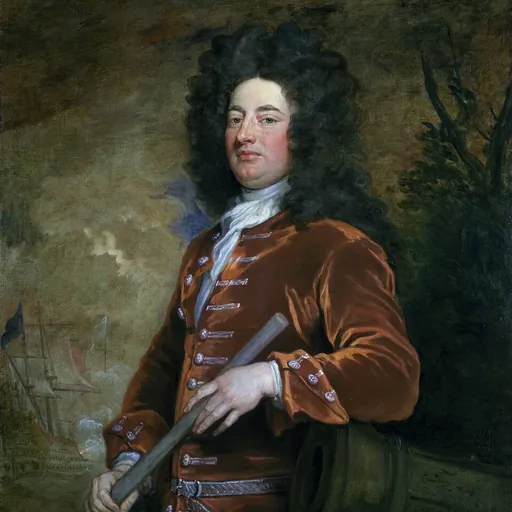
John Jennings
British naval officer and politician of the seventeenth and eighteenth centuries
About John Jennings
Lived 1664 – 1743 (aged 78–79). John Jennings was a politician.
Admiral Sir John Jennings (1664 – 23 December 1743) was a Royal Navy officer and Whig politician who sat in the English and British House of Commons between 1705 and 1734. He commanded HMS Kent at Cadiz and Vigo in 1702 during the War of the Spanish Succession. He went on to be Commander-in-Chief of the Jamaica Station, then Senior Naval Lord and finally Governor of Greenwich Hospital.
Early life Jennings was the fifteenth child of Philip Jennings of Duddleston Hall, Shropshire and his wife Christian Eyton, daughter of Sir Gerard Eyton of Eyton, Shropshire. He was descended from a Shropshire family which had suffered for its adherence to the Royalist cause during the English Civil War. He married Alice Breton. In 1690 he was made captain of the newly launched HMS Experiment, of 32 guns, and employed in cruising off the coast of Ireland, where he intercepted a number of small vessels which were being used as transports by James II's forces. In 1693, Jennings was nominated captain of the Victory, flagship of Sir John Ashby; later the same year he was transferred to the 62-gun HMS Mary, in which he went to the Mediterranean with Admiral Russell.
On the outbreak of the War of the Spanish Succession, Jennings commanded HMS Kent (of 70 guns) under Admiral Rooke at Cadiz and Vigo in 1702, where he played a part in the destruction of the Franco-Spanish fleet. He took part in the capture of Gibraltar, and was captain of the 96-gun HMS St George at the Battle of Málaga in 1704. He was knighted for his exploits by Queen Anne on 9 September 1704, and having been promoted to rear admiral in 1705, became Commander-in-Chief of the Jamaica Station in 1706. He was promoted to vice admiral in 1708 and admiral in 1709. His attack on Tenerife in 1706 was unsuccessful. He commanded the fleet off Lisbon from 1708 to 1710, and was later Commander-in-Chief of the Mediterranean Fleet. but stood down when the Government fell in April 1717.
He was also appointed governor of Greenwich Hospital and Ranger of Greenwich Park from 1720, and presented the marble statue of George II by Rysbrack which stands in the Grand Square of the hospital. Also in 1721, he acquired Newsells Bury at Barkway in Hertfordshire. He was becoming deaf, but resigned from the Admiralty Board in June 1727 because he objected to serving under Lord Berkeley, the first Sea lord. He was returned again as MP for Rochester at the 1727 British general election. Although Berkeley was dismissed from the Admiralty board in 1727, Jennings was not keen to return, hoping instead for a promotion or peerage. He was promoted to rear-admiral of England in January 1733, but resigned a year later when Sir John Norris was made admiral of the fleet and commander in chief.
Death and legacy Jennings died at Greenwich on 23 December 1743 at the age of 79, and was buried in Westminster Abbey. A separate monument exists at Barkway Parish Church sculpted by John Michael Rysbrack.
With his wife Alice, he had one son, George, who duly inherited Newsells.
Don’t just read it —
keep it.
Full-length biographies made to live with: read them, listen on the way to work, watch them tonight.
- E-book
- Audio
- Video
Instant download · yours to keep · every purchase keeps this site free
Important facts
People in John Jennings's life
Named in this biography and alive at the same time


Related people
Same field, nearest in time




Contemporaries
People whose lives overlapped John Jennings's



Frequently asked questions
Who was John Jennings?
British naval officer and politician of the seventeenth and eighteenth centuries
When was John Jennings born?
John Jennings was born in 1664.
When did John Jennings die?
John Jennings died on 23 December 1743 in Greenwich.
What was John Jennings's occupation?
John Jennings was a politician.
Sources & further reading
· DBpedia: John Jennings (Royal Navy officer)
Cite this page
APA: Biography.guide. (2026). John Jennings. https://biography.guide/john-jennings-politician-1664/
MLA: "John Jennings." Biography.guide, https://biography.guide/john-jennings-politician-1664/.
Chicago: "John Jennings." Biography.guide. https://biography.guide/john-jennings-politician-1664/.
Data last updated: 2026-09-20 · Spot an error? Report a correction.
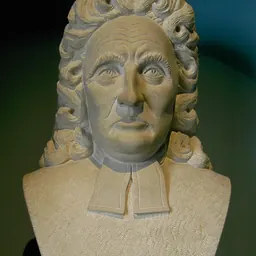
Portrait: Wikimedia Commons · author & licence
Page generated 2026-09-27 04:58 UTC