
About John Hunter
Lived 1737 – 1821 (aged 83). John Hunter was a British painter, naval officer, surveyor, printmaker, governor and cartographer.
Vice-Admiral John Hunter (29 August 1737 – 13 March 1821) was an officer of the Royal Navy, who succeeded Arthur Phillip as the second Governor of New South Wales, serving from 1795 to 1800.
Both a sailor and a scholar, he explored the Parramatta River as early as 1788, and was the first to surmise that Tasmania might be an island. As governor, he tried to combat serious abuses by the military in the face of powerful local interests led by John MacArthur. Hunter's name is commemorated in historic locations such as Hunter Valley and Hunter Street, Sydney.
Family and early life John Hunter was born in Leith, Scotland, the son of William Hunter, a captain in the merchant service, and Helen, née Drummond, daughter of J. Drummond and niece of George Drummond, several-time lord provost of Edinburgh.
Naval career Seven Years' War In 1755 Hunter was enrolled as seaman on HMS Centaur, became a midshipman and served on and then . Howe appointed him third lieutenant of his flagship in 1782, and was advanced to first lieutenant by the time she took part in the relief of Gibraltar and the Battle of Cape Spartel. Following these engagements Hunter was appointed to his first command, that of the 14-gun sloop Marquis de Seignelay, on 12 November 1782. His service as Governor was ultimately recognised through the grant of an annual pension of £300, approved by then-Prime Minister Henry Addington in October 1802.
When the platypus was first seen by Europeans in 1798, a pelt and sketch were sent back to the United Kingdom by John Hunter.
Later life and legacy
In summer 1804 Hunter was given command of the 74-gun , serving with the fleet off Brest under Admiral William Cornwallis. While sailing out of Torbay on the evening of 24 November, a sudden fog came down. The ships of the fleet, unaware of each other's positions and their own location became disorganised. Hunter twice narrowly avoided colliding with other ships, but ran aground at 8pm on the cliff near Paignton, and soon afterwards bilged. He died at his London home at Judd Street, New Road, Hackney, London on 13 March 1821. HMAS Hunter the lead ship of the new Hunter-Class frigates of the Royal Australian Navy is named after him. The Hunter was laid down in 2023 and is expected to be commissioned in 2031.
He retired to his home town of Leith and lived at a then-new Georgian house at 5 Cassels Place, part of the still extant Georgian terrace at the foot of Leith Walk, and now renumbered as 34 Leith Walk.
Memorials
A bust of Hunter was placed by the Australian government at the north end of The Shore in Leith in 1996.
Don’t just read it —
keep it.
Full-length biographies made to live with: read them, listen on the way to work, watch them tonight.
- E-book
- Audio
- Video
Instant download · yours to keep · every purchase keeps this site free
Important facts
People in John Hunter's life
Named in this biography and alive at the same time

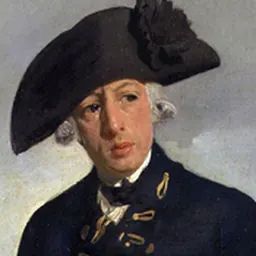
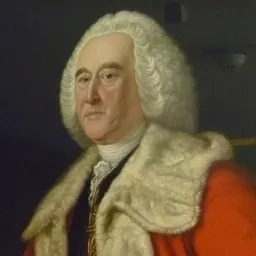
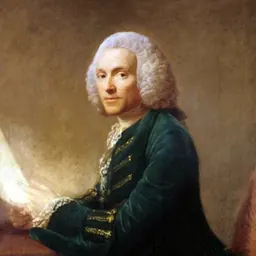
Related people
Same field, nearest in time


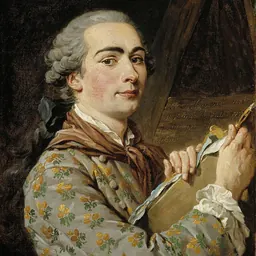

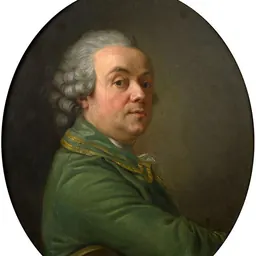
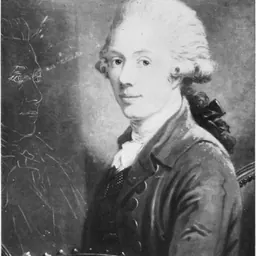
Contemporaries
People whose lives overlapped John Hunter's






Frequently asked questions
Who was John Hunter?
Royal Navy officer and governor (1737-1821)
When was John Hunter born?
John Hunter was born on 29 August 1737 in Leith, Scotland.
When did John Hunter die?
John Hunter died on 13 March 1821 in London Borough of Hackney.
What was John Hunter's occupation?
John Hunter was a painter, naval officer, surveyor, printmaker, governor and cartographer.
What nationality was John Hunter?
John Hunter was British.
Sources & further reading
· DBpedia: John Hunter (Royal Navy officer)
Cite this page
APA: Biography.guide. (2026). John Hunter. https://biography.guide/john-hunter-painter/
MLA: "John Hunter." Biography.guide, https://biography.guide/john-hunter-painter/.
Chicago: "John Hunter." Biography.guide. https://biography.guide/john-hunter-painter/.
Data last updated: 2026-09-20 · Spot an error? Report a correction.
Page generated 2026-09-27 05:21 UTC