
About John Horden
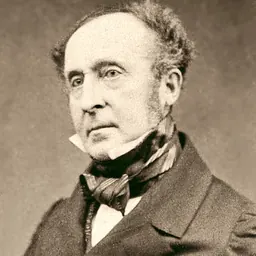
Lived 1828 – 1893 (aged 64). John Horden was a British translator, bible translator, anglican priest and bishop.
John Horden (January 20, 1828 – January 12, 1893) was the first Anglican Bishop of Moosonee, Canada, who for more than forty years led services in Cree, Inuit and other languages of his parishioners.
Early life Horden was born in Exeter, England, the eldest son of William Horden (a printer) and Sarah Seward, and received his early schooling at St. John's School, paid for by charitable donations.
Horden was an active member of his local Church of England congregation (Church of St. Thomas the Apostle, Exeter) and regularly attended the vicar's Bible class, which offered information on the mission opportunities available in addition to a Biblical education. With two other students, he expressed his interest in the mission field and they met to pray and study. After some time they all volunteered for the Church Missionary Society and two were accepted. Horden was rejected and told that he was still thought too young to be a church leader in "heathen" areas. He was, however, encouraged to continue his schooling and was told that he would hear from the Society when they needed someone.
Arrival in Hudson's Bay Territory On May 10, 1851, Horden received a letter from them, informing him that the Bishop of Rupert's Land, had made a request for a schoolmaster at Moose Factory, territory of the Hudson's Bay Company, and that he had been appointed to fill the position. They also told him to prepare to leave within a month and indicated that they desired that he marry and take his wife out to assist him in his missionary work. He immediately prepared for his new position. He contacted his fiancée of one year, Elizabeth Baker Oke (1826–1908), a teacher who trained at The Home and Colonial School Society (Gray’s Inn Road, London), and someone who also had missionary aspirations, and they quickly married (May 28, 1851). Horden was to assume the role of catechist, to superintend the schools and to be a scripture reader at the Sunday services. Elizabeth was charged with supervising the girl’s schools and teaching the Indian women. In London, Horden met with Reverend George Barnley, a Wesleyan Methodist missionary at Moose Factory until 1847, who introduced him to some basic Cree language and its symbolic writing.
On June 8, 1851, the young couple set sail for North America. Horden spent much of his time on the trip by continuing his studies of the Greek Testament and of the Cree language. He benefited from the prior experience of several of the crew of the ship with the language and had developed a small vocabulary by the end of the voyage. He also learned to play the accordion. Funding was obtained through the Coral Missionary Society, largely through the efforts of Beatrice Batty and other editors of its magazine, to create a foster care program for orphans. These children were cared for in the homes of native families in the settlement, remaining part of Cree society, and could attend school, which was not compulsory.
Family Island life in this remote territory was both exerting and fulfilling. The settlement was mainly inhabited by the Cree, connected to the mainland by an ice road in the winter, and home to an international community of Hudson's Bay Company employees at the post. and flooding were not uncommon, with Horden remarking that during the spring thaw of 1857, every house on the island flooded, "having five feet nine inches deep in my own kitchen."
Horden and Elizabeth had six children, five of whom survived infancy: Elizabeth Anderson Horden (b. 1852) named for Bishop Anderson, John Oke Horden (b. ~1854), who became a physician and surgeon in Middlesex, England and to whose home his mother retired in later life, Christiana Seward Horden (b. 1856), who married William Kelk Broughton (District Manager and Chief Trader at Albany, Rupert's House and Moose Factory, awarded Gold medal and two bars), Beatrice Campbell Horden (b. 1863), and baby "Bertie", Herbert Henry Horden (b. 1866), who also became a doctor in Middlesex, England but died by suicide in 1904 from prussic acid poisoning. Daughter Ellen Hudson Horden (1860–1861), named after her place of birth, was buried at Moose Factory.
After delaying their plans of a furlough for an entire year due to a ship-wreck, in 1865 Horden and his family sailed back to England through icebergs and freezing storms, and Thomas Vincent was placed in charge of the mission. Upon Horden's return to England, he found he was very well known throughout the British Isles, and became a popular and sought-after speaker. In 1867, Horden returned overland from Montreal to James Bay, travelling the last by canoe with Elizabeth and their two youngest children, having left the three older children to be educated in England. Horden later remarked on his "loneliness", missing his children in England. and in 1881 John and Elizabeth can be found on the census in the nearby village of Combe Down. At that time her mother Jane Oke, a widow since 1846 who had worked as a dress maker, was living in "Free Cottages" at St. David, Devonshire and Elizabeth's unmarried sister Christiana, an upholsteress, was living there also. When Horden returned to Hudson's Bay in 1882, Elizabeth now 56 years of age, remained behind to attend to her family in England and was active in raising contributions for the Moosonee Association until her death in 1908. Three 1893 design sketches for the memorial by sculptor Herbert Read, depicting an island scene of the bishop and natives, are held at the Devon Heritage Centre.
St. John's Hospital School on High Street, Exeter, where Horden attended the English Free School as a child, erected a monument to Horden in the wall, inscribed with a biography and closing with "Faithful unto Death".
The Calendar of Saints of the Anglican Church of Canada remembers his service on January 12.
Don’t just read it —
keep it.
Full-length biographies made to live with: read them, listen on the way to work, watch them tonight.
- E-book
- Audio
- Video
Instant download · yours to keep · every purchase keeps this site free
Important facts
People in John Horden's life
Named in this biography and alive at the same time



Related people
Same field, nearest in time


Contemporaries
People whose lives overlapped John Horden's




Frequently asked questions
Who was John Horden?
Anglican Bishop of Moosonee
When was John Horden born?
John Horden was born on 20 January 1828 in Exeter.
When did John Horden die?
John Horden died on 12 January 1893 in Moose Factory.
What was John Horden's occupation?
John Horden was a translator, bible translator, anglican priest and bishop.
What nationality was John Horden?
John Horden was British.
Sources & further reading
Cite this page
APA: Biography.guide. (2026). John Horden. https://biography.guide/john-horden/
MLA: "John Horden." Biography.guide, https://biography.guide/john-horden/.
Chicago: "John Horden." Biography.guide. https://biography.guide/john-horden/.
Data last updated: 2026-09-26 · Spot an error? Report a correction.
Page generated 2026-09-27 05:16 UTC