
About John Henry Smyth
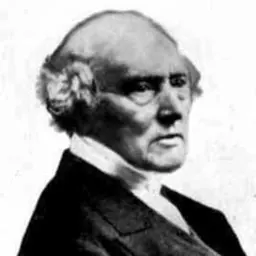
Lived 1844 – 1908 (aged 64). John Henry Smyth was an American politician.
John Henry Smythe or Smyth (July 14, 1844 – September 5, 1908) was an American diplomat who served as the United States ambassador to Liberia from 1878 to 1881 and from 1882 to 1885. Before his appointment, he had various clerkships in the federal government in Washington, DC, and in Wilmington, North Carolina. Later in his life he took part in a number of leading African American organizations and was president of a Reformatory School outside of Richmond, Virginia.
Early life John Henry Smythe was born on July 14, 1844, in Richmond, Virginia, to Sully and Ann Eliza Smythe. Sully died in 1857 and Ann Eliza died in 1883. Smythe was taught to read between the ages of five and seven. About the age of eight or nine he was sent to Philadelphia, Pennsylvania to be educated, and he first attended a Quaker school and then a grammar school. When Smythe's father died, he quit school and took a job as an errand boy in a dry goods store, although he returned to school after a year. in 1859 he entered the Quaker run Institute for Colored Youth led by Ebenezer D. Bassett, graduating May 4, 1862. Bassett would later be minister-resident to Haiti, holding the position 4 years before Smythe would be diplomat to Liberia. Smythe was a talented painter, and was admitted a member of the Academy of Fine Arts at Philadelphia, focusing on landscapes. After graduating, in 1864, he worked as a laborer in the china house of Tyndale & Mitchell, and worked as an Army sutler's clerk for a short time during the American Civil War (1861–1865).
Career London and Washington, DC In 1865, on the recommendation of John W. Forney and Shelton Mackenzie, Smythe traveled to London to learn acting, intending to meet with the famous actors Ira Aldridge (who was in St. Petersburg and Smythe did not meet) and Samuel Phelps. Smythe's money ran short and he returned home, abandoning hopes for a career on the stage. Smythe took manual labor work and, on the advice of William Whipper, began teaching at a school in Wilkes Barre, Pennsylvania. In 1869, Smythe enrolled at Howard University Law School where John Mercer Langston was dean. As a student, he was appointed by Henry M. Wittlesey clerk in the Freedmen's Bureau on January 12, 1870. On August 15 of that year he resigned to become a clerk in the United States Census. Smythe was one of the forty-nine clerks who resigned from that department in protest in 1872, and he was then appointed clerk in the internal revenue agent of the Treasury Department on August 1, 1872, resigning that appointment in November to take another appointment from George S. Boutwell as internal revenue storekeeper. He resigned from this position on January 8, 1873, to take a position as a clerk in the Freedman's Savings Bank in Washington, DC, but was soon sent to Wilmington, North Carolina to be a cashier in the bank there. When the Freedmen's Bank failed, Smythe remained in Wilmington and passed the North Carolina Bar. which dissolved by 1880 but twenty years later reformed as the American Negro Academy.
Smythe wrote introductions to volumes of poetry by Daniel Webster Davis, and worked with poet George Moses Horton.
On March 5, 1897, Smythe was a part of the formation of the American Negro Academy led by Alexander Crummell. Also in 1897 he helped found the Virginia Manual Labor School to carry out the program of the Negro Reformatory Association of Virginia in Broad Neck Farm, Hanover County, Virginia. In the fall of 1898, Smythe attended meetings in Rochester led by Alexander Walters, T. Thomas Fortune, John C. Dancy, Ida B. Wells, and John W. Thompson which marked the formation of the Afro-American Council. Smyth addressed the council, stating that he could not support the organization as the organization "opposed separate schools and favored mixed marriages" and he severed ties with the group. In fact, Smythe was an outspoken opponent of intermarriage and integrated schools as he felt independence was important for racial pride and solidarity, but which put him at odds with many black leaders.
Other organizations Among his many memberships, Smythe was a member of the London Atheneum Club. In 1903, Smythe formed and was the president of a company called, "Negro Development and Exposition Company of the United States of America" which sought to raise money for a black exhibit for the 1907 Jamestown Exposition in Norfolk in 1907.
Personal life, death and legacy Smythe was a Presbyterian in religion and married Fannie Shappen and had children.
An elementary school for black children in Norfolk, Virginia, was named for Smythe.
John Henry Clavell Smythe, a Sierra Leone Creole flight navigator in World War II, barrister, Attorney-General, was a grandson and namesake of John Henry Smythe.
Don’t just read it —
keep it.
Full-length biographies made to live with: read them, listen on the way to work, watch them tonight.
- E-book
- Audio
- Video
Instant download · yours to keep · every purchase keeps this site free
Important facts
People in John Henry Smyth's life
Named in this biography and alive at the same time





Related people
Same field, nearest in time





Contemporaries
People whose lives overlapped John Henry Smyth's
Frequently asked questions
Who was John Henry Smyth?
American diplomat (1844-1908), ambassador to Liberia
When was John Henry Smyth born?
John Henry Smyth was born on 14 July 1844 in Richmond.
When did John Henry Smyth die?
John Henry Smyth died on 5 September 1908 in Richmond.
What was John Henry Smyth's occupation?
John Henry Smyth was a politician.
What nationality was John Henry Smyth?
John Henry Smyth was American.
Sources & further reading
Cite this page
APA: Biography.guide. (2026). John Henry Smyth. https://biography.guide/john-henry-smyth-politician/
MLA: "John Henry Smyth." Biography.guide, https://biography.guide/john-henry-smyth-politician/.
Chicago: "John Henry Smyth." Biography.guide. https://biography.guide/john-henry-smyth-politician/.
Data last updated: 2026-09-26 · Spot an error? Report a correction.
Page generated 2026-09-27 05:15 UTC