
About John Henry Bastide
Lived 1700 – 1770. John Henry Bastide was a British engineer.
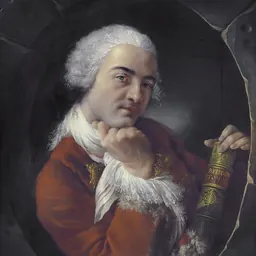
Lieutenant-General John Henry Bastide ( – September 1770) was a British army officer and military engineer who played a significant role in the early history of Nova Scotia. He was the chief engineer at both of the sieges of Louisbourg (1745 and 1758) and the siege of Minorca.
Early life and career Bastide was born around 1700, the son of a French military officer, Colonel Armand de la Bastide, a Huguenot born in Bern, Switzerland, the son of Colonel John de la Bastide. After Armand became a naturalised British citizen in 1691, he was given command of Count Nassau's Regiment. Later he was appointed as Governor of the Isle of Wight. He died in 1744. Armand is Sir Derek Jacobi's seven times great uncle on his mother's side.
John Bastide joined the British Army as a boy; a notation in the Army List describes him as a ‘child’. His first commission, dated 23 August 1711, was as an ensign in Hill's Regiment. He purchased his promotion to lieutenant in the same regiment on 25 February 1718. On 10 June 1719, Bastide and his regiment were at the Battle of Glen Shiel. He drew a detailed plan of the battlefield and the movements of the opposing forces.
It is not certain when Bastide became an engineer but he was certainly one by 1726. From that date to 1739, he directed "the works and fortifications at Jersey and Guernsey."
At that time, engineer officers were not part of the British Army as such but, along with the artillery, were part of the Ordnance Corps, under the command of the Master General of the Ordnance. It was, however, quite normal for engineers to also hold rank within an army regiment. Regimental commissions were purchased but appointments within the corps of engineers were by seniority and could not be purchased.
In 1740, Bastide went to North America as chief engineer at Annapolis Royal, then the chief town of Nova Scotia. It had responsibilities for defences and fortifications throughout Nova Scotia and New England. In 1742, he visited Canso to lay plans for refortification. The plans were never implemented but Bastide left a detailed plan of the harbour and the community. On 13 May 1743, Bastide sent a letter addressed to "My Lord Duke." Describing himself as the second lieutenant in General Cornwallis's regiment, he stated that he had received advice that he was to be exchanged from his regiment to one in Nova Scotia. He did not wish to be transferred and begged leave to resign his lieutenancy to his son or permission to sell it in order to provide some security for his family. He continued in his engineer duties, being promoted to Engineer Extraordinary on 3 July 1742, Engineer in Ordinary on 8 March 1744, and Sub-Director sometime later in 1744. As war became imminent, Bastide returned to Annapolis Royal to bolster its defences. With time and resources at a premium, Bastide abandoned plans to erect new fortifications and concentrating on putting "the old ones into the best repair they are capable of." His valuable services in preparing the plans and the means for the capture of Louisburg in 1745 were also acknowledged by Governor Shirley of Massachusetts in a message to the House of Representatives. However, Pepperrell later expressed serious reservations concerning Bastide's engineering abilities, describing him to the Duke of Newcastle in November as not "equal to the care of the Works of this important Fortress."
However, over the years a small town had been allowed to develop within cannon-shot of the fort's defences. This area, known as St Philips Town, lay across both the roads from the fort to the town of Mahon. Bastide was subject to later criticism that he "neglected to destroy those houses in the town which would afford cover to the besiegers.". " Mr Pitt, Principal Secretary of State, has informed the Admiralty that the Master General of Ordnance says that Lieutenant Colonel Bastide reports that a floating battery made of an old gunship will help to secure Milford Haven.....". In 1757, William Pitt decided on the capture of Louisbourg as a high priority. In a Council of war called by Lord Loudoun at Halifax, to decide on the advisability of attacking Louisbourg or Quebec, a paper from Bastide was read and considered by the members of the council.
In early 1758, Bastide was appointed chief engineer of the expedition to capture Louisbourg, this event possibly coinciding with his promotion to colonel on 9 January. He had Major Patrick MacKellar as his deputy and a further 8 engineer officers under his command. On arrival in Halifax in early May, Bastide prepared six blockhouses of squared timber with the timbers marked so that they could be erected within a few hours upon arrival at Louisbourg. These were designed to have an upper platform with musket-proof parapets on which small cannon could be mounted and were intended as "end rideouts for the protection of the camp".
The expedition set sail from Halifax on 29 May 1758 under the command of Major-General Jeffery Amherst, arriving off Gabarus Bay on 2 June. Due to bad weather a landing was not made until 8 June. In Amherst's post-expedition report to William Pitt he states, "The 17th I got Colonel Bastide on Horseback, and, with Colonel Williamson and Major M'Kellar, we reconnoitred the whole Ground as far as we could and Colonel Bastide was determined in his Opinion of making Approaches by the Green Hill, and confining the Destruction of the Ships in the Harbour, to the Light-House Point, and the Batteries on that Side", and, "On the 24th the Enemy fired on the Light-House Batteries from the Town and Shipping, and on our advanced Redoute, which was finished, they fired from the Town. Colonel Bastide remained fixed in his Opinion of advancing by Green-Hill." Bastide would appear to have been taking the cautious, conventional approach and a study of the ground would indicate that any other approach was fraught with difficulties and Bastide, with his great experience of Louisbourg, must have been the best person to understand this. At a later stage General Wolfe made serious charges concerning "the ignorance and inexperience of the Engineers," asserting "It is impossible to conceive how poorly the engineering business was carried on here.". and on 22 February 1761, he was promoted to major-general in the Army. On 25 June 1761, he participated in the Burying the Hatchet ceremony that was held at Governor Jonathan Belcher’s garden on present-day Spring Garden, Halifax in front of the Court House. The ceremony ended seventy years of warfare between the Mi'kmaq and the British.
At about the same time, he received orders to supervise the construction of the fortifications at Halifax where he remained until July 1762. With the Spanish Empire having entered the war on the side of France, there was concern that Halifax would be attacked. pBastide played a prominent role in the construction of the Halifax Citadel and the defences to Halifax Harbour, the result being a system of rough field works made of earth and sod.
Bastide returned to England in October 1762. He was promoted lieutenant-general on 30 April 1770. He died in September 1770 and his will was proved at the Prerogative Court ofI no Canterbury on 26 September 1770, his parish and county being stated as Southampton, Hampshire. A memorial of 1766 says that he had three sons and two daughters.
Don’t just read it —
keep it.
Full-length biographies made to live with: read them, listen on the way to work, watch them tonight.
- E-book
- Audio
- Video
Instant download · yours to keep · every purchase keeps this site free
Important facts
People in John Henry Bastide's life
Named in this biography and alive at the same time


Related people
Same field, nearest in time


Contemporaries
People whose lives overlapped John Henry Bastide's


Frequently asked questions
Who was John Henry Bastide?
British engineer
When was John Henry Bastide born?
John Henry Bastide was born in 1700.
When did John Henry Bastide die?
John Henry Bastide died in 1770.
What was John Henry Bastide's occupation?
John Henry Bastide was an engineer.
What nationality was John Henry Bastide?
John Henry Bastide was British.
Sources & further reading
· Wikipedia: John Henry Bastide
Cite this page
APA: Biography.guide. (2026). John Henry Bastide. https://biography.guide/john-henry-bastide/
MLA: "John Henry Bastide." Biography.guide, https://biography.guide/john-henry-bastide/.
Chicago: "John Henry Bastide." Biography.guide. https://biography.guide/john-henry-bastide/.
Data last updated: 2026-09-20 · Spot an error? Report a correction.
Page generated 2026-09-27 05:34 UTC