
About Thomas Burgh
Lived 1670 – 1730 (aged 59–60). Thomas Burgh was an engineer, architect and politician.
Colonel Thomas de Burgh ( ; 1670 – 18 December 1730), always named in his lifetime as Thomas Burgh, was an Anglo-Irish military engineer, architect, and Member of the Parliament of Ireland who served as Surveyor General of Ireland (1700–1730) and designed a number of the large public buildings of Dublin including the old Custom House (1704–6), Trinity College Library (1712–33), Dr Steevens' Hospital, the Linen Hall (1722), and the Royal Barracks (1701 onwards).
Early life Thomas Burgh was the son of Rt Rev Ulysses Burgh (d. 1692) of Drumkeen, County Limerick, who was Dean of Emly and later Bishop of Ardagh. His mother was Mary, daughter of William Kingsmill of Ballibeg, County Cork. His brothers, Richard Burgh of Dromkeen and Drumrusk and William Burgh of Bert House, Athy, were both Members of the Irish Parliament.
Thomas was educated at Delany's school in Dublin, and Trinity College, Dublin, where he matriculated on 22 November 1685 and left without taking a degree. Prior to the outbreak of the 1688 wars he is likely to have left Ireland for London with his father. He returned to Ireland in the army of King William III, as a lieutenant in Lord Lovelace's Regiment of Foot, and served at the Siege of Limerick. This may have been followed by a brief spell in the Irish Engineers from 1691. In any case, de Burgh was commissioned as a Captain in 1692 in the Royal Regiment of Foot. In this capacity, he served in the Low Countries at the Battles of Steenkerke (1692) and Landen (1693), and as an engineer at the siege of Namur (1695). During this time, he absorbed the ideas of the Dutch engineer Menno van Coehoorn (1641–1740).
In 1700, Burgh replaced the Surveyor General of Ireland, William Robinson, and, one year later, also became Barracks Overseer in Ireland. Under his command, the building of barracks was expanded and the rebuilding of Dublin Castle (begun under Robinson) was completed. Chapelizod House and Chichester House in Dublin were repaired as well as numerous coastal fortifications.
As well as a Colonel of the Engineers (Lieutenant-Colonel, 11 April 1706), Burgh held a Captain's commission in Brasier's Regiment of Foot from 1707 to 1714.
Public life In 1704, Burgh was admitted as a freeman of the City of Dublin in recognition of his work in enriching Dublin's architecture. He was later admitted to the Dublin Philosophical Society. He served as Member of Parliament for Naas from 1713 to 1730 and as a government minister. He was appointed High Sheriff of Kildare in 1712, Governor of the Royal Hospital Kilmainham in 1707 and served as a Trustee of Dr Steevens' Hospital from 1717 to 1730.
From 1705 to 1714, he was Lieutenant-General of the Ordnance for Ireland, He also designed Kildrought House in nearby Celbridge.
He worked on several engineering projects, including improvements to Dublin Harbour and the proposed Newry Canal, although this was not built until after his death. Thomas Burgh (1707–1759), succeeded his father as MP for Naas Colonel Theobald Burgh (b. 1709) Ulysses Burgh (died 1742) Rev John Burgh (died 1767), vicar of Donaghmore, County Monaghan Richard Burgh (died 1762), a barrister of Drumkeen, County Limerick, succeeded his brother as MP for Naas; he left much of his property to his sister Elizabeth's son Walter Hussey, who took the name Walter Hussey Burgh Mary, who married a cousin, also named Thomas Burgh Dorothea, who married as his second wife Rt Hon Anthony Foster (1705–1779), Chief Baron of the Irish Exchequer in 1749 Catherine (died 1797), who married Rev John Alcock, Dean of Ferns Elizabeth (1705–1757), who married Ignatius Hussey, and was mother of the Rt Hon Walter Hussey Burgh MP PC (1742–1783), Chief Baron of the Irish Exchequer, a leading member of the Irish Patriot Party and a noted orator.
Surname In 1848, Thomas Burgh's grandson Ulysses Burgh, 2nd Baron Downes was allowed to change the family surname to "de Burgh" by Royal Licence.
Don’t just read it —
keep it.
Full-length biographies made to live with: read them, listen on the way to work, watch them tonight.
- E-book
- Audio
- Video
Instant download · yours to keep · every purchase keeps this site free
Important facts
Family & relationships
People in Thomas Burgh's life
Named in this biography and alive at the same time

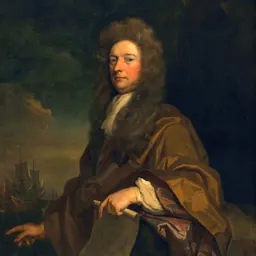

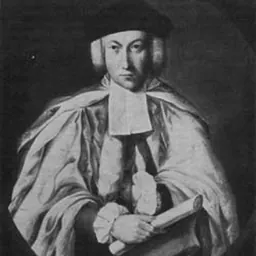
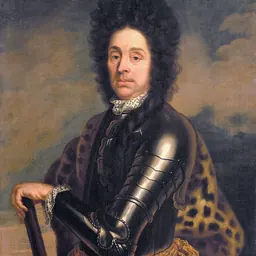
Related people
Same field, nearest in time


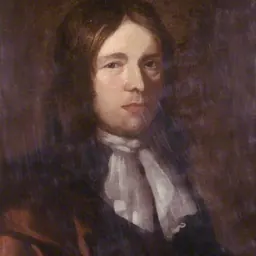
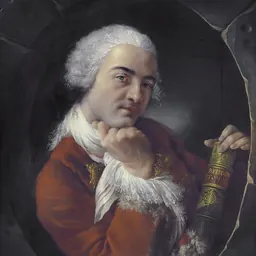

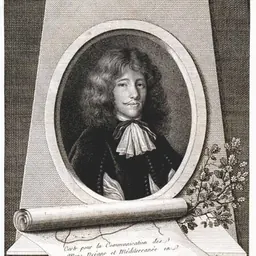
Contemporaries
People whose lives overlapped Thomas Burgh's


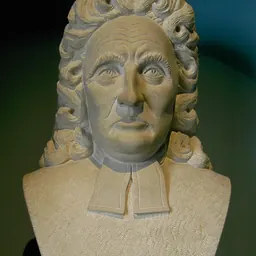

Frequently asked questions
Who was Thomas Burgh?
Irish military engineer, architect and MP (1670–1730)
When was Thomas Burgh born?
Thomas Burgh was born in 1670.
When did Thomas Burgh die?
Thomas Burgh died on 18 December 1730.
What was Thomas Burgh's occupation?
Thomas Burgh was an engineer, architect and politician.
What nationality was Thomas Burgh?
Thomas Burgh's recorded nationality: Kingdom of Ireland.
Sources & further reading
· DBpedia: Thomas Burgh (1670–1730)
Cite this page
APA: Biography.guide. (2026). Thomas Burgh. https://biography.guide/thomas-burgh-engineer/
MLA: "Thomas Burgh." Biography.guide, https://biography.guide/thomas-burgh-engineer/.
Chicago: "Thomas Burgh." Biography.guide. https://biography.guide/thomas-burgh-engineer/.
Data last updated: 2026-09-20 · Spot an error? Report a correction.
Page generated 2026-09-27 05:29 UTC