
About John Elliot
Lived 1732 – 1808 (aged 75–76). John Elliot was a British privateer and politician.
Admiral John Elliot (1732 20 September 1808) was a Royal Navy officer and colonial administrator who served in the Seven Years' War and American War of Independence. He rose to the rank of admiral, and served briefly as the governor of Newfoundland.
Elliot was born into a Scottish gentry family and joined the British navy in 1740. Little is known about his early service, but he received a promotion to post-captain during the Seven Years' War, and commanded the 32-gun frigate with distinction, first capturing a small French frigate, and then taking command of a squadron of three ships and bringing to action the notorious privateer François Thurot, who had been raiding the coast of Ireland in 1760. After a short but bitter engagement, Thurot was killed and his ships captured. Elliot was widely hailed as a hero and he and his captains received several rewards. He commanded several other ships during the remainder of the war, and after a period of unemployment during the peace, returned to active service during the American War of Independence.
His service in this conflict involved carrying the members of the Carlisle Peace Commission to America, and playing a minor role in operations off the coast, before returning to European waters. He was present at the relief of Gibraltar and the Battle of Cape St Vincent with Admiral Sir George Rodney, and saw action at the Battle of Ushant with Admiral Richard Kempenfelt. Promoted to flag rank after the end of the war he served as governor of Newfoundland during the peace, but was unable to take any commands during the French Revolutionary Wars owing to his infirmity, and died in 1808 with the rank of admiral.
Family and early life
Elliot was born in Scotland in 1732, the fourth son of Sir Gilbert Elliot, 2nd Baronet, of Minto and his wife Helen. Little is known about his early life but he joined the Royal Navy after graduating from the Royal Naval Academy, Portsmouth in 1740, and went aboard in July that year. His first appointment was to command with the Channel Fleet, and he took part in the reconnaissance of Rochefort in early 1758. The letter had been sent to all the ports in the hopes of there being ships available to intercept the French, but no ships were stationed on the coast, and only by chance was Elliot at Kinsale. Also there sheltering from the weather were the 36-gun ships and . After a close-fought action, Thurot's force was battered into submission, with his ships dismasted and reduced to a sinking condition. Thurot's body was washed ashore at Port William and was buried with full military honours at Kirkmaiden.
Elliot and his captains received the thanks of both the British and Irish Parliaments, and the freedom of the city of Cork. Elliot's cousin, Thomas Pasley was serving on Aeolus during the battle, and having distinguished himself in the fighting, was promoted to lieutenant of the ship. |Victory, at sea|11 January 1804
Last years of war Elliot further distinguished himself by cutting out a French brig laden with naval stores from under the guns of a French shore battery at Belle Île on 17 May 1760. Aeolus was badly damaged during the action, and returned to port to be repaired. While these were being carried out it is possible that Elliot was temporarily appointed to command the 44-gun , aboard which he escorted an outward bound merchant convoy headed to the Baltic. With this service completed, and repairs on Aeolus being finished, Elliot resumed command of her, and spent 1761 cruising in the Bay of Biscay. He also briefly became Member of Parliament for Cockermouth that year. He was promoted to commodore on 11 April 1778, and shortly afterwards took the Earl of Carlisle, George Johnstone and William Eden to North America to negotiate with the colonists as the Carlisle Peace Commission. It was about this time that he was made a Colonel of Marines, a post he held until 1787. Elliot soon found that there was little assistance that he could render, and having a ship as large as Edgar on station there made her a target for Spanish gunboats. Elliot consequently returned to England.
Elliot spent most of the remaining years of the war commanding Edgar in the English Channel. In November 1781, the Admiralty had received intelligence that a large convoy was preparing to sail from Brest under Admiral de Guichen. It was a convoy of transports carrying naval supplies for the West Indies and the French fleet in the East Indies. Edgar was part of Admiral Richard Kempenfelt's squadron of 18 ships, commanded from , which was ordered to intercept the convoy. Kempenfelt did so in the afternoon of 12 December in the Bay of Biscay, approximately south-west of Ushant. With the French naval escort to leeward of the convoy, Kempenfelt attacked immediately, capturing 15 of the transports before nightfall. The rest of the convoy scattered, most returning to [Brest; only five transports reached the West Indies. During the engagement, known as the Battle of Ushant, Edgar fought a running battle with the 84-gun Triomphant. Elliot was later praised by Kempenfelt for his actions during the battle. He fulfilled the post for its usual term, sailing out in June each year and returning in October, with his principal duties being the regulation of the fisheries. He was succeeded by a new commander, Vice-Admiral Mark Milbanke in 1789, having been promoted to rear-admiral of the red on 24 September 1787. He was further advanced to vice-admiral of the blue on 21 February 1790, and as tensions rose with the Spanish Armament that year, Elliot hoisted his flag aboard , but with the easing of the crisis soon struck it. Increasingly infirm, he was promoted to vice-admiral of the red on 12 April 1794, after the outbreak of the French Revolutionary Wars, but was unable to take up any posts. He was promoted to admiral of the blue on 16 April 1795, and then to admiral of the white. He settled at his estate at Mount Teviot, Roxburghshire during his last years and died there on 20 September 1808. He never married. His nephews included Thomas Pasley, William Cathcart, 1st Earl Cathcart and Admiral Robert Digby. Another nephew was Gilbert Elliot-Murray-Kynynmound, 1st Earl of Minto, who inherited John Elliot's estates.
Don’t just read it —
keep it.
Full-length biographies made to live with: read them, listen on the way to work, watch them tonight.
- E-book
- Audio
- Video
Instant download · yours to keep · every purchase keeps this site free
Important facts
People in John Elliot's life
Named in this biography and alive at the same time
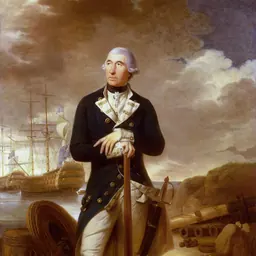
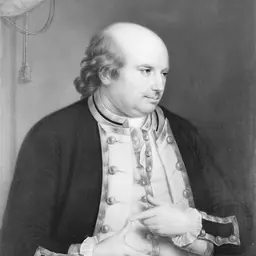
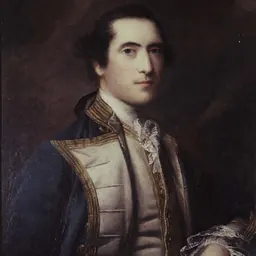




Related people
Same field, nearest in time
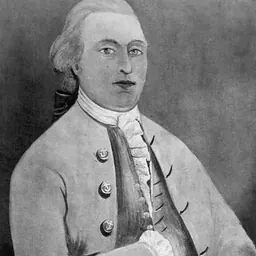


Contemporaries
People whose lives overlapped John Elliot's






Frequently asked questions
Who was John Elliot?
Royal Navy officer (1732-1808)
When was John Elliot born?
John Elliot was born in 1732 in Scotland.
When did John Elliot die?
John Elliot died on 20 September 1808 in Roxburghshire.
What was John Elliot's occupation?
John Elliot was a privateer and politician.
What nationality was John Elliot?
John Elliot was British.
Sources & further reading
· DBpedia: John Elliot (Royal Navy officer)
Cite this page
APA: Biography.guide. (2026). John Elliot. https://biography.guide/john-elliot-privateer/
MLA: "John Elliot." Biography.guide, https://biography.guide/john-elliot-privateer/.
Chicago: "John Elliot." Biography.guide. https://biography.guide/john-elliot-privateer/.
Data last updated: 2026-09-20 · Spot an error? Report a correction.
Page generated 2026-09-27 05:14 UTC