
About John Edward Carew
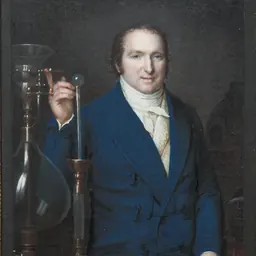
Lived 1785 – 1868 (aged 82–83). John Edward Carew was a British sculptor.
John Edward Carew (c. 1782 – 1 December 1868) was an Irish sculptor during the 19th century. His most prominent work is The Death of Nelson, one of the four bronze panels on the pedestal of Nelson's Column in Trafalgar Square.
Life Thought to be the son of a local stonemason and sculptor, Carew was born in Tramore near Waterford on the southern Irish coast. He studied art in Dublin. Around 1809, he came to London to work for Sir Richard Westmacott. For part of the time which he worked with Westmacott he also had his own studio in the Edgware Road.
In 1831 he moved to a studio in Brighton, to be nearer Petworth House, home of George Wyndham, 3rd Earl of Egremont who was his main patron from the mid-1820s until the earl's death in 1837. Carew later moved to Grove House near Petworth.
When Lord Egremont died leaving no provision for him in his will, the sculptor sued the Earl's executors for £50,000. Ten thousand pounds of this was for "loss of time in the attendance on the late Lord Egremont". Carew claimed that he had not been properly paid for the sculptures made for Petworth, and that he had sacrificed commercial success by moving to Sussex to be near the earl. The defence produced evidence that Carew had been generously paid, at least £20,000 for completed works, and that Lord Egremont had done all he could to promote Carew's reputation. Carew's counsel withdrew the case. Carew was declared bankrupt in 1842. and a statue of Henry Grattan for St Stephen's Hall in the Palace of Westminster (1857). He was selected to make the bronze relief of the death of Nelson, for the pedestal of Nelson's Column; it was installed in December 1849. For the Catholic cathedral at St John's, Newfoundland, Carew executed several statues and an elaborate altarpiece. (1832) Bust of Captain Marryat RN (1834) Statue of Henry Grattan in St Stephen's Hall, Houses of Parliament (1844) Statue of Edmund Kean for the Drury Lane Theatre (1833) Statue of Sir Richard Whittington for the Royal Exchange, London, (1844) Bust of Lady Georgiana Fane (1846) Statue of John Curran in Westminster Palace (1856)
Church work includes: Memorial of General Sir John Floyd in St James' Church, Hampstead Road (1818) Memorial to Henry Hoare of Mitcham Grove in Moredun, Surrey (1828) Memorial to Rear Admiral Richard Willis in Petworth Parish Church (1829) Memorial to Edmund Woods in Chichester Cathedral Baptism of Christ for St John the Baptist's Church, Brighton (1835) Reredos in the Church of Our Lady of the Assumption and St Gregory, London (1853) Four works – statue of St. John the Baptist, the Immaculate Conception (erected 1858), St Francis of Assisi and St. Patrick – in Basilica of St. John the Baptist, St. John's, Newfoundland
Don’t just read it —
keep it.
Full-length biographies made to live with: read them, listen on the way to work, watch them tonight.
- E-book
- Audio
- Video
Instant download · yours to keep · every purchase keeps this site free
Important facts
People in John Edward Carew's life
Named in this biography and alive at the same time






Related people
Same field, nearest in time




Contemporaries
People whose lives overlapped John Edward Carew's


Frequently asked questions
Who was John Edward Carew?
Irish sculptor
When was John Edward Carew born?
John Edward Carew was born in 1785 in Tramore.
When did John Edward Carew die?
John Edward Carew died in 1868 in London.
What was John Edward Carew's occupation?
John Edward Carew was a sculptor.
What nationality was John Edward Carew?
John Edward Carew was British.
Sources & further reading
· Wikipedia: John Edward Carew
Cite this page
APA: Biography.guide. (2026). John Edward Carew. https://biography.guide/john-edward-carew/
MLA: "John Edward Carew." Biography.guide, https://biography.guide/john-edward-carew/.
Chicago: "John Edward Carew." Biography.guide. https://biography.guide/john-edward-carew/.
Data last updated: 2026-09-20 · Spot an error? Report a correction.
Page generated 2026-09-27 05:31 UTC