
About John Floyd
Lived 1783 – 1837 (aged 54). John Floyd was an American politician.
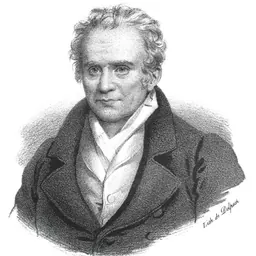
John Floyd (April 24, 1783 – August 17, 1837) was an American politician and military officer. He represented Virginia in the United States House of Representatives and later served as the 25th governor of Virginia.
During his career in the House of Representatives, Floyd advocated for settling the Oregon Country, unsuccessfully arguing on its behalf from 1820 until he left Congress in 1829; the area did not become a territory of the United States until 1848.
During the 1832 presidential election, Floyd was selected by John C. Calhoun to serve as the Nullifier Party's candidate. The state legislature of South Carolina voted to give the state's eleven electoral votes to Floyd. While governor of Virginia, Nat Turner's Rebellion occurred. Although Floyd was an outspoken advocate for state's rights, he supported the gradual abolition of slavery on account of its inefficiency. His term as governor oversaw a period of economic prosperity for the state.
Family and early life Floyd was born at Floyds Station, Virginia, near what is now Louisville, Kentucky. His parents were pioneer John Floyd, who Native Americans killed twelve days before his son's birth, and Jane Buchanan. His first cousin was Charles Floyd, the only member of the Lewis and Clark Expedition to die. In a letter dated 15 December 1830, Sam Houston stated that Floyd was the first cousin of another member of the expedition, Nathaniel Pryor.
Floyd was educated at home and a nearby log schoolhouse before enrolling in Dickinson College in Carlisle, Pennsylvania at the age of thirteen. Although he enrolled in the class of 1798, he had to withdraw due to financial troubles. Floyd graduated in 1806, and his graduating dissertation was entitled An Enquiry into the Medical Properties of the Magnolia Tripetala and Magnolia Acuminata.
In 1804, Floyd married Letitia Preston, who came from a prominent southwest Virginian family. She was the daughter of William Preston and Susannah Smith and sister of Francis Preston, of Abingdon, Washington County, Virginia. They had 12 children, including:
John Buchanan Floyd (1806–1863), Governor of Virginia and Secretary of War under President Buchanan. Nicketti Buchanan Floyd, married United States Senator John Warfield Johnston. George Rogers Clark Floyd (1810–1895), Secretary of Wisconsin Territory and later a member of the West Virginia Legislature Eliza Lavalette Floyd, married professor George Frederick Holmes
Floyd was a surgeon with the rank of major in the Virginia State Militia from 1807 to 1812. At the outbreak of the War of 1812, Floyd moved his family to a new home near present-day Virginia Tech to be near friends and entered the regular army. On July 13, 1813, he was appointed surgeon of Lt. Col. James McDowell's Flying Camp in the Virginia militia. When he returned from a leave of absence, he discovered someone else had been appointed to replace him, so his service in this role ended on November 16, 1813. In addition, Floyd supported a bill that authorized Virginia to raise troops and place them at the federal government's order, as well as supporting a resolution to condemn the terms of peace proposed by the British commissioners at Ghent. As Floyd's biographer noted:
This proposed recognition meant more to Floyd even than trade advantages and justice; it was another step in the disenthrallment of America. It would afford relief from that political plexus that had made it impossible for one European nation to move, even in matters relating to America, without creating a corresponding movement in each of the others. He was tired of negotiating the things which related exclusively to America in London, Paris, and Madrid.
When General Andrew Jackson tried and executed two British agents during the First Seminole War in Spanish-held Florida, it precipitated the Great Seminole Debate of 1818–1819 in Congress, with some claiming he exceeded his orders from President James Monroe and demanding his censure. Floyd, however, supported Jackson's actions, maintaining he had acted according to precedent and his orders. He also denied the sovereignty of the Seminole tribe. He stated:
If gentlemen would only expunge from their memories the progress of European liberty and institutions, they would find in America a number of states, or separate, independent, and distinct nations, confederated for common safety, and mutual protection, taught wisdom by the eternal feuds of Spain, England, France, and Germany, now consolidated into large empires. These states before the confederation could make war and peace, raise armies, or build a navy, coin money, pass bankrupt laws, naturalize foreigners, or regulate commerce ... Informed by Europe they knew Jealousies would arise, and constant strife render armies in every nation necessary to their defence, which would endanger their liberties and homes. These states then, in their sovereign and independent characters, were willing to enter into a compact, by which the power of making war and peace, and regulating commerce, possessed alike by all, should be transferred to a congress of the states, to be exercised with uniformity, for their mutual benefit; thus avoiding the evils of "superanuated and enslaved" Europe. These two were the only powers ever intended to be granted by the states. All other powers conferred by the compact are necessary to carry these two into execution. Disorder followed, and both Floyd and John Randolph were "so persistent in their interruptions as to necessitate an adjournment of the joint session". The resolution passed, and the committee was formed with Floyd as the chairman, and Thomas Metcalfe of Kentucky and Thomas Van Swearingen of Virginia as members. Nothing happened with the bill, and John Quincy Adams, then Secretary of State, criticized Floyd and characterized him as "a 'flaunting' canvasser and a politician seeking to win prestige and patronage, particularly the latter, by a vigorous opposition to the party in power" and attributed his motives for occupation by "a desire to provide a retreat for a defaulting relative and possibly for himself." Floyd then brought forth a resolution on December 10, 1821, to inquire into the expediency of occupying the area, and a week later presented another resolution to have the Secretary of the Navy give an estimate for a survey of harbors on the Pacific Coast.
On January 18, 1822, he introduced a bill to authorize and require the president to occupy "the territory of the United States" on the waters of the Columbia River and to organize the territory north of the 42d parallel of latitude and west of the Rocky Mountains as the "Territory of Oregon" as soon as the population reached 2000. However, Floyd's bill was unsuccessful, as was a possible attempt to discredit Adams. Adams certainly saw it as an attempt to damage his chances for the presidency. When a vote was taken on January 27, 1823, it failed to pass by a tally of 61 to 100. Throughout the rest of 1823 and 1824, Floyd continued in his pursuit. When President Monroe suggested that the second session of the 18th United States Congress look into establishing a military base at the mouth of the Columbia River, Floyd reintroduced his bill. He argued:
I ... appeal to the House to consider well our interests in the Western Ocean, on our western coast, and the trade to China and India; and the ease with which it can be brought down the Missouri. What is this commerce? Thousands of years have passed by, and, year after year, all the nations of the earth have, each year, sought the rich commerce of that country; all have enjoyed the riches of the East. That trade was sought by King Solomon, by Tyre, Sidon; this wealth found its way to Egypt, and at last to Rome, to France, Portugal, Spain, Holland, England, and finally to this Republic. How vast and incomparably rich must be that country and commerce, which has never ceased, one day, from the highest point of Jewish splendor to the instant that I am speaking, to supply the whole globe with all the busy imagination of man can desire for his ease, comfort, and enjoyment! Whilst we Rave so fair an opportunity offered to participate so largely in all this wealth and enjoyment, if not to govern and direct the whole, can it be possible that doubt, or mere points of speculation, will weigh with the House and cause us to lose forever the brightest prospect ever presented to the eyes of a nation?
His bill passed this time, with a vote of 115 to 57, but it failed in the Senate.
Role in presidential elections In the period leading up to the 1824 presidential election, a leading candidate was William H. Crawford. However, malfeasance charges were brought up against Crawford. A select committee was formed to investigate the charges, the chairman of which was Floyd. Crawford's rivals were determined to remove Floyd, as it was known he favored Crawford's candidacy, but their efforts failed.
The 1828 presidential election did not initially have a clear front-runner for the Southern politicians. They were united in their determination to unseat Adams but thought at first that Andrew Jackson's time had passed after his unsuccessful bid in 1824. However, his popularity had grown, and he was convinced that Jackson could serve as a figurehead only while the cabinet ran things; an alliance was formed between Northern "plain republicans", with Martin Van Buren as their spokesperson, and Southern "planters", with Senator Littleton Waller Tazewell of Virginia, an intimate friend of Floyd, as their spokesperson, to put Jackson in the White House. Floyd later wrote:
At this moment came the direful struggle between the great parties in Congress founded upon the claim which the majority ... from the north of the Potomac made to the right to lay any tax upon the importations into the United States which was intended to act as a protection to northern manufacturers by excluding foreign fabrics of the same kind. Hence all the states to the south of the Potomac became dependent upon the Northern States for a supply of whatever thing they might want, and in this way the South was compelled to sell its products low and buy from the North all articles it needed from twenty-five to one hundred and twenty-five per cent higher than from France to England ... At this juncture the southern party brought out Jackson.
Floyd worked hard on Jackson's behalf and considered his efforts sufficient for a post in the new cabinet, and so declined to run again for Congress. However, he did not receive this post.
Governor of Virginia Floyd was Governor of Virginia from 1830 to 1834.
In January 1831, Floyd was successful in his bid for re-election as governor, this time for three years, and as the first governor under the new state constitution enacted in 1830. Virginia's economy had seen an upswing under his stewardship, and in his December address, he said he wanted to see this continue. He unveiled a "bold economic program" that included a network of state-subsidized internal improvements designed to make Virginia a "commercial empire". Floyd, along with Tazewell and John Tyler, were considered the leaders of the Virginians that had become disaffected with Jackson and had turned to Calhoun. They felt that Jackson had repudiated "virtue and ability as well as Old Republican tenets." Floyd, however, ceased his objections against Jackson for a time. During Floyd's address to the General Assembly, he did, however, touch upon the national issues swirling around the country. As Floyd's biographer noted:
In clear and forceful language Floyd reasserted the state sovereignty theory of government, as guaranteed by the 'Compact or Constitution,' holding the Federal Government to be merely the 'Agent of the States' entrusted only with such powers as were originally intended to operate 'externally' and 'upon nations foreign to those composing the Confederacy.' He called attention to the disregard with which 'an unrestrained majority' had received the memorials and protests of some of the 'sovereign states,' justifying their acts by precedent and expediency and thus melting away 'the solder of the Federal chain;' also to the fact that it was then 'strongly insinuated' that the states could not 'interpose to arrest an unconstitutional measure.' Such a course, he was certain, could result only in nullifying the federal constitution and in a complete failure in our experiment in government.
When the Democratic Party announced that Van Buren would be their vice presidential candidate, Floyd was not happy. He renewed his antagonism with Jackson accordingly. Floyd felt that Van Buren would inject "Northern principles" into the government and would "lead with a rapidity of lightening [sic] to the sudden and immediate emancipation of slavery". Virginians led the movement to prevent Van Buren's election. As historian William J. Cooper noted, "For the Calhounites in Virginia, replacing Van Buren with Barbour would achieve two desired goals: eliminate the man they designated as the great enemy both of Calhoun and of the Virginia doctrine as well as symbolize the political resurgence of Virginia."
Presidential electoral votes by state. Floyd carried South Carolina (in green) The Nullification Crisis had been ongoing since 1828, and in December 1832, Jackson came down squarely against "the nullifiers" in his proclamation. However, in the presidential election of 1832, Jackson confirmed his power in the Southern United States by winning his re-election. Jackson had skillfully neutralized Barbour's movement, and Clay did not appear on several southern tickets.
Floyd's biographer commented that despite advocating moderation in his annual message in December 1832, he was "secretly counting the costs and horrors of war" and that Floyd characterized Jackson's Proclamation in response to South Carolina's Nullification Ordinance as an "outrage upon our institutions" and a "satire upon the revolution" making war inevitable. When Floyd learned that Clay was willing to compromise on the tariff and that South Carolina would submit her issues to a "convention of the states", he supported both. The crisis averted, he toned down his opposition to Jackson but was unwilling to return to the Democratic Party while Van Buren was the leader. As a result, he turned to Clay and attempted to bring him and John C. Calhoun together in a new political party to support these views. "... the elimination of both Clay and Calhoun from the list of eligibles for the presidency had become temporarily imperative. Accordingly, Floyd set himself to the task of working out a fighting alliance between all the factions opposed to the administration. To this end, he encouraged discord within the Democratic party, while scrupulously keeping the conflicting ambitions of his own friends in the background." On April 16, 1834, he left Richmond for his home, escorted by Bigger's Blues, Richardson's Artillery, Myer's Cavalry, and Richardson's Riflemen, Richmond's volunteer companies.
Floyd suffered a stroke and died on August 17, 1837, in Sweet Springs in Monroe County, Virginia (now West Virginia), and his tombstone can be found in the Lewis Family Cemetery, on the hill behind the remains of the historic Lynnside Manor. His grave is near to that of John Lewis.
On January 15, 1831, the General Assembly of Virginia passed an act creating the present county of Floyd out of Montgomery County, named after Floyd, who was governor at the time.
Don’t just read it —
keep it.
Full-length biographies made to live with: read them, listen on the way to work, watch them tonight.
- E-book
- Audio
- Video
Instant download · yours to keep · every purchase keeps this site free
Important facts
People in John Floyd's life
Named in this biography and alive at the same time

Related people
Same field, nearest in time



Contemporaries
People whose lives overlapped John Floyd's


Frequently asked questions
Who was John Floyd?
American politician and military officer (1783–1837)
When was John Floyd born?
John Floyd was born on 24 April 1783 in Jefferson County.
When did John Floyd die?
John Floyd died on 17 August 1837 in Sweet Springs.
What was John Floyd's occupation?
John Floyd was a politician.
What nationality was John Floyd?
John Floyd was American.
Sources & further reading
· DBpedia: John Floyd (Virginia politician)
Cite this page
APA: Biography.guide. (2026). John Floyd. https://biography.guide/john-floyd-politician/
MLA: "John Floyd." Biography.guide, https://biography.guide/john-floyd-politician/.
Chicago: "John Floyd." Biography.guide. https://biography.guide/john-floyd-politician/.
Data last updated: 2026-09-25 · Spot an error? Report a correction.
Page generated 2026-09-27 05:12 UTC