
About John E. Arnold
Lived 1913 – 1963 (aged 50). John E. Arnold was an American psychologist.
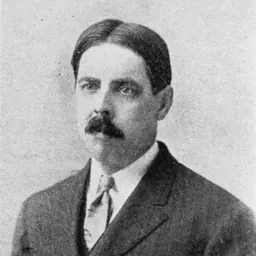
John E. Arnold circa 1955, showing prop used in Arcturus IV case study for Creative Engineering course John Edward Arnold (né Paulsen; March 14, 1913 – September 28, 1963) was an American professor of mechanical engineering and professor of business administration at Stanford University. He was a pioneer in scientifically defining and advancing inventiveness, based on the psychology of creative thinking and imagination, and an internationally recognized innovator in educational philosophy.
Biography John Arnold was born in Minneapolis, Minnesota. He received the B.A. in psychology in 1934 from the University of Minnesota and a M.S. in mechanical engineering in 1940 from Massachusetts Institute of Technology. Subsequently, he served in industry as a mechanical designer and research engineer. He taught at MIT from 1942 to 1957 and was the founder, director, and sole member of MIT's "Creative Engineering Laboratory".
In the 1950s Arnold sought to shift the meaning of design from being "the language used to tell fabrication and assembly where to make their cuts" to "the language of innovation", by which engineers expressed their imagination. He moved to Stanford University in 1957 with a joint appointment as professor of mechanical engineering and professor of business administration. He was founding director of the Design Division of the Mechanical Engineering Department, continuing to formulate and teach about creativity in engineering. He died at the age of 50 of a heart attack while traveling in Italy on sabbatical; he had planned to write a book on the philosophy of engineering.
Arnold taught summer seminars in creativity for manufacturing engineers, military researchers, and industrial designers (1953–1956 at MIT and continuing at Stanford). and A. H. Maslow's "Emotional Blocks to Creativity", with considerable attention given to Alex Faickney Osborn's notion of "brainstorming".
On his passing, Arnold's Stanford colleagues described him as "an uncommon man ... a visionary thinker who set trends in design education". They said he was "warmly human, an outstanding and articulate speaker ... sought by many groups to contribute to their programs". hosted by the Department of Mechanical Engineering, continues to develop Arnold's design methodology, combining creativity and technology with a "concern for human values and the needs of society".
Early career and interests John Arnold's activities demonstrated his vision of what it means to work and live as a creative person.
Subsequently, on joining the MIT faculty Arnold first taught courses in engineering mechanics, but his interests in teaching shifted to the process of engineering design. He became known internationally as an innovator in educational philosophy. Bringing his understanding of psychology into the design process, his notion of "creative engineering" showed engineering designers how to approach and solve problems creatively.
While at MIT, Arnold designed and built a substantial portion of his home in Wenham, Massachusetts. Besides cultivating his fields and raising sheep, he was an amateur printer and photographer.
Perspective on creativity Arnold was well known for applying and devising heuristics for studying a problem and generating novel engineering solutions. By the late 1950s, a literature search on the subject of creativity would lead to his contributions. Basing design processes and teaching about design on psychology and contextual factors, Arnold demonstrated how the scientific method could be applied for improving creativity.
Arnold sought to balance the then prevalent analytical approach to technology with an approach based on synthesis, namely combining different perspectives for understanding and solving a problem. As a generalist, he advocated a broad perspective, envisioning the creative process as essential in life. He stated that challenges of "the modern age" called for engineers to be bold, devising entirely new kinds of solutions.
Arnold stated that the creative process is a particular kind of problem-solving, distinguished from decision-making by four requirements that make the result creative: a better combination, not just something different tangible, something you can see, or feel or react to in some fashion, not just an idea forward-looking in time, relating to society's needs, not merely "recreative" a "synergetic" quality—the value achieved in the combination is much greater than the sum of the parts (a multiplicative effect).
The value of a creative result was measured by increased function, improved performance, and lowered cost. The most important aspect of the creative process was figuring out what people need and thus would want to buy.
Arnold believed we can improve creativity by scientific understanding of the inventive process and improving it so it became more organized and deliberate with a step-by-step approach. He defined a framework for the creative process involving a combination of analysis, synthesis, and evaluation in three phases: Question and observe (preparation), Associate (production), and Predict (decision-making). Arnold viewed these phases as a kind of checklist for guiding creative work. To prompt his own thinking, Arnold would refer to a deck of cards with probes adopted from Osborn, e.g., what could be rearranged, reversed, or put to other uses?
Importance of individual thought in the creative process During the Creativity Conference of 1958, participants debated the role of the individual versus the group in the creative process. Arnold's philosophy of creativity and design emphasized the individual because "Every new combination of values ... is formed in the mind of an individual man." While acknowledging that some engineering activities are best undertaken as a group activity to get feedback for ideas, he was critical of research directors who brought engineers together without concern for their individual competence. Accordingly, he advocated personal development first and foremost, providing guidelines for self-reflection and idea generation, a form of metacognition.
According to Arnold, some people believed that individuals could not invent because society and the sciences had become too complex—"no man can know all and therefore no man can invent." Irving A. Taylor, social psychologist, asserted that in the associative, "productive" phase, contributions by individuals in a group brainstorming session could be synergetic. But he generally agreed that the greatest creative accomplishments (such as a Picasso painting) were inherently individual endeavors.
M. F. Agha, a consultant art director and designer, argued that while it is true a group of individuals may produce nothing, working in groups was how business was done, and such practices were inherent in the "economic and cultural fabric" of society. He illustrated the social dynamics by a story of "Kibbitzers" who collaborated to develop an advertisement for a new product. At the same time, he admitted progress could be impaired by self-proclaimed experts, whom he called "Tsitzers" because their only effect was to squelch ideas, saying "Tsk, Tsk".
Despite his philosophical stand on the importance of the individual, Arnold's projects included some full-group sessions and small groups working together.
The Arcturus IV case study in creative engineering Arnold's philosophy of design was first formulated and taught in "Creative Engineering" courses at MIT in the 1951–52 school year. He developed a case study called Arcturus IV that gained considerable attention in the public press, but its humanistic perspective was new and controversial.
The Arcturus IV Case Study posited a fictitious planet around the star Arcturus with beings, called Methanians, for whom the students were to design marketable products. The students' task was to design tools and appliances for these beings. In particular, Arnold said that he sought to unsettle "preconceived notions about man-machine relationships and to strengthen the influence of environment on design".
Translated back to Earthlings, Arnold was promoting a humanistic approach
A quarter (3 weeks) of the Creative Engineering course was devoted to the Arcturus project. Arnold observed that "time spent out in space" profoundly influenced the students in subsequent course exercises, such that students would become engaged in a broad and detailed consideration of relevant design factors. The science fiction exercise "jolted" the student, requiring an adjustment to thinking and methods that made subsequent learning easier: "He has to stretch his imagination to such a limit that it doesn't quickly shrink back to its former inconspicuous self." Arnold believed it was important for designers to develop daring and confidence against what he called "a vicious jury" that might destroy ideas. Arnold believed that the Arcturus IV case, because it raised issues about the planet and inhabitants that couldn't be resolved, would instill confidence in a student who proceeded deliberately and logically in designs based on principles. This experience would then help the student retain his self-confidence when a design jury found a mistake in his work. He wrote, "In the Arcturus case the student designer can always rationalize that he is as much entitled to his opinion as the jury is to theirs and everyone lives happily ever after." such that the design of the course itself became a case for the Creative Engineering Group to reflect upon.
Starting in 1962, Arnold also taught Engineering Drawing, the "study and application of the language of vision as it applies to the engineer and scientist", as part of the general Engineering School curriculum. Because of his sabbatical in 1963, it was the only course he was scheduled to teach in 1963–64. Following Arnold's philosophy, in this year McKim started to offer a Design Project course that emphasized "the cross-discipline responsibilities of the designer"; follow-on semesters emphasized "economic and marketing determinants" and experimentation, leading to a working prototype.
Robert McKim in Experiences in Visual Thinking: "My greatest debt is to the late professor John E. Arnold, who not only suggested that I develop a visual-thinking course at Stanford (a course that has been a major testing ground for this book), but who also influenced me by his pioneering efforts to educate productive thinking."
Frederik Pohl in the science fiction novel Jem refers to an engineering design class at the "MISFITS" that created products for export to Arcturus.
Don’t just read it —
keep it.
Full-length biographies made to live with: read them, listen on the way to work, watch them tonight.
- E-book
- Audio
- Video
Instant download · yours to keep · every purchase keeps this site free
Important facts
People in John E. Arnold's life
Named in this biography and alive at the same time




Related people
Same field, nearest in time


Contemporaries
People whose lives overlapped John E. Arnold's




Frequently asked questions
Who was John E. Arnold?
psychologist
When was John E. Arnold born?
John E. Arnold was born on 14 March 1913.
When did John E. Arnold die?
John E. Arnold died on 28 September 1963.
What was John E. Arnold's occupation?
John E. Arnold was a psychologist.
What nationality was John E. Arnold?
John E. Arnold was American.
Sources & further reading
Cite this page
APA: Biography.guide. (2026). John E. Arnold. https://biography.guide/john-e-arnold/
MLA: "John E. Arnold." Biography.guide, https://biography.guide/john-e-arnold/.
Chicago: "John E. Arnold." Biography.guide. https://biography.guide/john-e-arnold/.
Data last updated: 2026-09-20 · Spot an error? Report a correction.
Page generated 2026-09-27 05:31 UTC