
About John Coburn
Lived 1762 – 1823 (aged 60–61). John Coburn was a judge.
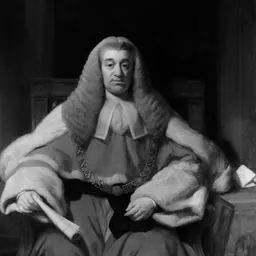
alt=Portrait of John Coburn located at the Margaret I. King Library in the University of Kentucky in Lexington, Kentucky
John Coburn (August 28, 1762 – February 10, 1823) was a Kentucky pioneer, Circuit Court Judge, and Territory Judge.
Early life John Coburn was born August 28, 1762, in Philadelphia, Pennsylvania. As a young man, he received a collegiate education, read law under Luther Martin, Attorney General of Maryland, and was admitted to the bar. Martin took special interest in young Coburn, and under Martin's advice, Coburn moved from Philadelphia to Lexington, Kentucky in 1784.
Career Upon his arrival in Lexington, Kentucky, he found success in mercantile trading, and as his local influence grew, he was elected town trustee. At this time, Kentucky was a Virginia county, and in August 1785, Coburn was appointed to the Danville committee to begin the process of admitting Kentucky as a state to the union. Statehood was granted on June 1, 1792.
In 1786 he married Mary Moss, daughter of a prosperous Virginia planter, who migrated with her family over the Appalachians to Kentucky after the Revolutionary War. Her mother, twice widowed, had married Joseph Royall Farrar of Bryan Station several years after the infamous siege on the fort by the Wyandot, Shawnee, and Lenape warriors led by the British Captain William Caldwell and Simon Girty.
In 1794, Coburn moved his growing family to the town of Washington, Kentucky, the second-largest town, after Lexington, and the county seat for Mason County.
In Washington, Coburn partnered with Dr. Basil Duke (grandfather of Basil W. Duke, Confederate Brigadier General) and Captain Nathaniel Wilson in land speculation and merchant trading. Coburn and Duke built a house on Green Street, opposite the court house, in which the families occupied separate apartments. Wilson built a house on an adjoining lot, now called the Albert Sidney Johnston House, the birthplace of the Confederate General who died in the Battle of Shiloh.
Wilson died in 1796, and Coburn and Duke continued purchasing large amounts of land in Mason County, the surrounding counties, and across the river in Ohio. In 1801 they laid out the town of Decatur in what would eventually be Brown County, Ohio. They were also appointed to a committee tasked with building Franklin Academy in the town of Washington.
Coburn served in the Kentucky Electoral College for three presidential elections: 1796, John Adams and Thomas Jefferson; 1800, Thomas Jefferson and Aaron Burr; and 1804, Thomas Jefferson and George Clinton.
In August 1798, in response to the Alien and Sedition Acts, Coburn was appointed to a committee requesting the governor of Kentucky call for an early convening of the legislature. The ensuing meetings of the Legislature resulted in the passing of the famous Kentucky Resolutions which were influential in undoing the Federalist Party and bringing about the election of Thomas Jefferson in 1800.
In 1802 Coburn penned a letter to Thomas Jefferson expressing his many years of regret for the situation of the enslaved in the U.S. and a desire that some solution be created for the abolition of slavery. He refers to slavery as an "evil" and the enslaved as "greatly oppressed". He shares his own ideas for a solution, mainly providing free land in the "unappropriated tract of country" northwest of the Ohio, as well as instruction, supervision, and proper schools. In closing, he states if his appeal fails that his letter stands as a record of his warning to fellow citizens of the impending dangers that will arise with inattention to the subject of slavery.
On February 23, 1805, Coburn was appointed Judge of the Territory of Michigan by President Thomas Jefferson, which he declined, but in October of that year, accepted an appointment from Jefferson for Judge of the Territory of Orleans. He resigned that appointment in 1809, and on November 20, 1811, was appointed Judge of the Louisiana Territory by President James Madison.
Daniel Boone Coburn and Daniel Boone became acquainted in the early 1780s when Daniel was a well known Kentucky Frontiersman and Coburn was a young merchant trader newly arrived from Philadelphia. Although it is unknown where Coburn and Boone first met, Coburn's name is on the Ft. Boonesborough Memorial as he was documented as a visitor to the fort in the original minutes. The two men remained lifelong friends despite Boone's legal difficulties that placed his name as a defendant on Judge Coburn's civil docket.
In 1799 Boone was offered a large tract of land by the Spanish west of the Mississippi River, but four years later the Louisiana Purchase threw these Spanish land grants into question. In the fall of 1809, the federal land commission was reviewing the claims, and Coburn received inside information that the commission was about to rule against Boone. Coburn informed Boone of the impending decision and offered his assistance in writing an appeal to Congress. In December, when the commission formally announced their ruling against Boone's claim, Judge Coburn had already drawn up a petition and presented it to his friends in Washington. In Coburn's appeal to Congress he expressed sentiments that Daniel had spent his life exploring the wilderness and settling the western country at his own risk, opening the road to civilization in the new territories. He claimed Boone's object had always been the defense of the country and to share with others and not for gain of personal wealth. Coburn's appeal eventually persuaded Congress to provide Daniel with land from the public domain in Missouri. Coburn's petition was circulated in national newspapers which led to a resurgence of interest in the life of Daniel Boone.
Death In June 1807, Coburn sold his ownership in the house on Green Street in Washington to his partner, Dr. Basil Duke. Sometime before 1816, he moved to his 275-acre farm on the Ohio River about one mile east of the town of Maysville, and there he died on February 10, 1823.
On August 26, 1786, John married Mary Moss, daughter of Hugh Moss and Virginia "Jennie" Ford. Mary's sister was Keturah Moss Leitch Taylor, the widow of David Leitch and wife of General James Taylor Jr. (founder of Newport, Kentucky). and 2) Mary Walton. His first wife was the first cousin of Col. Alexander William Doniphan. John Coburn (1791–1804), died unmarried. Dr. Wilson Coburn (1793–1833) married Anne Wood. America Coburn (1796–1826) married 1) Thomas Chalfont secretary to the last two Spanish Governors of Upper Louisiana, New Spain (Zénon Trudeau and Carlos de Hault de Lassus) and niece of Joseph Marie LeBarge, Sr.
Don’t just read it —
keep it.
Full-length biographies made to live with: read them, listen on the way to work, watch them tonight.
- E-book
- Audio
- Video
Instant download · yours to keep · every purchase keeps this site free
Important facts
People in John Coburn's life
Named in this biography and alive at the same time
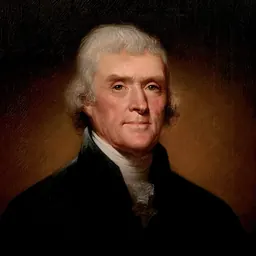
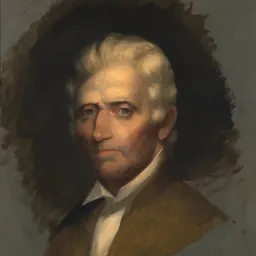
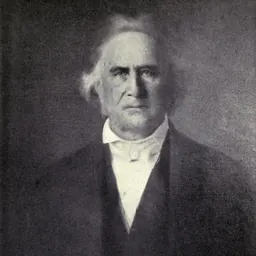

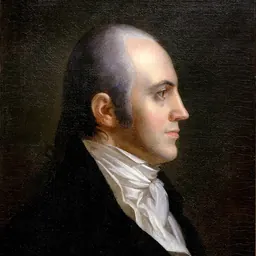


Related people
Same field, nearest in time
Contemporaries
People whose lives overlapped John Coburn's




Frequently asked questions
Who was John Coburn?
Kentucky pioneer and judge (1762-1823)
When was John Coburn born?
John Coburn was born in 1762.
When did John Coburn die?
John Coburn died in 1823.
What was John Coburn's occupation?
John Coburn was a judge.
Sources & further reading
· DBpedia: John Coburn (Kentucky judge)
Cite this page
APA: Biography.guide. (2026). John Coburn. https://biography.guide/john-coburn-judge/
MLA: "John Coburn." Biography.guide, https://biography.guide/john-coburn-judge/.
Chicago: "John Coburn." Biography.guide. https://biography.guide/john-coburn-judge/.
Data last updated: 2026-09-20 · Spot an error? Report a correction.
Page generated 2026-09-27 05:33 UTC