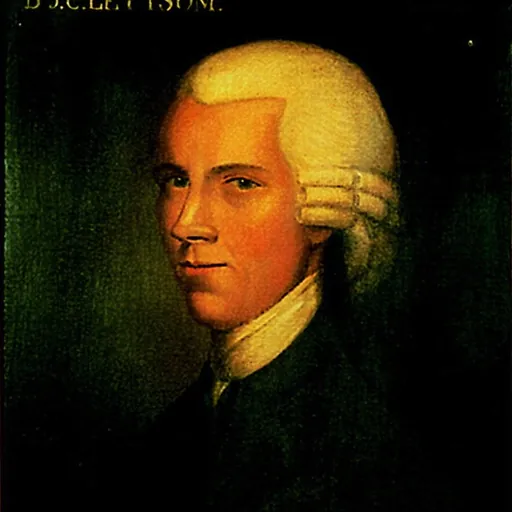
John Coakley Lettsom
British Virgin Islands born English physician and scientist
About John Coakley Lettsom
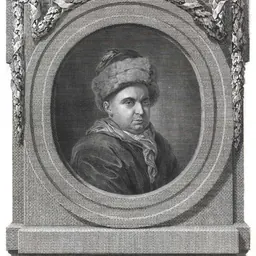
Lived 1744 – 1815 (aged 70–71). John Coakley Lettsom was a British physician, entomologist, plantation owner and botanist.
John Coakley Lettsom FRS (1744 – 1 November 1815) was a British physician and philanthropist born on Little Jost Van Dyke in the British Virgin Islands in a Quaker settlement. The son of a West Indian planter and an Irish mother, he grew up to be an abolitionist. He founded the Medical Society of London in 1773, convinced that a combined membership of physicians, surgeons and apothecaries would prove productive. As the oldest such in the United Kingdom, it is housed in London's medical community at Lettsome House, Chandos Street, near Cavendish Square. Lettsom was its mainstay, as founder, president (1775–1776, 1784–1785, 1808–1811 and 1813–1815) and benefactor.
Life John Coakley Lettsom (1744-1 Nov 1815), physician, with his family in his garden at Grove Hill, Camberwell, Surrey. Oil painting by unknown English artist, Wellcome Library
John Coakley Lettsom was born into the Quaker community on the island of Little Jost Van Dyke in the British Virgin Islands, in 1744. John and his brother were the sole survivors of seven sets of male twins, sons of Edward and Mary Lettsom. John alone was sent to England at the age of six to be educated.
At school in Lancashire the antics of the young Lettsom attracted the attention of the Quaker preacher Samuel Fothergill, who introduced his protégé to his brother, the London physician, Dr John Fothergill. Having completed an apprenticeship to a Yorkshire apothecary, Lettsom came to London in 1766 and through the influence of Dr Fothergill commenced his medical training at St Thomas' Hospital. His studies were interrupted by the death of his father, prompting his return to Tortola in the British Virgin Islands, where he freed the slaves he had inherited and provided medical care for the local population. As the only doctor in the islands at that time, he was able to earn a considerable sum, his diligence and industry enabling him to resume his studies in Europe. John Coakley Lettsom matriculated at the Leyden University in the Netherlands on 8 June 1769, and received his Medical Doctor degree there on 20 June 1769. His thesis concerns the natural history of the tea-tree.
Lettsom became a close friend of Benjamin Franklin and William Thornton. A fellow founder of the Medical Society of London was Joseph Hooper, who largely forgotten today, was also a founder of the Society for Effecting the Abolition of the Slave Trade. It was Joseph Hooper who brought Lettsom's children into the world.
In 1779 he bought land in Camberwell and had a villa at Grove Hill, away from the pollution of London. The villa was demolished when the estate was broken up in the early 1800s, but one of its cottages, 'The Hermitage' (number 220 Camberwell Grove) survives, at the junction with Grove Hill Road. A side-street, Lettsom Street,; Lettsom Gardens, a community garden; and a nearby housing estate are named in his honour. The cottage is Grade II listed.
Career Lettsom's career accelerated with membership of Royal College of Physicians in London and marriage to Ann (Nancy) Miers (1748-1830), daughter of John Miers. She was born in Crooked Lane, London in about 1760: "A plain stumpy little woman whose only attraction was the large fortune she was known to possess!", but actually a singularly sweet person.
By the age of 30 Lettsom's reputation as a physician, author and Fellow of the Royal Society was established. Furthermore, he had founded the General Dispensary in Aldersgate Street and the Medical Society of London. He was a founder member of the Royal Humane Society in 1774, initiated the Sea-bathing Infirmary at Margate (1791), became a pillar of the Royal Jennerian Society (for vaccination), and gave his support to the Society for the Relief of Widows and Orphans of Medical Men, the Society for the Relief of Debtors, and the Philanthropic Society for homeless children. Numerous other clubs, societies, hospitals, dispensaries, and charitable institutions in the United Kingdom and North America benefited from Lettsom's patronage, while from his pen there flowed a stream of "Hints", pamphlets, diatribes, and letters promoting Sunday schools, female industry, provision for the blind, a bee society, soup kitchens and the mangel-wurzel, while condemning quackery, card parties, and intemperance. In the diversity of his interests, as physician, philanthropist, botanist, mineralogist and collector, Lettsom was in the mould of that giant of the previous generation of London physicians, Sir Hans Sloane. He financed botanical expeditions and cultivated American plants in his garden at Camberwell.
Lettsom was elected to the American Philosophical Society in 1787. He was elected a Foreign Honorary Member of the American Academy of Arts and Sciences in 1788.
For at least some of his years working in London, he lived in Newington Green, a village full of English Dissenters clustered round a green and its Unitarian church. There he met the young Mary Wollstonecraft and others intent on social reform.
Humour
Lettsom is reported to have written the following about himself:
Richard Woodman attributes similar words to the fictional naval surgeon Mr Lettsom in The Bomb Vessel:
Abolitionism Lettsom was also a noted abolitionist. In 1767 he had returned to the British Virgin Islands after the death of his father, and found himself the owner of a share of his father's slaves, whom he promptly manumitted. He then set up a medical practice on Tortola, and as the only physician on the island amassed a small fortune of £2,000, half of which he gave to his mother (who had remarried) and returned to London to continue his medical studies.
When his good friend, William Thornton, sought his advice about setting up a colony for freed slaves on the west coast of Africa, Lettsom counselled against it and suggested spending the money acquiring and manumitting the slaves in North America instead.
At the end of his life, Lettsom's son, Pickering Lettsom, returned to Tortola to practice law and there he married a wealthy widow, Ruth Georges née Hodge, who had inherited some 1,000 slaves from her grandfather, Benzaliel Hodge. Pickering Lettsom died about a month after the marriage, and his new wife (some 16 years his senior) died a few months later on 21 January 1809, leaving all her property to her father-in-law, John Lettsom. By a twist of fate, shortly before his own death, Lettsom, who had freed all the slaves he had ever owned, found himself the owner of another 500 slaves.
Entomology
Lettsom was an entomologist. He wrote The naturalist's and traveller's companion, containing instructions for collecting and preserving objects of natural history and for promoting inquiries after human knowledge in general. London: E. and C. Dilly (1774).
Family
On 31 July 1770 he married Anne Miers and they had several children; his extended family included William Garrow Lettsom, Sir Henry Miers Elliot, John Elliot and William Garrow.
Don’t just read it —
keep it.
Full-length biographies made to live with: read them, listen on the way to work, watch them tonight.
- E-book
- Audio
- Video
Instant download · yours to keep · every purchase keeps this site free
Important facts
People in John Coakley Lettsom's life
Named in this biography and alive at the same time

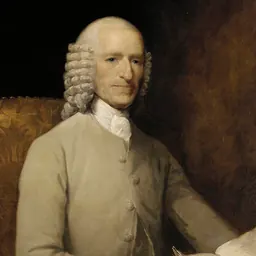

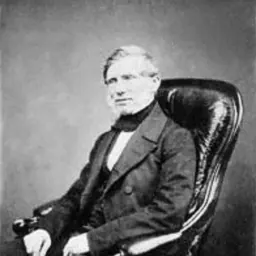

Related people
Same field, nearest in time

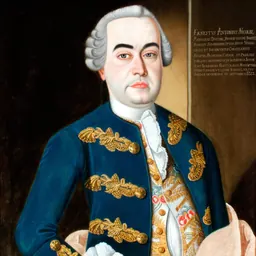

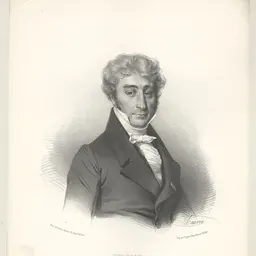
Contemporaries
People whose lives overlapped John Coakley Lettsom's




Frequently asked questions
Who was John Coakley Lettsom?
British Virgin Islands born English physician and scientist (1744–1815)
When was John Coakley Lettsom born?
John Coakley Lettsom was born in 1744 in British Virgin Islands.
When did John Coakley Lettsom die?
John Coakley Lettsom died in 1815 in London.
What was John Coakley Lettsom's occupation?
John Coakley Lettsom was a physician, entomologist, plantation owner and botanist.
What nationality was John Coakley Lettsom?
John Coakley Lettsom was British.
Sources & further reading
· Wikipedia: John Coakley Lettsom
· DBpedia: John Coakley Lettsom
Cite this page
APA: Biography.guide. (2026). John Coakley Lettsom. https://biography.guide/john-coakley-lettsom/
MLA: "John Coakley Lettsom." Biography.guide, https://biography.guide/john-coakley-lettsom/.
Chicago: "John Coakley Lettsom." Biography.guide. https://biography.guide/john-coakley-lettsom/.
Data last updated: 2026-09-23 · Spot an error? Report a correction.
Portrait: Wikimedia Commons · author & licence
Page generated 2026-09-27 05:06 UTC