
About John Ciardi
Lived 1916 – 1986 (aged 69). John Ciardi was an American linguist, poet, translator, writer, university teacher and science fiction writer.
Literary career After the war, Mr. Ciardi returned briefly to Kansas State, before being named instructor [in 1946], and later assistant professor, in the Briggs Copeland chair at Harvard University, where he stayed until 1953. ... While at Harvard, Mr. Ciardi began his long association with the Bread Loaf Writers Conference at Middlebury College in Vermont, where he lectured on poetry for almost 30 years, half that time as director of the program. The translation "is widely used at universities." He wrote the 1959 poetry textbook How Does a Poem Mean?
For the last decade of his life, he reported on word histories on National Public Radio's Morning Edition, as an outgrowth of his series of books of etymologies, A Browser's Dictionary (1980), A Second Browser's Dictionary (1983) and Good Words to You (posthumously published in 1987). The weekly three-minute spot on etymology was called Word In Your Ear.
Among 20th-century American men of letters, he maintained a notably high profile and level of popularity with the general public, as well as a reputation for considerable craftsmanship in his output. Burton Raffel summed up Ciardi's career: "Blessed with a fine voice, a ready wit, and a relentless honesty, Ciardi became in many ways an archetype of the existentially successful twentieth-century American poet, peripatetic, able to fit into and exploit chinks in the great American scheme of things, while never fitting in as either a recognized peg or hole."
Legacy Critic and poet Kenneth Rexroth described Ciardi as "... singularly unlike most American poets with their narrow lives and feuds. He is more like a very literate, gently appetitive, Italo-American airplane pilot, fond of deep simple things like his wife and kids, his friends and students, Dante's verse and good food and wine." May Sarton, for example, accused Ciardi of "hat[ing her] guts and [of doing] everything he could to destroy [her]" in describing the difficulties faced by women poets.
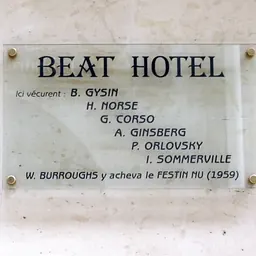
Working for the Saturday Review while overseas, Ciardi sent Harold Norse's poem, "Victor Emmanuel Monument (Rome)", back to the U.S. to be published in the April 13, 1957 issue. The poem described Italian soldiers as flamboyant prostitutes. He published harsh criticisms of the Beat poets but championed William Burroughs's Naked Lunch . He had been a fresh, sometimes brash, voice for modern poetry, but as he approached his fiftieth birthday in 1966, he had become entrenched and his voice became bitter, sometimes bumptious. He urged his only remaining students, those at Bread Loaf for two weeks each August, to learn how to write within the tradition before abandoning it in favor of undisciplined, improvisational free verse. Ciardi was unceremoniously fired from Bread Loaf in 1972, after serving seventeen years as director, and not having missed a single year on the poetry staff since 1947.
John Ciardi has come to be regarded as a mid-level, mid-20th century formalist, one who was replaced in literary history by the more daring and colorful Beat, Confessional, and Black Mountain poets. However, with revisionism chipping away at the reputations of the latter groups, and the brief emergence of a renewed interest in formalism in the late 20th century, Ciardi's type of mostly understated verse enjoyed a small resurgence in popularity, one that has passed as the interest in formalism proved shallow and short lived.
In recognition of Ciardi's work, a John Ciardi Lifetime Achievement Award for Poetry is given annually to an Italian American poet for lifetime achievement in poetry.
National Public Radio (NPR) continues to make Ciardi's commentaries available. Etymologies and commentary on words such as daisy, demijohn, jimmies, gerrymander, glitch, snafu, cretin, and baseball, among others, are available from the archives of their website. NPR also began making his commentaries available as podcasts, starting in November 2005.
Awards "In 1956, Ciardi received the Prix de Rome from the American Academy of Arts and Letters. In 1982, the National Council of Teachers of English awarded him its award for excellence in children's poetry."
Don’t just read it —
keep it.
Full-length biographies made to live with: read them, listen on the way to work, watch them tonight.
- E-book
- Audio
- Video
Instant download · yours to keep · every purchase keeps this site free
Important facts
People in John Ciardi's life
Named in this biography and alive at the same time





Related people
Same field, nearest in time



Contemporaries
People whose lives overlapped John Ciardi's



Frequently asked questions
Who was John Ciardi?
American poet, professor, translator (1916–1986)
When was John Ciardi born?
John Ciardi was born on 24 June 1916 in Boston.
When did John Ciardi die?
John Ciardi died on 30 March 1986 in Edison.
What was John Ciardi's occupation?
John Ciardi was a linguist, poet, translator, writer, university teacher and science fiction writer.
What nationality was John Ciardi?
John Ciardi was American.
Sources & further reading
Cite this page
APA: Biography.guide. (2026). John Ciardi. https://biography.guide/john-ciardi/
MLA: "John Ciardi." Biography.guide, https://biography.guide/john-ciardi/.
Chicago: "John Ciardi." Biography.guide. https://biography.guide/john-ciardi/.
Data last updated: 2026-09-20 · Spot an error? Report a correction.
Page generated 2026-09-27 05:20 UTC