
About May Sarton
Lived 1912 – 1995 (aged 83). May Sarton was a Belgian and American writer, poet, diarist, novelist and screenwriter.
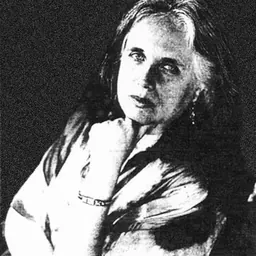
Eleanore Marie Sarton (May 3, 1912 – July 16, 1995), known by the pen name May Sarton, was a Belgian and American novelist, poet, and memoirist. Notably, Sarton came out as a lesbian in her writing in 1965, a time when it was highly unusual to do so.
Biography Eleanore Marie Sarton was born in Wondelgem, Belgium (today a part of the city of Ghent), the only child of historian of science George Sarton and his wife, English artist Mabel Eleanor Elwes. When Germany invaded Belgium during World War I, her family fled to Ipswich, England, where Sarton's maternal grandmother lived.
One year later, they moved to Boston, where her father started working at Harvard University. Sarton started theatre lessons in her late teens but continued writing poetry throughout her adolescence. She went to school in Cambridge, Massachusetts, graduating from Cambridge Latin High School in 1929.
Sarton won a scholarship to Vassar College but felt drawn to the theater after seeing Eva Le Gallienne perform in The Cradle Song. She joined Le Gallienne's Civic Repertory Theatre in New York City and spent a year working as an apprentice. However, Sarton continued to write poetry. When she was seventeen, she published a series of sonnets in December 1930, some of which were featured in her first published volume, Encounter in April (1937).
When she was 19, Sarton traveled to Europe, living in Paris for a year. In this time, she met such literary and cultural figures as Virginia Woolf, Elizabeth Bowen, Julian Huxley and Juliette Huxley, Lugné-Poe, Basil de Sélincourt, and S. S. Koteliansky. Sarton had affairs with both of the Huxleys. (September 9, 1898 – December 22, 1982), who became her partner for the next thirteen years. They separated in 1956, when Sarton's father died and Sarton moved to Nelson, New Hampshire. Honey in the Hive (1988) is about their relationship. In her memoir At Seventy, Sarton reflected on Judy's importance in her life and her (Sarton's) Unitarian Universalist upbringing. She was elected a fellow of the American Academy of Arts and Sciences in 1958.
Sarton later moved to York, Maine. In 1990, she was temporarily debilitated by a stroke. Since writing was difficult, she used a tape recorder to record and transcribe her journal Endgame: A Journal of the Seventy-Ninth Year (1992). Despite her physical difficulties, she maintained her sense of independence. Endgame was followed by the journal Encore: A Journal of the Eightieth Year (1993), a celebration of Sarton's life. She won the Levinson Prize for Poetry in 1993. Her final book, Coming Into Eighty (1995), published after her death, covers the year from July 1993 to August 1994, describing her attitude of gratitude for life as she wrestled with the experience of aging.
She died of breast cancer on July 16, 1995, and is buried in Nelson Cemetery, Nelson, New Hampshire.
Works and themes May Sarton wrote 53 books, including 19 novels, 17 books of poetry, 15 nonfiction works, 2 children's books, a play, and additional screenplays. According to The Poetry Foundation, Sarton's style as defined by critics is "calm, cultured, and urbane." Rather she wanted to touch on what is universally human about love in all its manifestations.
When publishing her novel Mrs. Stevens Hears the Mermaids Singing in 1965, Sarton feared that writing openly about lesbianism would lead to a diminution of the previously established value of her work. "The fear of homosexuality is so great that it took courage to write Mrs. Stevens Hears the Mermaids Singing," she wrote in Journal of a Solitude, "to write a novel about a woman homosexual who is not a sex maniac, a drunkard, a drug-taker, or in any way repulsive, to portray a homosexual who is neither pitiable nor disgusting, without sentimentality ..." After the book's release, many of Sarton's works began to be studied in university level women's studies classes, being embraced by feminists and lesbians alike. However, some scholars argue that while Sarton paints a "sympathetic" view of aging in her writing, she felt conflicted about her own aging process because of the effects of several illnesses, which is reflected in her journals. Due to her interest in aging, Sarton's writing has directly impacted the development of literary age studies. Her novel As We Are Now served as inspiration for Barbara Frey Waxman's coining of the literary genre "Reifungsroman" that focuses on "ripening toward death"; this serves as a spin-off of the typical Bildungsroman to focus on the development of older protagonists rather than younger protagonists.
Margot Peters' authorized biography (1998) revealed May Sarton as a complex individual who often struggled in her relationships. Peters' book was often scathing ("People who had the misfortune to become her intimates almost universally came to regret it. On the slightest of pretexts, Ms. Peters has it, Sarton subjected them to 'terrible scenes, nights of weeping, rages, blowups.' She was expert at emotional blackmail, and behaved badly in restaurants. Self-absorbed and insensitive, May Sarton wooed others with extravagant attentions, only to betray and humiliate them later -- 'with scant regard,' Ms. Peters observes, 'for the chaos left in her wake.'" ), but the biography was considered "thoughtful, even-handed, [and] well-written."
A selected edition of Sarton's letters was edited by Susan Sherman in 1997 and many of Sarton's papers are held in the New York Public Library.
Don’t just read it —
keep it.
Full-length biographies made to live with: read them, listen on the way to work, watch them tonight.
- E-book
- Audio
- Video
Instant download · yours to keep · every purchase keeps this site free
Important facts
People in May Sarton's life
Named in this biography and alive at the same time


Related people
Same field, nearest in time




Contemporaries
People whose lives overlapped May Sarton's






Frequently asked questions
Who was May Sarton?
American poet, novelist, and memoirist (1912-1995)
When was May Sarton born?
May Sarton was born on 3 May 1912 in Wondelgem, United States.
When did May Sarton die?
May Sarton died on 16 July 1995 in York.
What was May Sarton's occupation?
May Sarton was a writer, poet, diarist, novelist and screenwriter.
What nationality was May Sarton?
May Sarton was Belgian and American.
Sources & further reading
Cite this page
APA: Biography.guide. (2026). May Sarton. https://biography.guide/may-sarton/
MLA: "May Sarton." Biography.guide, https://biography.guide/may-sarton/.
Chicago: "May Sarton." Biography.guide. https://biography.guide/may-sarton/.
Data last updated: 2026-09-20 · Spot an error? Report a correction.
Page generated 2026-09-27 05:32 UTC