
About John Canton
Lived 1718 – 1772 (aged 53). John Canton was a British physicist, known for Electroscope, Electrostatic induction and Magnet.
John Canton (31 July 1718 – 22 March 1772) was a British physicist. He was born in Middle Street Stroud, Gloucestershire, to a weaver, John Canton (b. 1687) and Esther (née Davis). As a schoolboy, he became the first person to determine the latitude of Stroud, while making a sundial. The sundial caught the attention of many, including Dr Henry Miles, a Stroud-born Fellow of the Royal Society. Miles encouraged Canton to leave Gloucestershire to become a trainee teacher for Samuel Watkins, the headmaster of a Nonconformist school in Spital Square, London, with whom he ultimately entered into partnership.
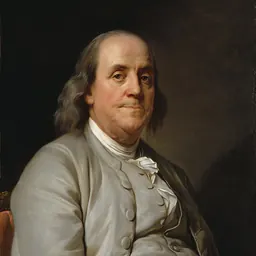
In 1750 he read a paper before the Royal Society on a method of making artificial magnets, and was subsequently elected a Fellow of the society (FRS). In 1751 he was a recipient of the Copley Medal "On account of his communicating to the Society, and exhibiting before them, his curious method of making Artificial Magnets without the use of Natural ones." He was the first in England to verify Benjamin Franklin's hypothesis of the identity of lightning and electricity, and he made several important electrical discoveries.
In 1762 and 1764 he published experiments in refutation of the decision of the Florentine Academy, at that time generally accepted, that water is incompressible. He put a hollow glass sphere with a thin capillary tube on it, and filled the sphere with water. He put the entire thing under an air pump, and changed the pressure between 2 atm and a near vacuum. He observed that the water rose up the capillary when in a near vacuum, and vice versa. He thus concluded that an increase of 1 atm would compress water by 1/10870 in volume. This agrees with modern value for the bulk modulus of water to within 3%. He also studied the compressibility of spirit of wine, olive oil, mercury and seawater, etc., and found that the compressibility increased with a decrease in density.
In 1768 he described the preparation, by calcining oyster-shell with sulphur, of the phosphorescent material known as Canton's phosphorus. His investigations were carried on while he worked as a school teacher. He died in London aged 53 of dropsy.
Canton is now mainly remembered for his work in electrostatics, He is honoured with a blue plaque at the site of his old school in his hometown of Stroud.
Don’t just read it —
keep it.
Full-length biographies made to live with: read them, listen on the way to work, watch them tonight.
- E-book
- Audio
- Video
Instant download · yours to keep · every purchase keeps this site free
Important facts
People in John Canton's life
Named in this biography and alive at the same time

Related people
Same field, nearest in time




Contemporaries
People whose lives overlapped John Canton's





Frequently asked questions
Who was John Canton?
British physicist
When was John Canton born?
John Canton was born on 31 July 1718 in Stroud.
When did John Canton die?
John Canton died on 22 March 1772 in London.
What was John Canton's occupation?
John Canton was a physicist.
What was John Canton known for?
John Canton was known for Electroscope, Electrostatic induction and Magnet.
What nationality was John Canton?
John Canton was British.
Sources & further reading
Cite this page
APA: Biography.guide. (2026). John Canton. https://biography.guide/john-canton/
MLA: "John Canton." Biography.guide, https://biography.guide/john-canton/.
Chicago: "John Canton." Biography.guide. https://biography.guide/john-canton/.
Data last updated: 2026-09-26 · Spot an error? Report a correction.
Page generated 2026-09-27 05:14 UTC