
About John Burton Cleland
Lived 1878 – 1971 (aged 93). John Burton Cleland was an Australian botanist, ornithologist, mycologist, anthropologist, physician and microbiologist, known for Dengue.
Sir John Burton Cleland CBE (22 June 1878 – 11 August 1971) was a renowned Australian naturalist, microbiologist, mycologist and ornithologist. He was Professor of Pathology at the University of Adelaide and was consulted on high-level police inquiries, such as the famous Taman Shud Case in 1948 and later. He also studied the transmission of dengue virus by the mosquito Stegomyia fasciata (Aedes aegypti).
Early life and education John Burton Cleland was born in Norwood, South Australia a grandson of John Fullerton Cleland and son of Dr William Lennox Cleland (1847–1918) and Matilda Lauder Cleland née Burton (1848–1928) a daughter of John Hill Burton FRSE. He attended Prince Alfred College and the universities of Adelaide and Sydney, graduating in medicine in 1900.
Marriage and family Cleland married Dora Isabel Paton (1880–1955) a daughter of Rev David Paton DD (1841–1907), minister of Chalmers Presbyterian Church, North Terrace, Adelaide, and Isabella Ann McGhie née Robson (1847–1933) and they had four daughters and a son. He encouraged them in the sciences: Dr Margaret Burton Cleland MRCS FRACP (1909–2004) who married Dr John Patrick Horan (1907–1993) MD FRCP FRACP; Dr William Paton 'Bill' Cleland MB FRCP FRCS (1912–2005), who married Norah Goodhart (1914–1994), became a cardio-thoracic surgeon; Joan Burton Cleland (c. 1915–2000) who married Erskine Norman Paton (1922–1985) became an ornithologist; Elizabeth Robson Cleland (16 October 1910 – 31 January 2005) married (Alfred) Moxon Simpson (1910–2001) on 3 August 1938. Moxon was a son of Alfred Allen Simpson. Elizabeth Simpson was author of The Hahndorf Walkers and The Clelands of Beaumont Barbara Burton Cleland (1913–?), a mathematics graduate who married Prof Andrew John La Nauze (1911–1990) Sir Donald MacKinnon Cleland CBE (1901–1975), administrator of Papua New Guinea, was his cousin, the son of Elphinstone Davenport Cleveland (1843–1928) and his second wife Anne Emily MacKinnon (1870–1944).
Career He worked as a microbiologist in Western Australia and New South Wales for several years. He was appointed as a full Professor of Pathology at the University of Adelaide, and taught generations of students.
Cleland was elected President of the Royal Society of South Australia 1927–1928, and again in 1941. He became a member of the Royal Australasian Ornithologists Union (RAOU) in 1902, and served as its President 1935–1936.
In 1934–35, he published a two-volume monograph on the fungi of South Australia, one of the most comprehensive reviews of Australian fungi to date.
Along with Charles Duguid and Constance Cooke, he was a board member of South Australia's Aborigines Protection Board after its creation in 1940, established by the Aborigines Act Amendment Act (1939) and "charged with the duty of controlling and promoting the welfare" of Aboriginal people.
Cleland led a University of Adelaide anthropological expedition to Nepabunna Mission in the northern Flinders Ranges in May 1937, whose members included Charles P. Mountford as ethnologist and photographer, botanist Thomas Harvey Johnston, virologist Frank Fenner, and others.
Cleland was the pathologist on the infamous Taman Shud Case, in which an unidentified man was discovered dead on a beach 1 December 1948. While Cleland theorised that the man had been poisoned, he found no trace of it. The man was never identified.
Cleland became increasingly interested in wildlife conservation and served as commissioner of the Belair National Park in 1928 and as chairman in 1936–65. He chaired the Flora and Fauna Handbooks Committee of South Australia, and with them oversaw the production of a series of descriptive biological manuals, and other books related to flora, fauna and geology.
Legacy and honours 1949, he was elected an Honorary Life Member of the RAOU. 1952, he was awarded the Australian Natural History Medallion. 1963, he is commemorated by the Cleland Wildlife Park (now within Cleland National Park). The J.B. Cleland Kindergarten in St Georges, South Australia is also named after him.
Don’t just read it —
keep it.
Full-length biographies made to live with: read them, listen on the way to work, watch them tonight.
- E-book
- Audio
- Video
Instant download · yours to keep · every purchase keeps this site free
Important facts
People in John Burton Cleland's life
Named in this biography and alive at the same time


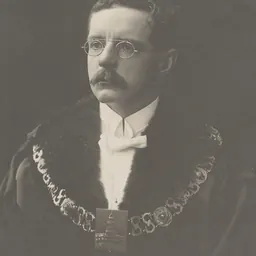


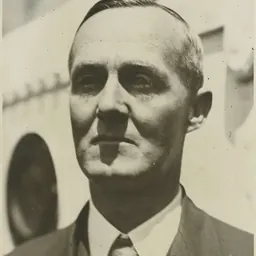
Related people
Same field, nearest in time
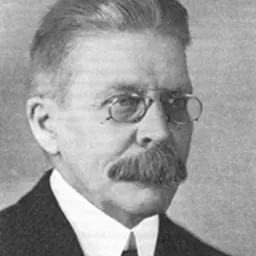

Contemporaries
People whose lives overlapped John Burton Cleland's



Frequently asked questions
Who was John Burton Cleland?
Australian biologist (1878-1971)
When was John Burton Cleland born?
John Burton Cleland was born on 22 June 1878 in Norwood.
When did John Burton Cleland die?
John Burton Cleland died on 11 August 1971 in Adelaide.
What was John Burton Cleland's occupation?
John Burton Cleland was a botanist, ornithologist, mycologist, anthropologist, physician and microbiologist.
What was John Burton Cleland known for?
John Burton Cleland was known for Dengue.
What nationality was John Burton Cleland?
John Burton Cleland was Australian.
Sources & further reading
· Wikipedia: John Burton Cleland
· DBpedia: John Burton Cleland
Cite this page
APA: Biography.guide. (2026). John Burton Cleland. https://biography.guide/john-burton-cleland/
MLA: "John Burton Cleland." Biography.guide, https://biography.guide/john-burton-cleland/.
Chicago: "John Burton Cleland." Biography.guide. https://biography.guide/john-burton-cleland/.
Data last updated: 2026-09-20 · Spot an error? Report a correction.
Page generated 2026-09-27 05:32 UTC