
About John Berryman
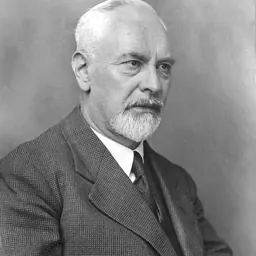
Lived 1914 – 1972 (aged 57). John Berryman was an American poet, writer and university teacher.
John Allyn McAlpin Berryman (born John Allyn Smith, Jr.; October 25, 1914 – January 7, 1972) was an American poet and scholar. He was a major figure in American poetry in the second half of the 20th century and is considered a key figure in the "confessional" school of poetry. His 77 Dream Songs won the 1965 Pulitzer Prize for Poetry.
Life and career John Berryman was born on October 25, 1914, in McAlester, Oklahoma. His great-grandfather was Confederate officer Robert G. Shaver. He lived in Oklahoma until he was 10 years old, when his father, John Smith, a banker, and his mother, Martha (also known as Peggy), a schoolteacher, moved to Florida. In 1926, in Clearwater, Florida, when Berryman was 11, his father shot and killed himself. Smith was jobless at the time, and he and Martha were filing for divorce. Berryman was haunted by his father's death for the rest of his life and wrote about his struggle to come to terms with it in his poetry.
alt=After his father's death at the rear entrance to Kipling Arms, where the Smiths rented an apartment, the poet's mother, within months, married John Angus McAlpin Berryman in New York City. The poet was renamed John Allyn McAlpin Berryman. Berryman's mother also changed her first name from Peggy to Jill. His stepfather later divorced his mother, but he and Berryman stayed on good terms. With both his mother and stepfather working, his mother decided to send him to the South Kent School, a private boarding school in Connecticut. He left at age 17 to attend Columbia College, where he was president of the Philolexian Society, joined the Boar's Head Society, edited The Columbia Review, and studied under the literary scholar and poet Mark Van Doren. At Cambridge, he attended lectures by poets T. S. Eliot and W. H. Auden, and also met W. B. Yeats and Dylan Thomas.
In October 1942, Berryman married Eileen Mulligan (later Simpson) in a ceremony at St. Patrick's Cathedral, with Van Doren as his best man. The couple moved to Beacon Hill, and Berryman lectured at Harvard. The marriage ended in 1953 (the divorce was formalized in 1956), when Simpson finally grew weary of Berryman's affairs and acting as "net-holder" during his self-destructive personal crises. Simpson memorialized her time with Berryman and his circle in her 1982 book Poets in Their Youth.
In 1947, Berryman started an affair with a married woman named Chris Haynes, documented in a long sonnet sequence that he refrained from publishing in part because that would have revealed the affair to his wife. He eventually published the work, Berryman's Sonnets, in 1967. It includes more than one hundred sonnets. The book was followed by his next significant poem, Homage to Mistress Bradstreet (1956), a conversation with the 17th-century poet Anne Bradstreet which featured illustrations by the artist Ben Shahn and was Berryman's first poem to receive "national attention" and a positive response from critics.
Despite his third book of verse's relative success, Berryman's great poetic breakthrough was 77 Dream Songs (1964). It won the 1965 Pulitzer Prize for poetry and solidified Berryman's standing as one of the most important poets of the post-World War II generation that included Robert Lowell, Elizabeth Bishop, and Delmore Schwartz. Soon thereafter, the press began to give Berryman a great deal of attention, as did arts organizations and even the White House, which sent him an invitation to dine with President Lyndon B. Johnson (Berryman declined because he was in Ireland at the time). and that same year Life magazine ran a feature story on him. Also that year the newly created National Endowment for the Arts awarded him a $10,000 grant (when a Minneapolis reporter asked him about the award, he said he had never heard of the NEA before receiving it). The next year Berryman republished 77 Dreams Songs and His Toy, His Dream, His Rest as one book, The Dream Songs, in which the character Henry serves as Berryman's alter ego. In Love & Fame (1970), he dropped the mask of Henry to write more plainly about his life. Responses to the poems from critics and most of Berryman's peers ranged from tepid to hostile; the collection is now generally "considered a minor work". Henry reappeared in a couple of poems published in Delusions Etc. (1972), Berryman's last collection, which focused on his religious concerns and spiritual rebirth. The book was published posthumously and, like Love & Fame, is considered a minor work. Berryman was fired from the University of Iowa after a fight with his landlord led to his being arrested, jailed overnight, and fined for disorderly conduct and public intoxication.
In 1962, Berryman worked on Dream Songs over a summer at the Bread Loaf Writers' Conference in Vermont, and in 1965 he received a Guggenheim Fellowship, the money from which he used to take his family to live in Ireland for a year.
During his first marriage to Eileen Mulligan, the 1947 affair Berryman initiated with a colleague's wife was a galvanizing event in what became a lifelong struggle with alcoholism. When Thomas died a few days later at St. Vincent's Hotel, Berryman was the one to discover his body. Edward Hirsch observed that "the 57 stanzas of Homage to Mistress Bradstreet combine the concentration of an extended lyric with the erudition and amplitude of a historical novel".
Berryman's major poetic breakthrough came after the first volume of The Dream Songs, 77 Dream Songs, in 1964. The dream song form consists of short, 18-line lyric poems in three stanzas. They are in free verse, with some stanzas containing irregular rhyme. 77 Dream Songs (and its sequel His Toy, His Dream, His Rest) centers on a character named Henry who bears a striking resemblance to Berryman, but Berryman was careful to make sure his readers realized that Henry was a fictional version of himself (or a literary alter ego). In an interview, Berryman said, "Henry does resemble me, and I resemble Henry; but on the other hand I am not Henry. You know, I pay income tax; Henry pays no income tax. And bats come over and they stall in my hairand fuck them, I'm not Henry; Henry doesn't have any bats."
John Malcolm Brinnin, reviewing 77 Dream Songs in The New York Times, wrote that its "excellence calls for celebration". Robert Lowell wrote in The New York Review of Books, "At first the brain aches and freezes at so much darkness, disorder and oddness. After a while, the repeated situations and their racy jabber become more and more enjoyable, although even now I wouldn't trust myself to paraphrase accurately at least half the sections." In response to the perceived difficulty of the dream songs, in his 366th "Dream Song", Berryman facetiously wrote, "These Songs are not meant to be understood, you understand. / They are only meant to terrify & comfort".
In His Toy, His Dream, His Rest, many of the dream songs are elegies for Berryman's recently deceased poet friends, including Delmore Schwartz, Randall Jarrell, and Theodore Roethke. The volume contains four times as many poems as the previous one, and covers more subject matter. For instance, in addition to the elegies, Berryman writes about his trip to Ireland, as well as his own burgeoning literary fame.
Berryman's last two volumes of poetry, Love & Fame and Delusions, Etc., featured free-verse poems that were much more straightforward and less idiosyncratic than The Dream Songs. Before Love & Fame 's publication, Berryman sent his manuscript to several peers for feedback, including the poets Adrienne Rich and Richard Wilbur, both of whom were disappointed with the poems, which they considered inferior to those of The Dream Songs.
Berryman's Collected Poems – 1937–1971, edited and introduced by Charles Thornbury, was published in 1989. Robert Giroux decided to omit The Dream Songs from the collection. In his review of the Collected Poems, Edward Hirsch said of this decision, "It is obviously practical to continue to publish the 385 dream songs separately, but reading the Collected Poems without them is a little like eating a seven-course meal without a main course."
After surveying Berryman's career and accomplishments, the editors of The Norton Anthology of Modern Poetry wrote, "What seems likely to survive of his poetry is its pungent and many-leveled portrait of a complex personality which, for all its eccentricity, stayed close to the center of the intellectual and emotional life of the mid-century and after." Australian singer/songwriter Nick Cave has cited Berryman's influence on the composition of his 1992 album Henry's Dream, and also expressed his admiration overtly in the song "We Call Upon the Author" from the 2007 album Dig, Lazarus, Dig!!! Phish bassist Mike Gordon's side-project band has performed "Dream Song 22 – 'Of 1826'", releasing it on a live album, The Egg. Additionally, on March 30, 2014, their show featured a rendition of "The Poet's Final Instructions". On 14 January 1974 the Canadian Broadcasting Corporation aired The Hours of John Berryman, a 60-minute commentary on Berryman's "Opus Dei" (the 8-poem sequence that opens Delusions) by Canadian scholar and critic George Whalley. John Reeves produced the broadcast. The season finales of Successions four seasons are named after phrases from "Dream Song 29": "Nobody Is Ever Missing", "This Is Not for Tears", "All the Bells Say", and "With Open Eyes". The song "Stuck Between Stations" by American rock band The Hold Steady heavily references Berryman and the circumstances of his death. Berryman is one of the alcoholic writers whose lives and works are explored in British writer Olivia Laing's 2013 book The Trip to Echo Spring: On Writers and Drinking. His career and struggles are compared and contrasted with those of F. Scott Fitzgerald, Ernest Hemingway, Tennessee Williams, John Cheever, and Raymond Carver.
Don’t just read it —
keep it.
Full-length biographies made to live with: read them, listen on the way to work, watch them tonight.
- E-book
- Audio
- Video
Instant download · yours to keep · every purchase keeps this site free
Important facts
People in John Berryman's life
Named in this biography and alive at the same time




Related people
Same field, nearest in time


Contemporaries
People whose lives overlapped John Berryman's

Frequently asked questions
Who was John Berryman?
American poet and scholar (1914–1972)
When was John Berryman born?
John Berryman was born on 25 October 1914 in McAlester.
When did John Berryman die?
John Berryman died on 7 January 1972 in Minneapolis.
What was John Berryman's occupation?
John Berryman was a poet, writer and university teacher.
What nationality was John Berryman?
John Berryman was American.
Sources & further reading
Cite this page
APA: Biography.guide. (2026). John Berryman. https://biography.guide/john-berryman-poet/
MLA: "John Berryman." Biography.guide, https://biography.guide/john-berryman-poet/.
Chicago: "John Berryman." Biography.guide. https://biography.guide/john-berryman-poet/.
Data last updated: 2026-09-20 · Spot an error? Report a correction.
Page generated 2026-09-27 05:27 UTC