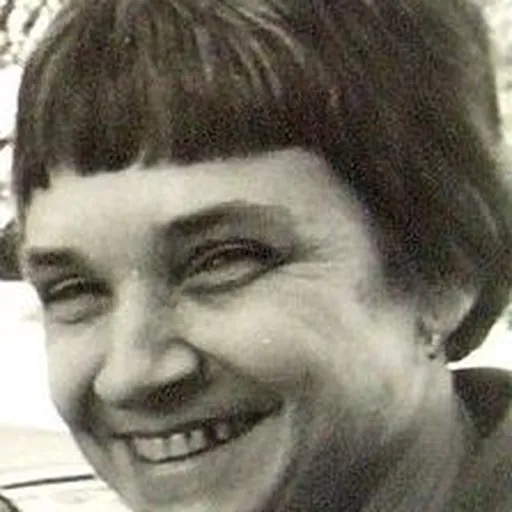
About Adrienne Rich
Lived 1929 – 2012 (aged 82). Adrienne Rich was an American poet, essayist, writer, women's rights activist, peace activist and feminist.
Adrienne Cecile Rich ( ; May 16, 1929 – March 27, 2012) was an American poet, essayist and feminist. She was called "one of the most widely read and influential poets of the second half of the 20th century", and was credited with bringing "the oppression of women and lesbians to the forefront of poetic discourse". Rich criticized the rigid identities that are sometimes created by feminism, called for feminism that is flexible and open to being transformed, and drew attention to the existing current of solidarity and creativity among women, which she named the "lesbian continuum."
Her first collection of poetry, A Change of World, was selected by W. H. Auden for the Yale Series of Younger Poets Award. Auden went on to write the introduction to the book. Rich famously declined the National Medal of Arts to protest House Speaker Newt Gingrich's vote to end funding for the National Endowment for the Arts.
Early life and education
Adrienne Cecile Rich was born in Baltimore, Maryland, on May 16, 1929, was a concert pianist and a composer. Her father was from a Jewish family, and her mother was a Southern Protestant; the girls were raised as Christians. Her paternal grandfather Samuel Rice was an Ashkenazi immigrant from Košice in the Austro-Hungarian Empire (present day Slovakia), while her paternal grandmother was a Sephardic Jew from Vicksburg, Mississippi. Samuel Rice owned a successful shoe store in Birmingham, Alabama.
Adrienne Rich's early poetic influence stemmed from her father, who encouraged her to read but also to write poetry. Her interest in literature was sparked within her father's library, where she read the work of writers such as Ibsen, Arnold, Blake, Keats, Dante Gabriel Rossetti, and Tennyson. Her father was ambitious for Adrienne and "planned to create a prodigy". Adrienne Rich and her younger sister were home schooled by their mother until Adrienne commenced public education in the fourth grade. The poems Sources and After Dark document her relationship with her father, describing how she worked hard to fulfill her parents' ambitions—moving into a world in which excellence was expected.
In later years, Rich went to Roland Park Country School, which she described as a "good old fashioned girls' school [that] gave us fine role models of single women who were intellectually impassioned." After graduating from high school, Rich earned her diploma at Radcliffe College of Harvard University, where she focused on poetry and learning the writing craft, encountering no women teachers at all.
The 1960s began a period of change in Rich's life: she received the National Institute of Arts and Letters award (1960), her second Guggenheim Fellowship to work at the Netherlands Economic Institute (1961), and the Bollingen Foundation grant for the translation of Dutch poetry (1962). Her collections from this period include Necessities of Life (1966), Leaflets (1969), and The Will to Change (1971), which reflect increasingly radical political content and interest in poetic form. Shortly afterward, in October, Conrad drove into the woods and shot himself, widowing Rich. Declining to accept it individually, Rich was joined by the two other feminist poets nominated, Alice Walker and Audre Lorde, to accept it on behalf of all women "whose voices have gone and still go unheard in a patriarchal world." The following year, Rich took up the position of the Lucy Martin Donnelly Fellow at Bryn Mawr College.
Later life: 1976–2012
In 1976, Rich began her same-sex partnership with Jamaican-born novelist and editor Michelle Cliff, which lasted until her death. In her controversial work Of Woman Born: Motherhood as Experience and Institution, published the same year, Rich acknowledged that, for her, lesbianism was a political as well as a personal issue, writing, "The suppressed lesbian I had been carrying in me since adolescence began to stretch her limbs." In her analytical work Adrienne Rich: the moment of change, Langdell suggests these works represent a central rite of passage for the poet, as she (Rich) crossed a threshold into a newly constellated life and a "new relationship with the universe". During this period, Rich also wrote a number of key socio-political essays, including "Compulsory Heterosexuality and Lesbian Existence," one of the first to address the theme of lesbian existence. In this essay, she asks "how and why women's choice of women as passionate comrades, life partners, co-workers, lovers, community, has been crushed, invalidated, forced into hiding." From 1981 to 1987, Rich served as an A.D. White Professor-At-Large for Cornell University. Rich published several volumes in the next few years: Your Native Land, Your Life (1986), Blood, Bread, and Poetry (1986), and Time's Power: Poems 1985–1988 (1989). She also was awarded the Ruth Paul Lilly Poetry Prize (1986), the Elmer Holmes Bobst Award in Arts and Letters from NYU, and the National Poetry Association Award for Distinguished Service to the Art of Poetry (1989). WIFP is an American nonprofit publishing organization. The organization works to increase communication between women and connect the public with forms of women-based media.
Janice Raymond, in the foreword of her 1979 book The Transsexual Empire, thanked Rich for "constant encouragement" and cited her in the book's chapter "Sappho by Surgery." The book has been criticized by a number of LGBT and feminist writers for its anti-trans stance, and many have criticized Rich for her involvement in and support of its production. While Rich never explicitly disavowed her support for Raymond's work, Leslie Feinberg cites Rich as having been supportive during Feinberg's writing of Transgender Warriors.
By the early 1980s, Rich was using canes and wheelchairs due to rheumatoid arthritis. Diagnosed with the condition at age 22, Rich kept her disability quiet for decades. The cold air in New England motivated Rich and Cliff to settle in California. A 1992 spinal operation required Rich to wear a metal halo screwed into her head.
In June 1984, Rich presented a speech at the International Conference of Women, Feminist Identity, and Society in Utrecht, Netherlands titled Notes Toward a Politics of Location. Her keynote speech is a major document on politics of location and the birth of the concept of female "locatedness." In discussing the locations from which women speak, Rich attempts to reconnect female thought and speech with the female body, with an intent to reclaim the body through verbalizing self-representation. Rich begins the speech by noting that while she speaks the words in Europe, she has searched for them in the United States. In her essay, Rich considers how one's background might influence their identity. She furthers this notion by noting her own exploration of the body, her body, as female, as white, as Jewish and as a body in a nation. Rich is careful to define the location in which her writing takes place. Throughout her essay, Rich refers back to the concept of location. She recounts her growth towards understanding how the women's movement grounded in Western culture and limited to the concerns of white women, then incorporated verbal and written expression of black United States citizens. Such professions have allowed her to experience the meaning of her whiteness as a point of location for which she needed to take responsibility. This work explored the relationship between private and public histories, especially in the case of Jewish women's rights. Her next published piece, An Atlas of the Difficult World (1991), won both the Los Angeles Times Book Award in Poetry and the Lenore Marshall/Nation Award as well as the Poet's Prize in 1993 and Commonwealth Award in Literature in 1991. In July 1994, Rich won the MacArthur Fellowship, the "Genius Grant" for her work as a poet and writer. Also in 1992, Rich became a grandmother to Julia Arden Conrad and Charles Reddington Conrad.
In 1997, Rich declined the National Medal of Arts in protest against the House of Representatives' vote to end the National Endowment for the Arts as well as policies of the Clinton Administration regarding the arts generally, and literature in particular, stating that "I could not accept such an award from President Clinton or this White House because the very meaning of art, as I understand it, is incompatible with the cynical politics of this administration ... [Art] means nothing if it simply decorates the dinner table of the power which holds it hostage." Her next few volumes were a mix of poetry and essays: Midnight Salvage: Poems 1995–1998 (1999), The Art of the Possible: Essays and Conversations (2001), and Fox: Poems 1998–2000 (2001).
In the early 2000s, Rich participated in anti-war activities, protesting against the threat of war in Iraq, both through readings of her poetry and other activities. In 2002, she was appointed a chancellor of the newly augmented board of the Academy of American Poets, along with Yusef Komunyakaa, Lucille Clifton, Jay Wright (who declined the honor), Louise Glück, Heather McHugh, Rosanna Warren, Charles Wright, Robert Creeley, and Michael Palmer.
In 2009, despite initially having reservations about the movement, Rich endorsed the call for a cultural and academic boycott of Israel, denouncing "the Occupation's denial of Palestinian humanity, destruction of Palestinian lives and livelihoods, the 'settlements,' the state's physical and psychological walls against dialogue."
Rich died on March 27, 2012, at the age of 82 in her Santa Cruz, California, home. Her son, Pablo Conrad, reported that her death resulted from long-term rheumatoid arthritis. Her last collection was published the year before her death. Rich was survived by her sons, two grandchildren and her partner Michelle Cliff.
Views
On feminism Adrienne Rich wrote several pieces that address the rights of women in society. In Snapshots of a Daughter-in-Law she offered a critical analysis of the life of being both a mother and a daughter-in-law, and the impact of their gender in their lives. Diving Into the Wreck was written in the early 1970s when her tone began to darken as she wrote about feminism and other social issues. In particular, she wrote openly about her outrage at the patriarchal nature of the greater society. In doing so, she became an example for other women to follow in the hope that continued work against sexism would eventually counteract it.
Her poems are also known for their feminist elements. One such poem is "Power", about Marie Curie (a female icon of the 20th century) and her relationship to power and feminism. Curie was slowly succumbing to the radiation that she absorbed in her research; Rich refers to that radiation as Curie's source of power, while exploring the concept of power from a woman's particular point of view.
Besides poems and novels, Rich also wrote nonfiction books that tackled feminist issues, including Of Woman Born, Motherhood as Experience and Institution, and Blood, Bread and Poetry. Blood, Bread, and Poetry is a collection of essays, including "Compulsory Heterosexuality and Lesbian Existence". Some of Rich's writing is included and discussed in Feminism and Community, edited by Penny A. Weiss and Marilyn Friedman.
Her works, interviews, and documentaries demonstrated Rich's in-depth perspective on feminism and society.
Rich commented on the use of the term "feminism". She preferred "women's liberation", thinking that "feminism" was more likely to induce resistance from women of the next generation. She also feared that the term would amount to nothing more than a label if used extensively. She viewed "women's liberation" as finally being free from factors that can be seen as oppressive to women's rights.
Rich also wrote in depth about "white feminism" and the need for intersectionality within the feminist movement. In Blood, Bread, and Poetry, Rich wrote that "feminism became a political and spiritual base from which I could move to examine rather than try to hide my own racism, recognize that I have anti-racist work to do continuously within myself". She went on to write that "so long as [feminists] identify only with white women, we are still connected to that system of objectification and callousness and cruelty called racism". Rich implored white feminists to consider the fact that "[they], as victims of objectification, have objectified other women" through their role as the oppressor, and through the white privilege they inherently possess under a racist regime.
Rich's views on feminism are evident in her works. She says in Of Woman Born that "we need to understand the power and powerlessness embodied in motherhood in patriarchal culture". She also speaks regarding the need for women to unite in On Lies, Secrets and Silence:
"Women have often felt insane when cleaving to the truth of our experience. Our future depends on the sanity of each of us, and we have a profound stake, beyond the personal, in the project of describing our reality as candidly and fully as we can to each other."
Given the conditions for feminism from the 1950s through the 1970s, it can be said that Rich's works on feminism were revolutionary. Her views on equality and the need for women to maximize their potential can be seen as progressive for the time. Her views strongly coincided with feminist thinking during that period. According to Rich, society was founded on patriarchy, and limits the rights of women. She believed that for equality to be achieved between the sexes, the prevailing notions must be readjusted to accommodate the female perspective.
On racism Rich wrote at length on the topic of white feminism and intersectionality within the feminist movement. Citing such prominent black feminist activists and academics as Gloria T. Hull, Michele Russel, Lorraine Bethel, and Toni Morrison in her works, Rich dedicated several chapters of her book Blood, Bread, and Poetry to the subject of racism. Of her essay Of Woman Born, Rich wrote that it "could have been stronger had it drawn on more of the literature by Black women toward which Toni Morrison's Sula inevitably pointed me."
Touching on the privilege conferred to her as a white feminist author, Rich wrote in Blood, Bread, and Poetry that she "is probably going to be taken more seriously in some quarters than the Black woman scholar whose combined experience and research give her far more penetrating knowledge and awareness than mine. I will be taken more seriously because I am white, [..] and because the invisibility of the woman of color who is the scholar/critic or the poet or the novelist is part of the structure of my privilege, even my credibility."
In 1981, Rich co-presented the keynote address for the National Women's Studies Association Convention in Storrs, Connecticut, along with Audre Lorde, delivering her speech entitled "Disobedience is What NWSA is Potentially About." The theme of the convention was "Women Respond to Racism", and Rich noted the homophobia and racism that still existed "in the enclave of Women's studies itself, where lesbians are still feared and women of color are still ignored". Rich went on to say that "women of color who are found in the wrong place as defined at any given time by the white fathers will receive their retribution unseen: if they are beaten, raped, insulted, harassed, mutilated, murdered, these events will go unreported, unpunished, unconnected; and white women are not even supposed to know they occur, let alone identify with the sufferings endured." Rich asked the audience: "how disobedient will Women's Studies be in the 1980s; how will this Association address the racism, misogyny, homophobia of the university and of the corporate and militist society in which it is embedded; how will white feminist scholars and teachers and students practice disobedience to patriarchy?" Rich implored the audience to rid themselves of the idea that "by opposing racist violence, by doing anti-racist work, or by becoming feminists white women somehow cease to carry racism within them", asserting that white women are never absolved of their white privilege and must continually commit to anti-racist work while they are still in the role of the oppressor.
In 2009, Rich came forward with a statement in support of the U.S. Campaign for the Academic and Cultural Boycott of Israel (USACBI), criticizing Israeli occupation and expressing her “continued solidarity with the Palestinian people’s long resistance.” 1979: Honorary Doctorate Smith College 1986: Inaugural Ruth Lilly Poetry Prize 1989: Honorary doctorate from Harvard University 1989: National Poetry Association Award for Distinguished Service to the Art of Poetry 1990: Bill Whitehead Award for Lifetime Achievement (for gay or lesbian writing) 1991: Common Wealth Award of Distinguished Service 1991: Fellow of the American Academy of Arts and Sciences 1992: Lenore Marshall Poetry Prize 1992: Poets' Prize for Atlas of the Difficult World 1992: Frost Medal 1992: Academy of American Poets Fellowship 1994: MacArthur Fellowship 1996: Wallace Stevens Award 1997: National Medal of Arts (refused) 1999: Lifetime Achievement Award from the Lannan Foundation 2006: National Book Foundation Medal for Distinguished Contribution to American Letters 2006: David R Kessler Award for LGBTQ Studies, CLAGS: The Center for LGBTQ Studies 2010: Lifetime Recognition Award from the Griffin Poetry Prize 2017: Finalist, Pulitzer Prize for Poetry (posthumous) 2019: In June 2019, Rich was one of the inaugural fifty American "pioneers, trailblazers, and heroes" inducted on the National LGBTQ Wall of Honor within the Stonewall National Monument (SNM) in New York City's Stonewall Inn. The SNM is the first U.S. national monument dedicated to LGBTQ rights and history, and the wall's unveiling was timed to take place during the 50th anniversary of the Stonewall riots.
Literary works
Nonfiction 1976: 1979: On Lies, Secrets and Silence: Selected Prose, 1966–1978 1986: Blood, Bread, and Poetry: Selected Prose, 1979–1985 (Includes the noted essay: "Compulsory Heterosexuality and Lesbian Existence") 1993: What Is Found There: Notebooks on Poetry and Politics 1995: If Not with Others, How? pp. 399–405 in 2001: 2007: Poetry and Commitment: An Essay 2009: A Human Eye: Essays on Art in Society, 1997–2008 2018: Essential Essays: Culture, Politics, and the Art of Poetry, W.W. Norton, 2018
Poetry Collections 1951: 1955: 1963: 1966: 1967: 1969: 1971: 1973: 1975: 1976: 1978: 1982: (reprint 1993) 1983: 1984: 1986: 1989: 1991: 1993: 1995: 1996: 1999: 2001: (reprint 2003) 2004: 2007: 2010: 2016:
Don’t just read it —
keep it.
Full-length biographies made to live with: read them, listen on the way to work, watch them tonight.
- E-book
- Audio
- Video
Instant download · yours to keep · every purchase keeps this site free
Important facts
Family & relationships
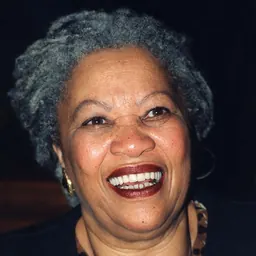
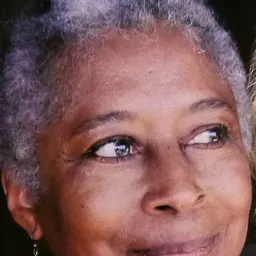
People in Adrienne Rich's life
Named in this biography and alive at the same time





Related people
Same field, nearest in time
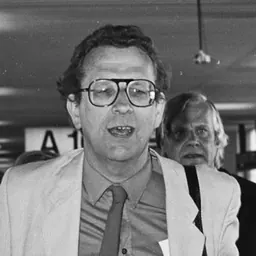

Contemporaries
People whose lives overlapped Adrienne Rich's
Frequently asked questions
Who was Adrienne Rich?
American poet, essayist and feminist (1929–2012)
When was Adrienne Rich born?
Adrienne Rich was born on 16 May 1929 in Baltimore.
When did Adrienne Rich die?
Adrienne Rich died on 27 March 2012 in Santa Cruz.
What was Adrienne Rich's occupation?
Adrienne Rich was a poet, essayist, writer, women's rights activist, peace activist and feminist.
What nationality was Adrienne Rich?
Adrienne Rich was American.
Sources & further reading
Cite this page
APA: Biography.guide. (2026). Adrienne Rich. https://biography.guide/adrienne-rich/
MLA: "Adrienne Rich." Biography.guide, https://biography.guide/adrienne-rich/.
Chicago: "Adrienne Rich." Biography.guide. https://biography.guide/adrienne-rich/.
Data last updated: 2026-09-22 · Spot an error? Report a correction.
Portrait: Wikimedia Commons · author & licence
Page generated 2026-09-27 05:02 UTC