
About John Banville
Born 1945. John Banville is an Irish screenwriter, novelist, writer, playwright, literary critic and journalist.
Early life William John Banville was born to Agnes (née Doran) and Martin Banville, a garage clerk, in Wexford, Ireland. The youngest of three siblings, his older brother Vincent is also a novelist, writing under the name Vincent Lawrence as well as his own. Their sister, Anne Veronica "Vonnie" Banville-Evans, wrote a children's novel and a memoir of growing up in Wexford.
Banville was educated at CBS Primary, Wexford — a Christian Brothers school — and at St Peter's College, Wexford. Though he intended to become a painter and an architect, Banville did not attend university. The decision was influenced by a desire to escape from his family; however, Banville would later describe it as a "great mistake" to have missed "four years of getting drunk and falling in love", Yet — in contrast to what he had missed — Banville stated that college would have been of little benefit to him, and he doubted whether he then "would have had the nerve" to carry out some of his earlier writings, if he had been "beaten into submission by my lecturers". Earlier — while in his teens — Banville stole a collection of Dylan Thomas's poetry from Wexford County Library.
After school, Banville worked as a clerk at Aer Lingus, which allowed him to travel at deeply discounted rates. He took advantage of such rates, travelling to Greece and Italy. Banville began working as a sub-editor at The Irish Press in 1969, and — subsequently — worked as a sub-editor at The Irish Times. He was appointed literary editor of The Irish Times in 1988, a position he held until 1999.
Personal life In 1969, Banville married the American textile artist Janet Dunham, whom he met in San Francisco the previous year while she was a student at the University of California, Berkeley. Their marriage broke down after Banville had an affair with a neighbour, Patricia Quinn, who subsequently became director of the Arts Council of Ireland. Banville had two daughters with Quinn, born around 1990 and 1997. Despite separating, Banville and Dunham never divorced; according to Banville, they remained "on good terms." Dunham died at Blackrock Clinic on 22 November 2021, In a 2024 interview, he expressed regret over his relationship history, saying: "I caused Janet such anguish. I have caused Patricia Quinn such anguish. I wasn't good with my children. I was not a good parent. I am not a good person. I am selfish. But I have to have responsibility."
Writing Banville writes in the Hiberno-English dialect, and dreads the loss of this ability if he were to follow the example of other Irish writers and move abroad.
As an unknown writer in the 1980s, he toured Dublin's bookshops—"and we had a lot of bookshops back then"—around the time of the publication of his novel Kepler "and there wasn't a single one of any of my books anywhere". Yet — he noted in 2012 — "I didn't feel badly about it because I was writing the kinds of books I wanted to write. And I had no one but myself to blame if I wasn't making money, that wasn't anybody's fault. Nobody was obliged to buy my books". He realised that — like himself — scientists were attempting to impose order in their work. Banville's third trilogy was published from 2000 onwards. Consisting of Eclipse, Shroud and Ancient Light, all concern the characters of Alexander and Cass Cleave.
Banville has compared writing to the life of an athlete: "It's asking an awful lot of one's self. Every day you have to do your absolute best—it's a bit like being a sportsman. You have to perform at the absolute top of your game, six, seven, eight hours a day—that's very, very wearing". In a July 2008 interview with Juan José Delaney in the Argentine newspaper La Nación, Banville was asked if his books had been translated into Irish. He replied that nobody would do so, and that he was often referred to — pejoratively — as a West Brit. He advises against young writers approaching him for advice: "I remind them as gently as I can, that they are on their own, with no help available anywhere".
He wrote fondly of John McGahern, who lost his job amid condemnation by his workplace and the Catholic Church for becoming intimately involved with a foreign woman. While on a book tour of the United States in March 2006, Banville received a telephone call: "I have bad news, I'm afraid. John Banville is dead." However, Banville was aware that McGahern had been unwell and, having performed the necessary checks to ensure that he was still alive, concluded that it was McGahern who was dead instead. And it was. Banville wrote an account of Caravaggio's 1602 painting The Taking of Christ for the book Lines of Vision, released in 2014 to mark the 150th anniversary of the National Gallery of Ireland.
He contributed to Sons+Fathers, a book published in 2015 to provide funds for the Irish Hospice Foundation's efforts to give care to terminally ill patients within their own homes.
Crime fiction Beginning with Christine Falls, which was published in 2006, Banville embarked on a crime fiction spree under the pen name of Benjamin Black. Writing his Benjamin Black stuff much more quickly and with less care than the composition of his literary novels, he appreciates his work as Black as a craft, while as Banville he is an artist. He has described crime writing as "cheap fiction". According to Banville, he writes his crime and mystery stuff on a computer, each one taking three to four months. He writes his other novels with a fountain pen, with each taking from two to five years.
The eponymous character in the Quirke series is a pathologist based in 1950s Dublin. The first three books, Christine Falls (2006), The Silver Swan (2007), and Elegy for April (2011) were made into a drama series, Quirke which — after being shown in Ireland — aired on British television. Subsequent books in this series were: A Death in Summer (2011), Vengeance (2012), Holy Orders (2013), Even the Dead (2016), April in Spain (2021), The Lock-Up (2023) and The Drowned (2024). The last three of those appeared under Banville's own name. A related book — this one also published under Banville's name — is Snow (2020). This featured a character named Detective Inspector St John Strafford, who appeared in subsequent books April in Spain and The Lock-Up.
Also published under the name Benjamin Black are crime books The Lemur (2008), The Black-Eyed Blonde (a Philip Marlowe novel, 2014), and Prague Nights (2017).
The Secret Guests (2020) is a work of alternative history crime, based on a scenario in which the young British princesses, Elizabeth and Margaret, are evacuated to County Tipperary in 1940 to escape the London Blitz and a possible German invasion of Britain. Again featuring St John Strafford, this book was published under the name B. W. Black.
Style The critics regard Banville as a master stylist of English, with his writing considered as perfectly crafted and dazzling. Described as "the heir to Proust, via Nabokov", he is known for his dark humour and sharp wit.
Michael Ross stated that Banville is "perhaps the only living writer capable of advancing fiction beyond the point reached by Beckett". Gerry Dukes, reviewing The Sea in the Irish Independent, hailed Banville as a "lord of language".
Literary influences
Banville said in an interview with The Paris Review that he liked Vladimir Nabokov's style; however, he went on, "But I always thought there was something odd about it that I couldn't quite put my finger on. Then I read an interview in which he admitted he was tone deaf."
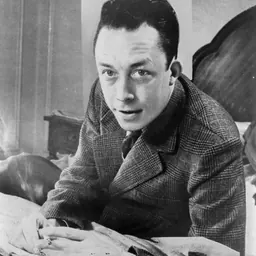
Banville has said that, as a boy, he imitated James Joyce: "After I'd read The Dubliners, and was struck at the way Joyce wrote about real life, I immediately started writing bad imitations of The Dubliners." Responding to a suggestion that Fyodor Dostoevsky and Albert Camus were worthy comparisons, Banville said: "Dostoyevsky is such a bad writer it is hard to take him seriously... Ditto Camus". On women in his own writing, Banville told Niamh Horan of the Sunday Independent in 2012: "I don't make a distinction between men and women. To me they are just people". Horan herself noted Banville's "special flair for writing about women and delving into the female psyche".
Banville contributed the introduction to the fifty-year retrospective of Edna O'Brien's work, The Love Object: Selected Stories, praising her as "one of the most sophisticated writers now at work" and noting how it was "hard to think of any contemporary writer who could match [O'Brien's] combination of immediacy and sympathetic recall". He noted how "striking" is the figuring of O'Brien's characters and acknowledged that all her characters "are in some way damaged by the world, and specifically by the world of men". Banville concluded by describing O'Brien as "simply one of the finest writers of our time".
Banville dedicated himself to the task of writing the screenplay for an adaptation of Elizabeth Bowen's novel The Last September. Banville later wrote the introduction for her Collected Stories.
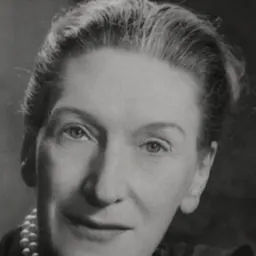
Close to the literary editor Caroline Walsh, Banville spoke of his devastation upon learning of her death. He dedicated Ancient Light to her. Likewise, Banville was close to Eileen Battersby, at whose funeral he was moved to tears whilst reciting a poem in her memory.
Crime and punishment Speaking to Niamh Horan in 2012, Banville related his thoughts on hurt and responsibility: "To hurt other people is the worst thing you can do. To be hurt oneself is bad enough, but hurting other people is unforgivable... Unforgivable. Literally unforgivable. I think that one has to take responsibility for one's life and one has to take responsibility for one's bad deeds as well as one's good deeds. One has to, as I say, be responsible... Failure in art, or failure in making a living, or a success—none of them compares, everything pales beside hurting other people, because, you know, we are here for such a short time and basic life itself is so hard one has a duty to try to be decent to other people".
On 21 August 2017, the RTÉ Radio 1 weekday afternoon show Liveline was discussing a report on Trinity College Dublin's use of 100,000 animals to conduct scientific research over the previous four years when a listener pointed out that Banville had previously raised the matter but been ignored. Banville personally telephoned Liveline to call the practice "absolutely disgraceful" and told the tale of how he had come upon some women protesting:
I was passing by the front gates of Trinity one day and there was a group of mostly young women protesting and I was interested... I spoke to them and they said that vivisection experiments were being carried out in the college. This was a great surprise to me and a great shock, so I wrote a letter of protest to The Irish Times. Some lady professor from Trinity wrote back essentially saying Mr Banville should stick to his books and leave us scientists to our valuable work. After that my late friend, [Lord Gahan?] wrote another letter to The Times and he suggested well, if vivisection is not harmful and painful to animals, why don't the experimenters themselves volunteer to undergo the experiments? ...I claim no expertise but I'm told that vivisection is of no consequence, that you don't really need it... I think if, as the vivisectionists assure us, the animals don't suffer, then why don't they volunteer themselves? It would be much better to have a human being to experiment on than an animal... [At this point the presenter questioned whether he really meant this]. I'm absolutely serious! ...why don't they conduct experiments on each other? ...We certainly should not be inflicting needless pain on innocent animals... If there's no pain, no distress... ask for human volunteers. Pay them money. Birchwood 1984
1997 The Untouchable 2001
2003
2010 The Sea 2012 Ancient Light
2014
Snow [??]
Booker Prize
Banville wrote a letter in 1981 to The Guardian suggesting that the Booker Prize, for which he was "runner-up to the shortlist of contenders", be given to him so that he could use the money to buy every copy of the longlisted books in Ireland and donate them to libraries, "thus ensuring that the books not only are bought but also read – surely a unique occurrence".
When his novel The Book of Evidence was shortlisted for the 1989 Booker Prize, Banville said a friend—whom he described as "a gentleman of the turf"—instructed him "to bet on the other five shortlistees, saying it was a sure thing, since if I won the prize I would have the prize-money, and if I lost one of the others would win ... But the thing baffled me and I never placed the bets. I doubt I'll be visiting Ladbrokes any time soon". Anne Haverty later described Banville's critique of Saturday as "devastatingly effective". Sutherland sent a letter (signed with the title "Lord Northcliffe Professor Emeritus") in response to Banville's review, a letter in which he took Banville to task over his misreading of a game of squash in the novel. Banville issued a written reply with the opening line: "Summoned, one shuffles guiltily into the Department of Trivia", before begging Sutherland's pardon for his "sluggish comprehension" after managing to make his way through "all seventeen pages" of the game. Banville later admitted that, upon reading Sutherland's letter, he thought he could "kiss the Booker goodbye". Banville, Barry and Ali Smith were dismissed outright and much of the discussion focused on Barnes, Ishiguro and Zadie Smith.
When the prize rules later changed to allow entries by American writers, Banville welcomed the idea. However, he later expressed regret over the decision: "The prize was unique in its original form, but has lost that uniqueness. It is now just another prize among prizes. I am convinced the administrators should take the bold step of conceding the change was wrong, and revert".
Kafka Prize In 2011, Banville was awarded the Franz Kafka Prize. Marcel Reich-Ranicki and John Calder were members of the jury. Banville said he had been "wrestling with Kafka since I was an adolescent", revealed where he would be positioning his bronze statuette trophy by claiming it "will glare at me from the mantelpiece" and described the award as "one of the ones one really wants to get. It's an old style prize and as an old codger it's perfect for me".
Nobel Prize in Literature hoax On the day that the 2019 and 2018 prizes were to be announced, the Swedish Academy's number appeared on Banville's telephone. He informed his daughter; she called her father back while watching the live announcement at midday to tell him his name had not been mentioned. Fellow Academy member Per Wästberg also thought it sounded like a "joke". Banville provided the recording to the Swedish Academy to assist its investigation. and told The Observer: "There is some comedy in it and potential material: 'The man who nearly won the Nobel prize'". while media in neighbouring England described it as "deceitful". He received numerous sympathetic emails and telephone calls and support from fellow writers.
Works
Main works Long Lankin. London: Secker & Warburg, 1970; revised edition 1984 Nightspawn. London: Secker & Warburg, 1971. Birchwood. London: Secker & Warburg, 1973. Revolutions Trilogy: Doctor Copernicus. London: Secker & Warburg, 1976. Kepler. London: Secker & Warburg, 1981. The Newton Letter. London: Secker & Warburg, 1982. Mefisto. London: Secker & Warburg, 1986. Frames Trilogy The Book of Evidence. London: Secker & Warburg, 1989. Ghosts. London: Secker & Warburg, 1993. Athena. London: Secker & Warburg, 1995. The Untouchable. London: Picador, 1997. Cleave Trilogy Eclipse. London: Picador, 2000. Shroud. London: Picador, 2002. Ancient Light. London: Viking Penguin, 2012. The Sea. London: Picador, 2005. The Infinities. London: Picador, 2009. The Blue Guitar. London: Viking Penguin, 2015. Mrs Osmond. London: Penguin, 2017. The Singularities. London: Knopf, 2022.
Quirke series Christine Falls. London: Picador, 2006. Published as Benjamin Black. The Silver Swan. London: Picador, 2007. Published as Benjamin Black. Elegy for April. London: Mantle, 2010. Published as Benjamin Black. A Death in Summer. London: Mantle, 2011. Published as Benjamin Black. Vengeance. London: Mantle, 2012. Published as Benjamin Black. Holy Orders. London: Mantle, 2013. Published as Benjamin Black. Even the Dead. London: Viking, 2015. Published as Benjamin Black. April in Spain. London: Faber & Faber, 2021. . Published as John Banville. The Lock-up. London: Faber & Faber, 2023. . Published as John Banville. The Drowned. London: Faber & Faber, 2024. Toronto, Ontario, Canada: Hanover Square Press, 2024. . Published as John Banville.
Snow. London: Faber & Faber, 2020. Published as John Banville. The Secret Guests. London: Penguin, 2020. Published as B. W. Black.
Other works The Lemur. London: Picador, 2008. Published as Benjamin Black. The Black-Eyed Blonde. New York: Henry Holt, 2014 (a Philip Marlowe novel). Published as Benjamin Black. Prague Nights. London: Penguin, 2017. (published in the U.S. as Wolf on a String). Published as Benjamin Black. Venetian Vespers. Knopf. October 2025. Published as John Banville.
Don’t just read it —
keep it.
Full-length biographies made to live with: read them, listen on the way to work, watch them tonight.
- E-book
- Audio
- Video
Instant download · yours to keep · every purchase keeps this site free
Important facts
People in John Banville's life
Named in this biography and alive at the same time





Related people
Same field, nearest in time




Contemporaries
People whose lives overlapped John Banville's

Frequently asked questions
Who is John Banville?
Irish writer (born 1945)
When was John Banville born?
John Banville was born on 8 December 1945 in Wexford.
What is John Banville's occupation?
John Banville is a screenwriter, novelist, writer, playwright, literary critic and journalist.
What nationality is John Banville?
John Banville is Irish.
Sources & further reading
Cite this page
APA: Biography.guide. (2026). John Banville. https://biography.guide/john-banville/
MLA: "John Banville." Biography.guide, https://biography.guide/john-banville/.
Chicago: "John Banville." Biography.guide. https://biography.guide/john-banville/.
Data last updated: 2026-09-26 · Spot an error? Report a correction.
Page generated 2026-09-27 05:14 UTC