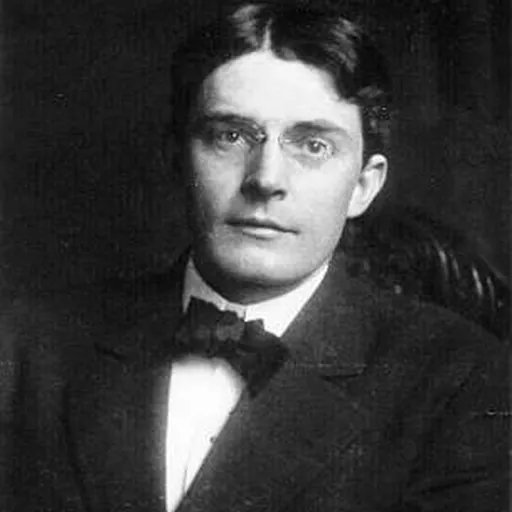
About John B. Watson
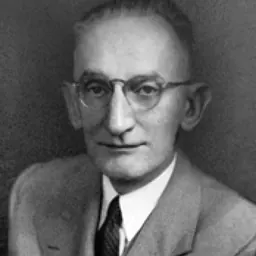
Lived 1878 – 1958 (aged 80). John B. Watson was an American psychologist and politician, known for Behavior modification, Behaviorism and Methodological behaviorism.
John Broadus Watson (January 9, 1878 – September 25, 1958) was an American psychologist who popularized the scientific theory of behaviorism, establishing it as a psychological school. Watson advanced this change in the psychological discipline through his 1913 address at Columbia University, titled Psychology as the Behaviorist Views It. Through his behaviorist approach, Watson conducted research on animal behavior, child rearing, and advertising, as well as conducting the controversial "Little Albert" experiment and the Kerplunk experiment. He was also the editor of Psychological Review from 1910 to 1915. A Review of General Psychology survey, published in 2002, ranked Watson as the 17th most cited psychologist of the 20th century.
Early life Watson was born on January 9, 1878 in Travelers Rest, South Carolina. His father, Pickens Butler Watson, was an alcoholic and left the family to live with two Indian women when John was 13 years old. His mother, Emma Kesiah Watson (née Roe), was a very religious woman who adhered to prohibitions against drinking, smoking, and dancing,
In an attempt to escape poverty, Watson's mother sold their farm and brought Watson to Greenville, South Carolina,
Marriage and children While he was in graduate school, Watson married Mary Ickes, sister of the newspaper reporter Harold L. Ickes, later a politician. They had two children, also named John and Mary Ickes Watson, Young Mary and her husband, Paul Hartley, had a daughter, Mariette Hartley, an actor who suffered from psychological issues that she attributed to her being raised according to her grandfather's theories.
Watson's wife later sought a divorce due to his ongoing affair with a student, Rosalie Rayner (1898–1935).
In 1921, following the finalization of the divorce, Watson and Rayner married in New Jersey, Like their half-sister, both sons later attempted suicide,
Historian John Burnham interviewed Watson late in life, presenting him as a man of strong opinions and some bitterness towards his detractors.
Watson lived on his farm until his death in 1958 at age 80, at Columbia-Presbyterian Medical Center in Upper Manhattan. He was buried at Willowbrook Cemetery, Westport, Connecticut.
Education Despite his poor academic performance and having been arrested twice during high school—first for fighting, then for discharging firearms within city limits—Watson was able to use his mother's connections to gain admission to Greenville's Furman University at the age of 16. Wanting to make psychology more scientifically acceptable, Watson thought of the approach as a declaration of faith, based on the idea that a methodology could transform psychology into a scientific discipline. Later, Watson became interested in the work of Ivan Pavlov (1849–1936), and eventually included a highly simplified version of Pavlov's principles in his popular works.
Dissertation on animal behavior Watson earned his PhD from the University of Chicago in 1903. In his dissertation, "Animal Education", he described the relationship between brain myelination and learning ability in rats at different ages. Watson showed that the degree of myelinization was largely related to learning ability. Watson stayed at the University of Chicago for five years doing research on the relationship between sensory input and learning. He discovered that the kinesthetic sense controlled the behavior of rats running in mazes. In 1908, Watson was offered and accepted a faculty position at Johns Hopkins University and was immediately promoted to chair of the psychology department.
Language, speech, and memory
Watson argued that mental activity could not be observed. In his book, Behaviorism (1924), Watson discussed his thoughts on what language really is, which leads to a discussion of what words really are, and finally to an explanation of what memory is. They are all manual devices used by humans that result in thinking. By using anecdotes that illustrate the behaviors and activities of mammals, Watson outlined his behaviorist views on these topics.
Watson refers to language as a "manipulative habit," because when we speak language, the sound originates in our larynx, which is a body instrument that we manipulate every time we talk in order to hear our "voice." As we change our throat shape and tongue position, different sounds are made. Watson explains that when a baby first cries, or first says "da" or "ma," that it is learning language. To further his theory, Watson and his wife conducted an experiment in which they conditioned a baby to say "da-da" when he wanted his bottle. Although the baby was conditioned and was a success for a short while, the conditioning was eventually lost. Watson argues, however, that as the child got older, he would imitate Watson as a result of Watson imitating him. By three years old, the child needed no help developing his vocabulary because he was learning from others. Thus, language is imitative.
Watson goes on to claim that, "words are but substitutes for objects and situations."
Fear: evoked by only two stimuli that are unconditioned—a sudden noise or the loss of (physical) support. However, because older children are afraid of many things (e.g. different animals, strange people etc.), it must be that such fear-provoking stimuli are learned. Fear can be observed by the following reaction with infants: crying, rapid breathing, eyes closing, or sudden jumping. Rage: an innate response to the body movement of the child being constrained. If a very young child is held in a way that she cannot move at all, then she will begin to scream and stiffen her body. Later this reaction is applied to different situations, e.g. children get angry when they are forced to take a bath or clean their room. These situations provoke rage because they are associated with physical restraint. Love: an automatic response from infants when tickled, patted, or stroked lightly. The infant responds with smiles, laughs, and other affectionate responses. According to Watson, infants do not love specific people, they are only conditioned to do so. Because the mother's face is progressively associated with the patting and stroking, it becomes the conditioned stimulus eliciting the affection towards her. Affectionate feelings, for people later, generate the same response because they are somehow associated with the mother.
Use of children "Little Albert" experiment (1920) One might consider the experiment Watson and his assistant Rosalie Rayner carried out in 1920 to be one of the most controversial in psychology. It has become immortalized in introductory psychology textbooks as the Little Albert experiment. The goal of the experiment was to show how principles of, at the time recently discovered, classical conditioning could be applied to condition fear of a white rat into "Little Albert", a 9-month-old boy. Watson and Rayner conditioned "Little Albert" by clanging an iron rod when a white rat was presented. First, they presented to the boy a white rat and observed that he was not afraid of it. Second, they presented him with a white rat and then clanged an iron rod. "Little Albert" responded by crying. This second presentation was repeated several times. Finally, Watson and Rayner presented the white rat by itself and the boy showed fear. Later, in an attempt to see if the fear transferred to other objects, Watson presented this Albert with a rabbit, a dog, and a fur coat. He cried at the sight of all of them. This study demonstrated how emotions could become conditioned responses. As the story of "Little Albert" has made the rounds, inaccuracies and inconsistencies have crept in, some of them even due to Watson himself. Analyses of Watson's film footage of Albert suggest that the infant was mentally and developmentally disabled. An ethical problem of this study is that Watson and Rayner did not uncondition "Little Albert".
In 2009, Beck and Levinson found records of a child, Douglas Merritte, who seemed to have been Little Albert. They found that he had died from congenital hydrocephalus at the age of 6. Thus, it cannot be concluded to what extent this study had an effect on Little Albert's life. On January 25, 2012, Tom Bartlett of The Chronicle of Higher Education published a report that questions whether John Watson knew of cognitive abnormalities in Little Albert that would greatly skew the results of the experiment. In 2014, however, the journals that initially endorsed Beck and Fridlund's claims about Albert and Watson (the American Psychologist and History of Psychology) published articles debunking those claims.
Deconditioning Because "Little Albert" was taken out of town, Watson did not have the time to decondition the child. This has ethical implications, but Watson did put in place a method for deconditioning fears. He worked with a colleague, Mary Cover Jones, on a set of procedures aimed at eliminating the fears of another little boy, Peter. Peter seemed to fear white rats and rabbits. Watson and Jones put Peter in his highchair and gave him a nice afternoon snack. At the same time a white rabbit in a cage was put in a distance that did not seem to disturb the child. The next day the rabbit was put slightly closer until Peter showed signs of slight disturbance. This treatment was repeated days after days until Peter could serenely eat his snack with the rabbit being right next to him. Peter was even able to play with the rabbit afterwards. This form of behavior modification is a technique today called systematic desensitization. In 1928, Watson wrote the book Psychological Care of Infant and Child with help from Rosalie Rayner, his assistant and wife. In it, Watson explains that behaviorists were starting to believe psychological care and analysis were required for infants and children. Watson advances the belief that children should be treated as young adults. As such, he warns against the dangers of a mother providing too much love and affection, because love—along with everything else understood by the behaviorist perspective— is conditioned. He contends that, since society does not overly comfort children as they become young adults in the real world, parents should not set up these unrealistic expectations. He disapproves of thumb sucking, masturbation and homosexuality, and encourages parents to be honest with their children about sex. He supports these views with the argument that "all of the weaknesses, reserves, fears, cautions, and inferiorities of our parents are stamped into us with sledgehammer blows," His emphasis on child development would influence some of his successors, though the field had already been delved into by psychologists prior to Watson. G. Stanley Hall, for instance, became well known for his 1904 book Adolescence. Hall's beliefs differed from Watson's behaviorism, as the former believed that one's behavior is mostly shaped by heredity and genetically predetermined factors, especially during childhood. His most famous concept, the 'Storm and Stress' theory, normalized adolescents' tendency to act out and experience mood swings.
Although he wrote extensively on child-rearing, including in Psychological Care of Infant and Child, as well as in many popular magazines, Watson later regretted altogether having written in the field, conceding that he "did not know enough" to do a good job.
Criticism Critics argued that Watson's theories mainly stemmed from his pre-existing beliefs. in which she wrote about the future of their family.
R. Dale Nance worried that Watson's personal indiscretions and difficult upbringing could have affected his views. Suzanne Houk shared similar concerns while analyzing Watson's hope for a businesslike and casual relationship between a mother and her child. Little Albert did not fear the rat and white rabbit until he was conditioned to do so. From this experiment, Watson concluded that parents can shape a child's behavior and development simply by controlling all the child's stimulus-response associations. Other critics were more wary of Watson's relatively recent interest and success in child psychology.
"Twelve infants" Watson has been misquoted with regard to the following passage, which is often presented out of context and with the last sentence omitted, making his position appear more radical than it actually was:
In Watson's Behaviorism, the sentence is provided in the context of an extended argument against eugenics. That Watson did not hold a radical environmentalist position may be seen in his earlier writing in which his "starting point" for a science of behavior was "the observable fact that organisms, man and animal alike, do adjust themselves to their environment by means of hereditary and habit equipments." 1913. "Psychology as the Behaviorist Views It." 1921. "Studies in Infant Psychology," with Rosalie Rayner.
Don’t just read it —
keep it.
Full-length biographies made to live with: read them, listen on the way to work, watch them tonight.
- E-book
- Audio
- Video
Instant download · yours to keep · every purchase keeps this site free
Important facts
People in John B. Watson's life
Named in this biography and alive at the same time


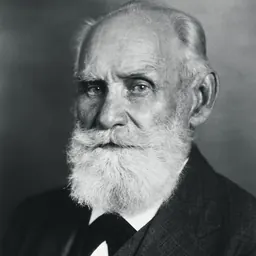



Related people
Same field, nearest in time
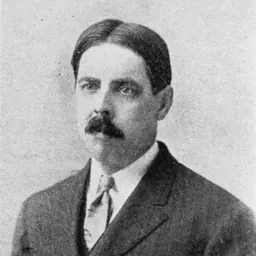



Contemporaries
People whose lives overlapped John B. Watson's



Frequently asked questions
Who was John B. Watson?
American psychologist (1878
When was John B. Watson born?
John B. Watson was born on 9 January 1878 in Greenville.
When did John B. Watson die?
John B. Watson died on 25 September 1958 in New York City.
What was John B. Watson's occupation?
John B. Watson was a psychologist and politician.
What was John B. Watson known for?
John B. Watson was known for Behavior modification, Behaviorism and Methodological behaviorism.
What nationality was John B. Watson?
John B. Watson was American.
Sources & further reading
Cite this page
APA: Biography.guide. (2026). John B. Watson. https://biography.guide/john-b-watson/
MLA: "John B. Watson." Biography.guide, https://biography.guide/john-b-watson/.
Chicago: "John B. Watson." Biography.guide. https://biography.guide/john-b-watson/.
Data last updated: 2026-09-20 · Spot an error? Report a correction.
Portrait: Wikimedia Commons · author & licence
Page generated 2026-09-27 04:57 UTC