
John A Haydon
American surveyor and civil engineer
About John A Haydon
Lived 1830 – 1902 (aged 72). John A Haydon was an American civil engineer, civil engineering and surveying.
John A. Haydon (June 21, 1830 – September 26, 1902) was an American surveyor and civil engineer. As a self-taught civil engineer, Haydon made significant contributions to American railroading. Haydon's railroad career spanned the Baltimore and Ohio railroad expansion to the Ohio River in 1853 and several other railroads to the last transcontinental railroad, the Northern Pacific railway. Haydon led the 1872 Yellowstone River expedition, where he faced a Sioux Indian skirmish led by Sitting Bull, Red Cloud and Crazy Horse at the Battle of Pryor's Creek, Montana. He also served as a captain in the Confederate Army Corps of Engineers under Generals Tilghman and Beauregard; captured at the battle of Fort Henry, early in the Civil War in 1862, he was paroled at Aiken, South Carolina, in November 1862 to serve the rest of the war, including the Richmond–Petersburg Campaign. In the latter part of his life, he worked locating branch railroads such as the Pennsylvania railroad in Maryland and for the Western Maryland railroad.
Early life and career
Haydon was born on June 21, 1830, in Alexandria, Virginia. Little is known of his education and early career. He married Alice M McSherry (1851-1927) on May 30, 1872, in Baltimore, Maryland. They had six children of which only five survived, three of which were Gertrude (b1876), Alice (b1883) and John (b1886).
Baltimore and Ohio Railroad In 1850, Haydon was part of the Baltimore and Ohio Railroad's engineering corps working on the railroad's extension west of Cumberland, Maryland.
Orange and Alexandria Railroad In 1852, Haydon worked as a resident engineer on the construction of the Orange and Alexandria Railroad middle section and Warrenton, Virginia.
Louisville and Nashville railroad In 1854, Haydon was again a resident engineer, in this case, the fifth division of the Louisville and Nashville railroad from the Tennessee state line to Nashville. This work, the Chief engineer wrote in its annual report consisted of "some of the heaviest work in Tennessee, consisting of two tunnels, and a succession of deep rock cuts, and high embankments."
Nashville, Tennessee - City Engineer Haydon lived in Nashville, Tennessee, in 1860, during this period as the civil engineer for the city of Nashville, Tennessee.
American Civil War service
In 1861 with the outbreak of the American Civil War, Haydon was appointed by Tennessee Governor Isham Green Harris in August 1861 as a captain in the Provisional Army of Tennessee as part of the Provisional Army of the Confederate States (PACS).
Battle of Fort Henry and Fort Donelson Haydon was assigned to Fort Henry under the command of General Lloyd Tilghman, another railroad engineer. With the first arrival of trained engineers in September 1861, his assignment was to assist Lt. Joseph Dixon acting as the engineering officer, in the oversight of the construction of its works. Later, Haydon would write that "the war will have reached every southern state both in the seaboard region and exposed river regions."
Aftermath In April 1865, Haydon was serving with the 25th Engineer corps in Alston, South Carolina
Postbellum activities Haydon became chief engineer for the Edisto and Ashley Rivers canal company in South Carolina in 1866 as part of a scheme to provide the city of Charleston with a fresh water supply. During this same period, Haydon also served as chief engineer for the Greenville and Columbia Railroad company.
Frederick and Pennsylvania Line Railroad
In 1868, Haydon became chief engineer of the Frederick and Pennsylvania Line Railroad in Frederick, Maryland. Haydon completed construction of the railroad in June, 1872.
Northern Pacific Railway As of summer 1871, the railroad had only surveyed its route from Duluth, Minnesota westward to Bismarck, North Dakota. On the Western leg, the railroad had been located from Tacoma, Washington east to Bozeman, Montana. This left chief engineer William Milnor Roberts with the task of locating over 600 miles of railroad in Western Dakota and Eastern Montana
Roberts planned surveys that included crossing the Bitterroot Mountain passes into Missoula, Montana, as well as a Yellowstone River survey.
Haydon's mission was to follow the Yellowstone River downstream to the mouth of Powder River a distance of 310 miles. Haydon to meet up with another survey party coming in from Fort Rice in North Dakota on the Missouri River, a distance of over 240 miles to Powder river. Haydon was to return from the Powder via the Musselshell River following this river to its source.
The survey party and military escort proceeded without the benefit of Crow Indian scouts, largely due to rumors of a Sioux-Cheyenne attack or preparations for multiple river crossings with ferry boats. a war party was formed with as many as a thousand warriors to go upstream on the Powder to locate and fight their enemy, the Crows.
Return to Fort Ellis On August 20, 1872, Haydon's party left the Yellowstone River to march towards the Musselshell River as planned by Chief Engineer Roberts. Haydon became ill on the trip and was temporarily replaced by Lt. Edward John McClernand, who studied surveying at West Point.
Unlike the other 1872 NPR survey party leader, Thomas Rosser, who was also a former Confederate officer and fellow engineer under General Beauregard, Haydon didn't have Rosser's experience in cavalry raids or efficiency in handling combat troops. Baker, unlike the other military escort commanders, Ball, Whistler and Stanley, moved his camp only once after the August 14 skirmish. Baker's refusal to furnish more than one company of soldiers to support Haydon in the face of a large Sioux force forced Haydon to turn back. Shortly after Baker returned to Fort Ellis, General Hancock placed him under arrest. and effectively the "entire output of coal in (the state of Maryland)."
Cumberland interests formed the Pennsylvania railroad in Maryland to escape that control. In January 1878, the railroad engaged Haydon to be its Chief Engineer
and started construction the next year in May 1879. The road commenced passenger service to Washington and New York on December 15, 1879. The Pennsylvania railroad with access to the Georges creek valley could then transport Maryland Coal and American Coal companies' "soft coal" products to one of the three export piers the railroad controlled in South Amboy, New Jersey.
Central Railway Company of Baltimore Maryland (1880) The Central Railway Company was formed as a competitor to the Baltimore City Passenger Company. In 1880, along with Abraham Patterson, William Graves, George Grafflin and Baltimore real estate developer John T. Ford, Haydon petitioned the city council for permission to lay streetcar tracks from boundary avenue to the Western Maryland's station on Fulton street thence over Howard street, thence to Camden and connections with the Baltimore and Ohio railroad and then to the Light street wharf. John Haydon Headstone in Saint John's cemetery in Frederick Maryland.
Patents Haydon received two patents for his work: Patent No. 241,359 in 1881 for a stock car feeding device. Patent No. 185,795 in 1876 for a roadway pavement consisting of a stone substratum, formed by slabs set into the road-bed at an angle, an intermediate layer, of concrete and a top dressing.
Death Haydon died in Frederick, Maryland, on September 26, 1902, and is interred in St. John's cemetery in Frederick, Maryland.
Don’t just read it —
keep it.
Full-length biographies made to live with: read them, listen on the way to work, watch them tonight.
- E-book
- Audio
- Video
Instant download · yours to keep · every purchase keeps this site free
Important facts
People in John A Haydon's life
Named in this biography and alive at the same time



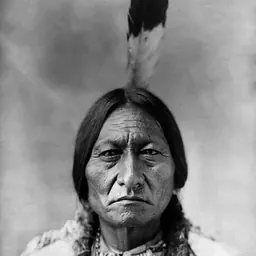

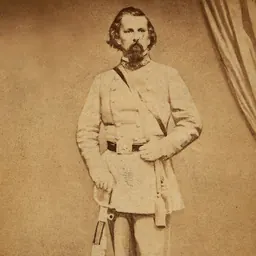
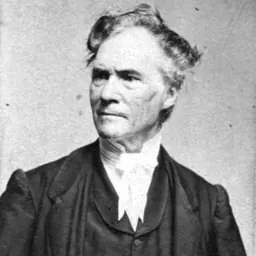
Related people
Same field, nearest in time


Contemporaries
People whose lives overlapped John A Haydon's




Frequently asked questions
Who was John A Haydon?
American surveyor and civil engineer (1830–1902)
When was John A Haydon born?
John A Haydon was born on 21 June 1830 in Alexandria.
When did John A Haydon die?
John A Haydon died on 26 September 1902 in Frederick.
What was John A Haydon's occupation?
John A Haydon was a civil engineer, civil engineering and surveying.
What nationality was John A Haydon?
John A Haydon was American.
Sources & further reading
Cite this page
APA: Biography.guide. (2026). John A Haydon. https://biography.guide/john-a-haydon/
MLA: "John A Haydon." Biography.guide, https://biography.guide/john-a-haydon/.
Chicago: "John A Haydon." Biography.guide. https://biography.guide/john-a-haydon/.
Data last updated: 2026-09-22 · Spot an error? Report a correction.
Page generated 2026-09-27 05:09 UTC