
About Johanna Olbrich
Lived 1926 – 2004 (aged 77). Johanna Olbrich was a German politician.
Johanna Olbrich (alias 'Sonja Lüneburg': 26 October 1926 – 18 February 2004) was an East German spy. Infiltrated into West Germany from Colmar (France) in 1966 or 1967, she moved to Bonn in 1969 and obtained work as a secretary with a senior politician.
Her espionage career ended abruptly in 1985 when she lost her (false) passport during a vacation in Rome. Fearing that the passport had fallen, or could fall, into the hands of western counter-intelligence services, which would lead to her unmasking, her handlers hurriedly ordered her back: she was smuggled into East Germany near Lübeck within the week.
Life Provenance and early years Johanna Olbrich was born in Lauban, a small manufacturing town in Silesia and to the west of Breslau (as Wrocław was known at that time). Her father was a railway worker. The real Sonja Lüneburg died in 1996. The woman who stole her identity seems never to have shown any very deep concern over what happened to the real Sonja Lüneburg.
Sources are in some respects imprecise as to how Olbrich was able to pass information to the East German authorities from her secretarial work, but she presumably used the miniature (by the standards of the times) camera with which she had been issued to photograph documents that passed across her desk. However, Flach suffered a stroke and died at the unexpectedly young age of 44. His successor as party general secretary was Martin Bangemann who inherited not merely the job but also his predecessor's secretary, known in the west as Sonja Lüneburg. Bangemann was also, between 1973 and 1984, a member of the European Parliament. Olbrich, urged on by her East German handlers, convinced him that she could work as his secretary both on Bonn and in Brussels. In the words of her ultimate boss, East Germany's legendary spy chief Markus Wolf (who in their retirements became a neighbour), "for Johanna there were now many pressures.... Each day she commuted hither and yonder between offices and apartments in the federal capital and in Brussels, striving not to neglect the interests either of her [western] boss nor of ours [as her spymasters]". Beyond her allotted tasks she was taking time carefully to make notes of important meetings, photocopying critical documents. She would photograph even her own handwritten notes of meetings in order to make them small enough to be more easily transported. For years, each month she would pack two or three photographic film rolls each of 36 images in a little envelope which she then left in the toilet of a train travelling to the east. This meant that sometimes when she travelled by train she took a slightly indirect route in order to be on the correct express train from West Germany's busiest Railway station at Cologne to East Berlin. In Lübeck she met a "smuggler" employed by the Stasi, who as she later wrote, was more normally involved in helping East Germans escape to the west. He took her by boat to a point in the (normally deadly) frontier defences between East and West Germany. East German border officials were waiting for them. She was escorted safely across the wide strip of open land on the East German side of the Inner German border. She was welcomed beyond the militarised strip with a glass of brandy. When she faced the regional high court in Düsseldorf she took the opportunity to share her belief that she "had done something that was right and important". She had wanted to "secure the peace in Europe". Writing later of the uncomprehending reaction by the prosecuting team at her Düsseldorf trial, she would observe "they simply could not grasp my motives, because they were prisoners of their own prejudices". However, she was released in 1994 and returned to her home in Bernau.
One reason that Johanna Olbrich's story is relatively widely known is that she featured prominently in a 2003 memoir published by the retired former spy chief Markus Wolf. In retirement the two became friends. Commentators observed that when Wolf took trips out of town it was Johanna Olbrich who was called upon to look after his domestic cats.
She also remained on friendly terms with Martin Bangemann, probably the most high-profile target of her successful career in espionage. Even at her trial, in 1992, he came to see her and greeted her with a hand shake in the court room. At Christmas in 1999 he sent her a copy of a political book with a note: "Dear Sonja - Your part in the story is only briefly set out. Happy Christmas, Health and Fortune, also for 2000. Warm greetings".
Johanna Olbrich died on 18 February 2004 at Bernau bei Berlin.
Don’t just read it —
keep it.
Full-length biographies made to live with: read them, listen on the way to work, watch them tonight.
- E-book
- Audio
- Video
Instant download · yours to keep · every purchase keeps this site free
Important facts
People in Johanna Olbrich's life
Named in this biography and alive at the same time

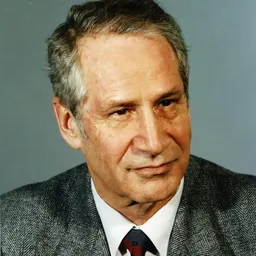
Related people
Same field, nearest in time






Contemporaries
People whose lives overlapped Johanna Olbrich's


Frequently asked questions
Who was Johanna Olbrich?
German spy (1926-2004)
When was Johanna Olbrich born?
Johanna Olbrich was born on 26 October 1926 in Lubań.
When did Johanna Olbrich die?
Johanna Olbrich died on 18 February 2004 in Bernau bei Berlin.
What was Johanna Olbrich's occupation?
Johanna Olbrich was a politician.
What nationality was Johanna Olbrich?
Johanna Olbrich was German.
Sources & further reading
Cite this page
APA: Biography.guide. (2026). Johanna Olbrich. https://biography.guide/johanna-olbrich/
MLA: "Johanna Olbrich." Biography.guide, https://biography.guide/johanna-olbrich/.
Chicago: "Johanna Olbrich." Biography.guide. https://biography.guide/johanna-olbrich/.
Data last updated: 2026-09-20 · Spot an error? Report a correction.
Page generated 2026-09-27 05:32 UTC