
Markus Wolf
Head of the East German foreign intelligence service during the Cold War
About Markus Wolf
Lived 1923 – 2006 (aged 83). Markus Wolf was a German and Russian writer, journalist, intelligence officer, functionary, editing staff and spy.
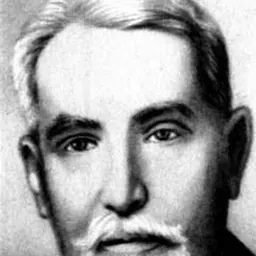
Markus Johannes Wolf (19 January 1923 – 9 November 2006), also known as Mischa, was a German spymaster who served as the head of the Main Directorate for Reconnaissance , the foreign intelligence division of East Germany's Ministry for State Security (, , commonly known as the ). He was the Stasi's number two for 34 years, which spanned most of the Cold War. He is often regarded as one of the most effective spymasters during the Cold War. In the West, he was known as the man without a face as Western agencies reportedly did not know what he looked like until 1978.
Early life and education
Wolf was born 19 January 1923, in Hechingen, Province of Hohenzollern (now Baden-Württemberg), to a German-Jewish father and a non-Jewish German mother. His father was the writer, communist activist, and physician Friedrich Wolf (1888–1953) and his mother was the nursery teacher Else Wolf ( Dreibholz; 1898–1973). He had one brother, the film director Konrad Wolf (1925–1982). His father was a member of the Communist Party of Germany (KPD), and after the anti-communist Nazi Party (NSDAP) gained power in 1933, Wolf emigrated to Moscow with his father, via Switzerland and France, because of their communist convictions and because Wolf's father was Jewish. During his exile, Wolf first attended the German Karl Liebknecht School and later a Russian school. In 1936, at the age of 13, he obtained Soviet identity documents. He was a citizen of Germany, the Soviet Union (USSR), and later East Germany (GDR).
Career
After finishing school, Wolf entered the Moscow Institute of Airplane Engineering (now Moscow Aviation Institute) in 1940, which was evacuated to Alma Ata after Nazi Germany's attack (Operation Barbarossa) on the USSR. There he was told to join the Comintern in 1942, where he among others was prepared for undercover work behind enemy lines. He also worked as a newsreader for German People's Radio after the dissolution of the Comintern, from 1943 until 1945.
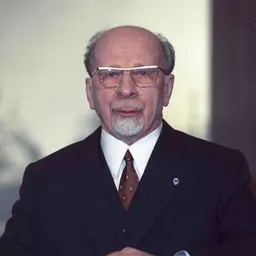
After the war, Wolf was sent to Berlin with the Ulbricht Group, led by Walter Ulbricht, to work as a journalist for a radio station in the Soviet occupation zone in Germany. He was among those journalists who observed the entire Nuremberg trials against the principal Nazi leaders. Between 1949 and 1951, Wolf worked at the GDR embassy in the USSR. That same year, he joined the Ministry for State Security (Stasi).
For most of his career in the HVA, Wolf was known as "the man without a face" due to his elusiveness. It was reported that Western agencies did not know the true appearance of the East German spy chief until 1978, when he was photographed by , Sweden's National Security Service, during a visit to Stockholm, Sweden. An East German defector, , then identified Wolf to West German counter-intelligence as the man in the picture. It has also been suggested that elements within the CIA had identified him by 1959 from photographs of attendees at the Nuremberg trials.
Support for terrorism
Until 1986, Wolf was responsible for Department III which allegedly supported terrorism in what the GDR considered the non-socialist economic area , which were countries that were not a member of Comecon, especially in the Arab world and had all information about terrorism sent directly to him. He spoke at the November 1989 Alexanderplatz demonstration, where he was both booed and applauded by a highly divided crowd during his speech. Calls to "stop" the speech, even to "hang" Wolf could be heard. The dissident Bärbel Bohley would later say:
In September 1990, shortly before German reunification, Wolf fled the country and sought political asylum in the USSR and Austria. When denied, he returned to West Germany, where he was arrested by West German police. Wolf claimed to have refused an offer of a large amount of money, a new identity with plastic surgery to change his features and a home in California from the Central Intelligence Agency, to defect to the United States. This was later quashed by the German supreme court, because West Germany was a separate country at the time. In 1997, he was convicted of unlawful detention, coercion, and bodily harm, and was given a suspended sentence of two years' imprisonment. He was additionally sentenced to three days' imprisonment for refusing to testify against when the former West German (SPD) politician was accused in 1993 of atomic espionage. Wolf said that Flämig was not the agent that he had mentioned in his memoirs.
Wolf died in his sleep at his Berlin home on 9 November 2006. He was cremated and buried in his brother's grave in the Pergolenweg Ehrengrab section of Berlin's Friedrichsfelde Cemetery. In 2011, the State Social Court of Berlin-Brandenburg ruled that the widow Andrea Wolf was not entitled to a "compensation pension" that her husband had been stripped of as a "fighter against fascism".
Cultural impact
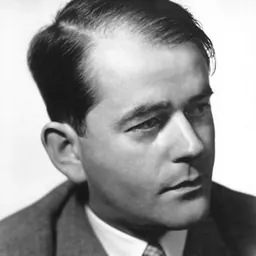
John le Carré's fictional spymaster Karla, a Russian, who appears in Tinker, Tailor, Soldier, Spy, The Honourable Schoolboy and Smiley's People was believed by some readers to be modeled on Wolf. However, the writer has repeatedly denied it, and did so once again when interviewed on the occasion of Wolf's death. Le Carré has also stated that it is "sheer nonsense" to claim that Wolf was the inspiration for the character Fiedler in The Spy Who Came in from the Cold. Although Fiedler is a German Jew who spent World War II in exile and then gained a senior position in East Germany's Intelligence Service, Carré said he had no idea who Markus Wolf was at the time of the writing of the book. He added that he considered Wolf to be the moral equivalent of Albert Speer. He maintained that a character's code name Wolf in an early draft of the book was a coincidence and that the name came from the brand of his lawn mower. He renamed the character after being told that there was an actual Wolf in East German intelligence.
Conversely, Wolf stated that The Spy Who Came In From the Cold was the only book he read for a period in the early 1960s, and was surprised how accurately it presented the reality within the East German security services. He wondered if le Carré had had special information about the situation within the Ministry of State Security. In 1944, he married his first wife Emmy Stenzer, the daughter of the German Communist Franz Stenzer, and who was the curator of the archives of Friedrich Wolf, Markus Wolf's father. His second wife was Christa Heinrich and they were married from 1976 to 1986. His third wife was Andrea Stingl and they married in 1986. He had two daughters Tanja Trögel and Claudia Wall and a son . Tanja Trögel continued her family passion supporting leftist activities.
Claudia Wall (born in either 1969 or 1970), a step daughter of Markus Wolf, was married from autumn 1997 until late 2008 to Hans Wall, the founder of an outdoor and street furniture firm Wall AG. She had two daughters Elisabeth (born in either 1996 or 1997) from her first marriage and Johanna (b. 1997 or 1998) from her second marriage which was to Hans Wall. Franz Wolf (born in May 1953 in Berlin) is a Gibraltar-based manager of a network of companies owned by Mikhail Fridman.
Don’t just read it —
keep it.
Full-length biographies made to live with: read them, listen on the way to work, watch them tonight.
- E-book
- Audio
- Video
Instant download · yours to keep · every purchase keeps this site free
Important facts
People in Markus Wolf's life
Named in this biography and alive at the same time




Related people
Same field, nearest in time


Contemporaries
People whose lives overlapped Markus Wolf's

Frequently asked questions
Who was Markus Wolf?
Head of the East German foreign intelligence service during the Cold War (1923–2006)
When was Markus Wolf born?
Markus Wolf was born on 19 January 1923 in Hechingen.
When did Markus Wolf die?
Markus Wolf died on 9 November 2006 in Berlin.
What was Markus Wolf's occupation?
Markus Wolf was a writer, journalist, intelligence officer, functionary, editing staff and spy.
What nationality was Markus Wolf?
Markus Wolf was German and Russian.
Sources & further reading
Cite this page
APA: Biography.guide. (2026). Markus Wolf. https://biography.guide/markus-wolf-writer/
MLA: "Markus Wolf." Biography.guide, https://biography.guide/markus-wolf-writer/.
Chicago: "Markus Wolf." Biography.guide. https://biography.guide/markus-wolf-writer/.
Data last updated: 2026-09-25 · Spot an error? Report a correction.
Page generated 2026-09-27 05:11 UTC