
Johanna Mestorf
German prehistoric archaeologist and Professor
About Johanna Mestorf
Lived 1828 – 1909 (aged 81). Johanna Mestorf was a German anthropologist, archaeologist, prehistorian, university teacher and translator.
Johanna Mestorf (17 April 1828, Bad Bramstedt, Duchy of Holstein – 20 July 1909, Kiel) was a German prehistoric archaeologist, the first female museum director in the Kingdom of Prussia and usually said to be the first female professor in Germany.
Life and career Johanna was the youngest of four surviving children of the physician and antiquarian Jacob Heinrich Mestorf and his wife Sophia Katharina Georgine, née Körner. When he died in 1837, she moved with her mother to Itzehoe, where she attended the Blöcker Institute upper school for girls. In 1849 she went to Sweden as a governess to the family of Count Piper at Ängsö Castle, and there also studied Scandinavian languages. In 1853 she returned to Germany, and during the next few years travelled to France and Italy several times as the companion of an Italian countess who was related to the Piper family. While working, she became a well-educated self-taught archaeologist.
Beginning in 1863, Mestorf translated important Scandinavian archaeological works into German; these translations had a significant impact on the development of the field in Germany, particularly in establishing the Three-age system and typological study of artifacts. She also began in the 1860s to write literature and articles and essays on ethnography and archaeology, and to give lectures on Norse mythology. She wrote reports on each of these congresses.
In 1868 she was given an honorary post at the Kiel Museum; in 1873 this was merged into the Museum of Antiquities of the Fatherland (Museum vaterländischer Alterthümer), the forerunner of the Schleswig-Holstein State Archaeological Museum at Gottorp Castle and of the Institute for Prehistory and Ancient History at the University of Kiel, at the same time becoming part of the university, and she became its first custodian. In 1891 she succeeded the director, becoming the first female museum director in Germany. She is usually regarded as the first woman to receive that title in Germany; however, according to the University of Kiel, the first was "a naturalist from the Baltic".
Mestorf was one of a group of women denied permission to attend lectures on Goethe at the University of Kiel in 1884/85 because the professor refused to grant it. Prachtmantel for the characteristic decorative Germanic rectangular cloak, similar to the Roman sagum, and Bog body (Moorleiche) for the human bodies and body parts found in European bogs. She catalogued the prehistoric finds of Schleswig-Holstein and educated the public on the importance of preserving them; she is responsible for the Danevirke and many other archaeological sites having been promptly investigated and preserved. including the Berlin Society for Anthropology, Ethnology and Prehistory (1891),
She was awarded the following medals: Small Gold Medal for Art and Science (1904) Silver Women's Order of Service Swedish Gold Medal of the Wife of Oscar I
On her retirement, she received a photograph personally signed by Emperor Wilhelm II, because no other form of recognition was possible for a woman.
Selected publications Wiebeke Kruse, eine holsteinische Bauerntochter. Ein Blatt aus der Zeit Christians IV. Hamburg: Meissner, 1866. (historical novelisation) Der archäologische Congress in Bologna. Aufzeichnungen. Hamburg: Meissner, 1871. Der internationale archäologische und anthropologische Congress in Stockholm am 7. bis 16. August 1874 – siebente Versammlung. Hamburg: Meissner, 1874. Der internationale Anthropologen- und Archäologen-Congress in Budapest vom 4. bis 11. September 1876 – achte Versammlung. Hamburg: Meissner, 1876. Die vaterländischen Alterthümer Schleswig-Holsteins. Ansprache an unsere Landsleute. Hamburg: Meißner, 1877. Vorgeschichtliche Alterthümer aus Schleswig-Holstein. Zum Gedächtnis des fünfzigjährigen Bestehens des Museums vaterländischer Alterthümer in Kiel. Hamburg: Meissner, 1885. Katalog der im germanischen Museum befindlichen vorgeschichtlichen Denkmäler. Rosenberg'sche Sammlung. Nuremberg: Germanisches Museum, 1886. Urnenfriedhöfe in Schleswig-Holstein. Hamburg: Meissner, 1886. "Aus dem Steinalter. Gräber ohne Steinkammer unter Bodenniveau". Mitteilungen des Anthropologischen Vereins in Schleswig-Holstein 1892, pp. 9–24. "Moorleichen". In Bericht des Museums Vaterländischer Alterthümer bei der Universität Kiel 42 (1900) (with Karl Albert Weber). Wohnstätten der älteren neolithischen Periode in der Kieler Föhrde. Kiel: Lipsius & Tischer, 1904. Führer durch das Schleswig-Holsteinische Museum Vaterländischer Altertümer in Kiel. Kiel: Dr. von Schmidt & Klaunig, 1909.
Don’t just read it —
keep it.
Full-length biographies made to live with: read them, listen on the way to work, watch them tonight.
- E-book
- Audio
- Video
Instant download · yours to keep · every purchase keeps this site free
Important facts
People in Johanna Mestorf's life
Named in this biography and alive at the same time


Related people
Same field, nearest in time
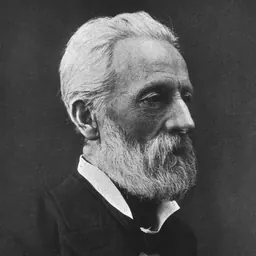
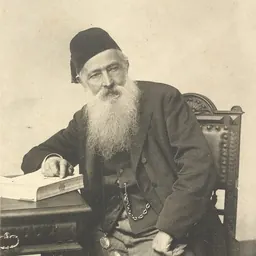

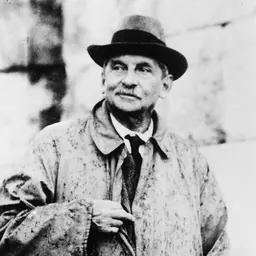

Contemporaries
People whose lives overlapped Johanna Mestorf's





Frequently asked questions
Who was Johanna Mestorf?
German prehistoric archaeologist and Professor (1828–1909)
When was Johanna Mestorf born?
Johanna Mestorf was born on 17 April 1828 in Bad Bramstedt.
When did Johanna Mestorf die?
Johanna Mestorf died on 20 July 1909 in Kiel.
What was Johanna Mestorf's occupation?
Johanna Mestorf was an anthropologist, archaeologist, prehistorian, university teacher and translator.
What nationality was Johanna Mestorf?
Johanna Mestorf was German.
Sources & further reading
Cite this page
APA: Biography.guide. (2026). Johanna Mestorf. https://biography.guide/johanna-mestorf/
MLA: "Johanna Mestorf." Biography.guide, https://biography.guide/johanna-mestorf/.
Chicago: "Johanna Mestorf." Biography.guide. https://biography.guide/johanna-mestorf/.
Data last updated: 2026-09-20 · Spot an error? Report a correction.
Page generated 2026-09-27 05:32 UTC