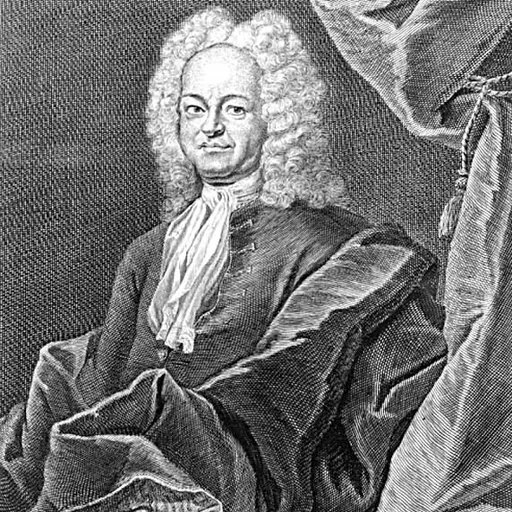
About Johann Juncker
Lived 1679 – 1759 (aged 80). Johann Juncker was a German physician, chemist and university teacher.
Johann Juncker (23 December 1679 in Londorf, Hesse – 25 October 1759 in Halle, Kingdom of Prussia) was a German physician and chemist. Juncker was a leader in the Pietist reform movement as it applied to medicine. He directed the Francke Foundations and initiated approaches to medical practice, charitable treatment, and education at the University of Halle that influenced others internationally. He was a staunch proponent of Georg Ernst Stahl and helped to more clearly present Stahl's phlogiston theory of combustion.
Early life and education Johann Juncker was born on 23 December 1679 to Johann Ludwig Juncker, a well-to-do tenant farmer in Londorf, near Giessen. Juncker went to school in Allendorf and Obernhof, before attending the Pädagogium in Giessen for four years. The head of the institution at that time, J. H. May, was a Pietist. A dissident evangelical reform movement, Pietism emphasized the practical application of theology and active charitable work.
Juncker attended the University of Marburg, matriculating on 30 October 1696 with a degree in philosophy. His studies were briefly interrupted when he helped his parents relocate to Franconia in 1696, due to hostilities of the Nine Years' War. Juncker moved to the newly founded University of Halle a center of Pietist theological reform where he began studying theology. Juncker also took classes in medicine with Friedrich Hoffmann and Georg Ernst Stahl while at Halle. Like many of the poorer students, Juncker taught in the Pädagogium at Halle.
In 1716 Juncker returned to Halle at the request of Francke, to become medical supervisor of the school, orphanage and clinic that Francke had founded. The institutions were collectively known as the Franckesche Stiftungen or Francke Foundations.
The Francke Foundations were shaped by the Pietist movement. As a pedagogical center, the institutions at Halle influenced educational systems both in Germany and internationally. Juncker was a leader of Pietist medicine, influential in establishing approaches to medical practice, charitable treatment, and education at Halle. Poor patients received both medical treatment and medicines for free. Charity patients and those able to pay received medicines of equal quality. Although other institutions were slow to model themselves on it,
Juncker wrote and published extensively. Between 1721 and 1757, 33 editions of Conspectus chirurgiae were published. It is considered one of his most important works, as is Conspectus formularum medicarum.
Juncker was an energetic defender of the Halle physician Georg Ernst Stahl, who founded the phlogiston theory of combustion. Juncker published dissertations and books that developed Stahl's vitalist approach. His treatment of Stahl's work on chemical composition and reaction was "critical and coherent", making it easier to understand and reaching a greater audience. He also agreed with Stahl that the disciplines of chemistry and medicine should be treated as distinct. Juncker's Conspectus chemiae theoretico-practicae (1730) systematically explored the work of Stahl and Johann Joachim Becher, and influenced the reception of Stahl's work by eighteenth-century European thinkers including Guillaume-François Rouelle and Immanuel Kant.
On 29 June 1729 Juncker was made a full professor with an appointment to the chair of medicine at the University of Halle.
Juncker held the position of professor of medicine at Halle from 29 June 1729 until his death on 25 October 1759. His grave is located in the Halle Stadtgottesacker cemetery complex. He was succeeded in his position as professor of medicine at Halle by his son, Friedrich Christian Juncker.
Publications
Juncker's published works include the following:
Conspectus medicinae theoretico-practicae : tabulis CXXXVIII omnes primarios morbos methodo Stahliana tractandos, exhibens (39 editions 1718-1744) Conspectus chirurgiae : tam medicae, methodo Stahliana conscriptae, quam instrumentalis, recentissimorum auctorum ductu collectae : quae singula tabulis CIII exhibentur : adjecto indice sufficiente (33 editions 1721-1757) Conspectus therapiae generalis : cum notis in materiam medicam tabulis XX methodo Stahliana conscriptus (33 editions 1725-1744) Conspectus formularum medicarum : exhibens tabulis XVI tam methodum rationalem, quam remediorum specimina, ex praxi Stahliana potissimum desumta, et therapiae generali accomodata (24 editions 1727-2012) Conspectvs chemiae theoretico-practicae : in forma tabvalrvm repraesentatvs, in qvibvs physica, praesertim svbterranea, et corporvm natvralivm principia habitvs inter se, proprietates, vires et vsvs itemqve praecipva chemiae pharmacevticae et mechanicae fvndamenta e dogmatibvs Becheri et Stahlii potissimvm explicantvr, eorvndemqve et aliorvm celebrivm chemicorvm experimentis stabilivntvr (1730)
Don’t just read it —
keep it.
Full-length biographies made to live with: read them, listen on the way to work, watch them tonight.
- E-book
- Audio
- Video
Instant download · yours to keep · every purchase keeps this site free
Important facts
People in Johann Juncker's life
Named in this biography and alive at the same time



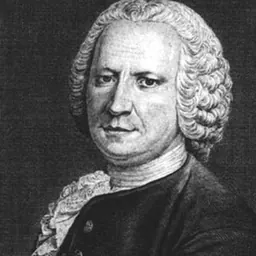
Related people
Same field, nearest in time


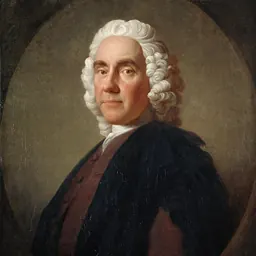
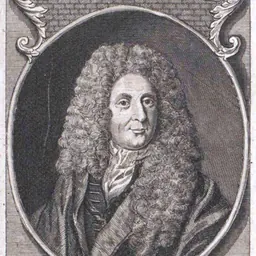
Contemporaries
People whose lives overlapped Johann Juncker's



Frequently asked questions
Who was Johann Juncker?
German physician and chemist (1679-1759)
When was Johann Juncker born?
Johann Juncker was born on 23 September 1679 in Londorf.
When did Johann Juncker die?
Johann Juncker died on 21 October 1759 in Halle (Saale).
What was Johann Juncker's occupation?
Johann Juncker was a physician, chemist and university teacher.
What nationality was Johann Juncker?
Johann Juncker was German.
Sources & further reading
Cite this page
APA: Biography.guide. (2026). Johann Juncker. https://biography.guide/johann-juncker/
MLA: "Johann Juncker." Biography.guide, https://biography.guide/johann-juncker/.
Chicago: "Johann Juncker." Biography.guide. https://biography.guide/johann-juncker/.
Data last updated: 2026-09-23 · Spot an error? Report a correction.
Portrait: Wikimedia Commons · author & licence
Page generated 2026-09-27 05:04 UTC