
Johann Joachim Becher
German physicist, scientific alchemist, pioneer of chemistry, scholar, courtier, and adventurer
About Johann Joachim Becher
Lived 1635 – 1682 (aged 46–47). Johann Joachim Becher was a chemist, economist, university teacher, physician, alchemist and convert, known for Phlogiston theory.
Johann Joachim Becher (; 6 May 1635 – October 1682) was a German physician, alchemist, precursor of chemistry, scholar, polymath and adventurer, best known for his terra pinguis theory which became the phlogiston theory of combustion, and his advancement of Austrian cameralism.
Page of Theatrum Chemicum Volume VI (1659), showing the first page of 'Discursus Solini Saltztal Regiomontani De potentissima philosophorum medicina universali, lapis philosophorum trismegistus dicta.'
Early life and education Becher was born in Speyer during the Thirty Years War. His father was a Lutheran minister and died when Becher was a child. At the age of thirteen Becher found himself responsible not only for his own support but also for that of his mother and two brothers. He learned and practiced several small handicrafts, devoted his nights to study of the most miscellaneous description and earned a pittance by teaching.
In 1654, at the age of nineteen, he published the Discurs von der Großmächtigen Philosophischen Universal-Artzney / von den Philosophis genannt Lapis Philosophorum Trismegistus (discourse about the almighty philosophical and universal medicine by the philosopher called Lapis Philosophorum Trismegistus) under the pseudonym 'Solinus Salzthal of Regiomontus.' It was published in Latin in 1659 as Discursus Solini Saltztal Regiomontani De potentissima philosophorum medicina universali, lapis philosophorum trismegistus dicta (translated by Johannes Jacobus Heilmann) in vol. VI of the Theatrum Chemicum.
Career In 1657, he was appointed professor of medicine at the University of Mainz and physician to the archbishop-elector. His Metallurgia was published in 1660; and the next year appeared his Character pro notitia linguarum universali, in which he gives 10,000 words for use as a universal language. In 1663, he published his Oedipum Chemicum and a book on animals, plants and minerals (Thier- Kräuter- und Bergbuch).
In 1666, he was made councillor of commerce at Vienna, where he had gained the powerful support of the prime minister of Emperor Leopold I. Sent by the emperor on a mission to the Netherlands, he wrote there in ten days his Methodus Didactica, which was followed by the Regeln der Christlichen Bundesgenossenschaft and the Politischer Discurs von den eigentlichen Ursachen des Auf- und Abblühens der Städte, Länder und Republiken. In 1669, he published his Physica subterranea; the same year, he was engaged with the count of Hanau in a scheme to acquire Dutch colonization of Guiana from the Dutch West India Company.
Meanwhile, he had been appointed physician to the elector of Bavaria; but in 1670 he was again in Vienna advising on the establishment of a silk factory and propounding schemes for a great company to trade with the Low Countries and for a canal to unite the Rhine and Danube.
In 1678, he crossed to England. He travelled to Scotland where he visited the mines at the request of Prince Rupert. He afterwards travelled for the same purpose to Cornwall, and spent a year there. At the beginning of 1680, he presented a paper to the Royal Society in which he attempted to deprive Christiaan Huygens of the honour of applying the pendulum to the measurement of time. In 1682, he returned to London, where he wrote Närrische Weisheit und weise Narrheit (in which, according to Otto Mayr he made extensive references to temperature regulated furnaces), a book the Chymischer Glücks-Hafen, Oder Grosse Chymische Concordantz Und Collection, Von funffzehen hundert Chymischen Processen and died in October of the same year.
Legacy Austrian Cameralist Becher was the most original and influential theorist of Austrian cameralism. He sought to balance between the need to reinstate postwar levels of population and production both in the countryside and the towns. By leaning more seriously on trade and commerce, Austrian cameralism helped to transfer attention to the troubles of the monarchy's urban economies. Ferdinand II had already taken some corrective steps before he died by attempting to ease the debts of the Bohemian towns and to put limits on some of the land-holding nobility's commercial rights. In Becher's Physica Subterranea, he proposes a model of matter based on Paracelsus's tria prima (salt, mercury, sulphur). He proposes that all matter is composed of air, water and three earths: terra lapidea related to the fusibility, terra fluida related to the fluidity and volatility, and terra pinguis related to the combustibility and flammability. According to Becher, flammable objects burned because they contained terra pinguis. Even metals had a bit of terra pinguis, observed in the process of calcination. The concept of terra pinguis was later developed by Georg Ernst Stahl into phlogiston theory.
Don’t just read it —
keep it.
Full-length biographies made to live with: read them, listen on the way to work, watch them tonight.
- E-book
- Audio
- Video
Instant download · yours to keep · every purchase keeps this site free
Important facts
People in Johann Joachim Becher's life
Named in this biography and alive at the same time
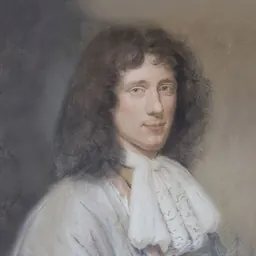

Related people
Same field, nearest in time

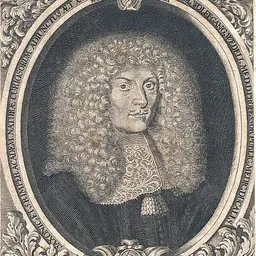
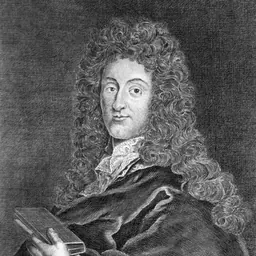



Contemporaries
People whose lives overlapped Johann Joachim Becher's





Frequently asked questions
Who was Johann Joachim Becher?
German physicist, scientific alchemist, pioneer of chemistry, scholar, courtier, and adventurer
When was Johann Joachim Becher born?
Johann Joachim Becher was born on 6 May 1635 in Speyer.
When did Johann Joachim Becher die?
Johann Joachim Becher died in 1682 in London.
What was Johann Joachim Becher's occupation?
Johann Joachim Becher was a chemist, economist, university teacher, physician, alchemist and convert.
What was Johann Joachim Becher known for?
Johann Joachim Becher was known for Phlogiston theory.
What nationality was Johann Joachim Becher?
Johann Joachim Becher's recorded nationality: Prince-Bishopric of Speyer.
Sources & further reading
· Wikipedia: Johann Joachim Becher
· DBpedia: Johann Joachim Becher
Cite this page
APA: Biography.guide. (2026). Johann Joachim Becher. https://biography.guide/johann-joachim-becher/
MLA: "Johann Joachim Becher." Biography.guide, https://biography.guide/johann-joachim-becher/.
Chicago: "Johann Joachim Becher." Biography.guide. https://biography.guide/johann-joachim-becher/.
Data last updated: 2026-09-20 · Spot an error? Report a correction.
Page generated 2026-09-27 05:24 UTC