
About Johann Gottlieb Graun
Lived 1703 – 1771 (aged 68). Johann Gottlieb Graun was a German composer, concertmaster and violinist.
Johann Gottlieb Graun (1702/1703 – 27 October 1771) was a German Baroque/Classical era composer and violinist, born in Wahrenbrück. His brother Carl Heinrich was a singer and also a composer, and is the better known of the two.
Johann Gottlieb studied with J.G. Pisendel in Dresden and Giuseppe Tartini in Padua. Appointed Konzertmeister in Merseburg in 1726, he taught the violin to J.S. Bach's son Wilhelm Friedemann. He joined the court of the Prussian crown prince (the future Frederick the Great) in 1732. Graun was later made Konzertmeister of the Berlin Opera in 1740. He composed over 50 songs and compositions.
Graun's compositions were highly respected, and continued to be performed after his death: "The concert-master, John Gottlib Graun, brother to the opera-composer, his admirers say, 'was one of the greatest performers on the violin of his time, and most assuredly, a composer of the first rank'," wrote Charles Burney. He was primarily known for his instrumental works, though he also wrote vocal music and operas. He wrote a large number of violin concertos, trio sonatas, and solo sonatas for violin with cembalo, as well as two string quartets — among the earliest attempts in this genre. He also wrote many concertos for viola da gamba, which were very virtuosic, and were played by Ludwig Christian Hesse, considered the leading gambist of the time. Despite these achievements, Graun’s reputation during his lifetime was by no means commensurate with the significance of his work. Overshadowed by the fame of his younger brother Carl Heinrich Graun and by that of his pupil Franz Benda, his contributions were long underestimated and, in many cases, largely overlooked. Only in more recent scholarship has a reassessment begun to take shape. In particular, studies have demonstrated that as early as the 1730s Graun developed a stylistic model for the violin concerto that proved influential and normative for subsequent composers . This growing recognition has led to a more nuanced understanding of Graun’s role in the formation of mid-18th-century instrumental style and has gradually restored his position as a central figure in the history of German violin music.
Despite the popularity of his works, Graun was not free from criticism. Burney noted that some critics complained that, "In his concertos and church music ... the length of each movement is more immoderate than Christian patience can endure."
Selected recordings Concerti & Sinfonie Wiener Akademie, dir. Martin Haselböck cpo
Don’t just read it —
keep it.
Full-length biographies made to live with: read them, listen on the way to work, watch them tonight.
- E-book
- Audio
- Video
Instant download · yours to keep · every purchase keeps this site free
Important facts
People in Johann Gottlieb Graun's life
Named in this biography and alive at the same time

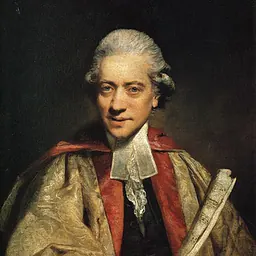
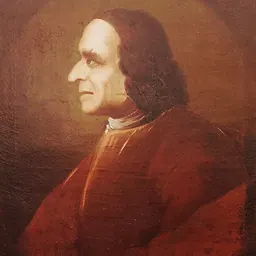

Related people
Same field, nearest in time
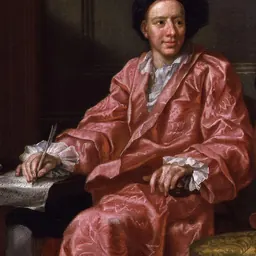
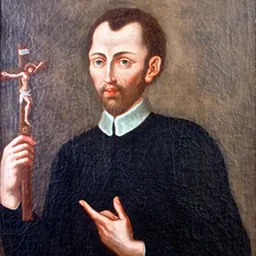
Contemporaries
People whose lives overlapped Johann Gottlieb Graun's




Frequently asked questions
Who was Johann Gottlieb Graun?
German composer and violinist
When was Johann Gottlieb Graun born?
Johann Gottlieb Graun was born on 27 October 1703 in Wahrenbrück.
When did Johann Gottlieb Graun die?
Johann Gottlieb Graun died on 27 October 1771 in Berlin.
What was Johann Gottlieb Graun's occupation?
Johann Gottlieb Graun was a composer, concertmaster and violinist.
What nationality was Johann Gottlieb Graun?
Johann Gottlieb Graun was German.
Sources & further reading
· Wikipedia: Johann Gottlieb Graun
· DBpedia: Johann Gottlieb Graun
Cite this page
APA: Biography.guide. (2026). Johann Gottlieb Graun. https://biography.guide/johann-gottlieb-graun/
MLA: "Johann Gottlieb Graun." Biography.guide, https://biography.guide/johann-gottlieb-graun/.
Chicago: "Johann Gottlieb Graun." Biography.guide. https://biography.guide/johann-gottlieb-graun/.
Data last updated: 2026-09-20 · Spot an error? Report a correction.
Page generated 2026-09-27 05:18 UTC