
Johann Georg Heinsch
Czech painter; mostly religious works; not to be confused with the still life painter
About Johann Georg Heinsch
Lived 1647 – 1712 (aged 64–65). Johann Georg Heinsch was a painter.
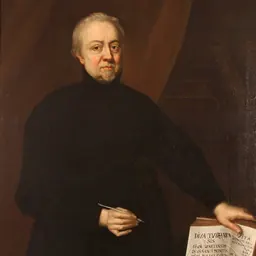
Jan Jiří Heinsch or Heintsch (; c. 1647 – September 9, 1712) was a Czech-German Baroque style artist. Heinsch primarily painted religious-themed works (including altarpieces) as well as portraits of monastic superiors – especially for various Catholic religious orders such as the Jesuits, Knights of the Cross with the Red Star or Augustinians. He is known to have produced around 150 paintings and, in addition, extensive graphic work.
Life
Heinsch was born in 1647 in Kłodzko (Glatz), the capital of the County of Kladsko (then part of Bohemia proper, now in Silesia, southern Poland), to a Protestant family. He lived there until at least 1678, when he moved to Prague. It is not certain where he gained a painting education in his early years. In Prague, where he joined local painters' guilds while converted to Catholicism, he learned the art of one of the best Czech Baroque painters, Karel Škréta (whom he took as his lifelong pattern); to a lesser extent was also influenced by the Italian Renaissance, particularly by Paolo Veronese. As for themes of paintings, Heinsch was inspired by thoughts of polymaths and divines Bohuslav Balbín or Jan František Beckovský.
In 1708, he entered the Augustinian monastery in Bělá pod Bezdězem in northern Bohemia, but before the end of the trial period he left; yet later painted several works for this institution.
Heinsch died in Prague on September 9, 1712. where the most successful is the portrait of the former Grand Master George Ignatius Pospíchal (1694–1699). In 1710, produced the design for a statue of St. Francis Borgia on the Charles Bridge, but it was later sculpted by another Czech-German artist, Ferdinand Maxmilián Brokoff.
His monumental painting « Jesus after the fast served by angels » can be seen at the Strahov monastery in Prague.
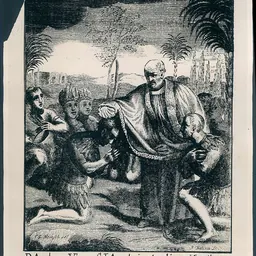
In addition to painting, Heinsch published several copperplate engraving illustrations. Notable are the ones featured in Societas Jesu Apostolorum imitatrix by Matthias Tanner. These illustrations depicted Jesuits' heroic deeds in the Americas and elsewhere. One example is his illustration of Fr. Andrew White who assisted the Catholics in Maryland during its founding.
In addition to Prague, his legacy is scattered throughout Bohemia and some examples also can be found in southern Moravia (churches in Brno and Uherské Hradiště).
Notes and references
Don’t just read it —
keep it.
Full-length biographies made to live with: read them, listen on the way to work, watch them tonight.
- E-book
- Audio
- Video
Instant download · yours to keep · every purchase keeps this site free
Important facts
more
Georg Hintzsch, Jan Jiri Heinsch, Johann Georg Heinrich, Georg Hainz, Georg Heintz, Johann Georg Heimsch, Heinsch, Jan Jirí Heintsch, HeintschPeople in Johann Georg Heinsch's life
Named in this biography and alive at the same time


Related people
Same field, nearest in time

Contemporaries
People whose lives overlapped Johann Georg Heinsch's




Frequently asked questions
Who was Johann Georg Heinsch?
Czech painter; mostly religious works; not to be confused with the still life painter (1647–1712)
When was Johann Georg Heinsch born?
Johann Georg Heinsch was born in 1647 in Kłodzko.
When did Johann Georg Heinsch die?
Johann Georg Heinsch died on 9 September 1712 in Prague.
What was Johann Georg Heinsch's occupation?
Johann Georg Heinsch was a painter.
Sources & further reading
· Wikipedia: Johann Georg Heinsch
Cite this page
APA: Biography.guide. (2026). Johann Georg Heinsch. https://biography.guide/johann-georg-heinsch/
MLA: "Johann Georg Heinsch." Biography.guide, https://biography.guide/johann-georg-heinsch/.
Chicago: "Johann Georg Heinsch." Biography.guide. https://biography.guide/johann-georg-heinsch/.
Data last updated: 2026-09-20 · Spot an error? Report a correction.
Page generated 2026-09-27 04:59 UTC