
About Jocelyn Field Thorpe
Lived 1872 – 1940 (aged 67). Jocelyn Field Thorpe was a British and English chemist and university teacher, known for 2-Pyridone, Thorpe reaction and Thorpe–Ingold effect.
Sir Jocelyn Field Thorpe FRS (1 December 1872 – 10 June 1940) was an English chemist who made major contributions to organic chemistry, including the Thorpe–Ingold effect and three named reactions.
Early life and education Thorpe was born in Clapham, London on 1 December 1872, one of nine children and the sixth son, of Mr. and Mrs. W.G. Thorpe of the Middle Temple. He attended Worthing College, and then from 1888 - 1890 studied engineering at King's College, London. He then moved to the Royal College of Science from 1890 - 1892 to study chemistry. He earned his Ph.D. in organic chemistry under Karl von Auwers at Heidelberg University in 1895. In 1895 he joined Owens College, Manchester (this became part of the University of Manchester in 1904), starting as an assistant to W. H. Perkin Jr., becoming a lecturer in 1896 and senior lecturer in 1908. In that year he was elected FRS and was awarded a Sorby Fellowship by the Royal Society to study in Sheffield.
Career and research
In 1908 he moved to the University of Sheffield to a full-time research appointment, and in 1913 applied for and was awarded the chair of organic chemistry at Imperial College, a post he was to hold until 1939. The previous incumbent was Thomas Edward Thorpe - although the two were not related, his father was a close friend of T. E. Thorpe and it was the latter who persuaded him to switch from engineering to chemistry in his undergraduate career. Although Ingold's obituary does give some references and on that account is the better source for Thorpe's chemical research career.
With William H. Perkin Jr. at Manchester he worked largely on terpenes (the primary constituents of many essential oils), in particular on camphor and its derivatives. At Imperial College from 1913 he set about a much-needed reorganisation of the organic chemistry department. With the outbreak of war in 1914 he threw himself into war work and proved to be a creative administrator within, amongst others, the Chemical Defence and Trench Warfare
After the war he remained on many committees and was frequently consulted by governmental and industrial bodies. His departmental reorganisations continued, but this postwar period saw much of his best research. With Christopher Kelk Ingold, a demonstrator in the chemistry department from 1920 – 1924, Thorpe worked on 'valence deflection' (sometimes called the Thorpe–Ingold effect). This derives from the observation that increasing the size of two of the substituents at a tetrahedrally-bound carbon atom leads to higher intramolecular reaction rates between parts of the other two substituents.
Three organic reactions bear his name. The Thorpe reaction is a chemical reaction described as a self-condensation of aliphatic nitriles catalyzed by base to form enamines. The Thorpe–Ziegler reaction is the intramolecular modification with a dinitrile as a reactant and a cyclic ketone after acid hydrolysis. In the Guareschi-Thorpe condensation cyanoacetamide reacts with a 1,3-diketone to a 2-pyridone.
Personality Kon remembered Thorpe as being jovial and full of ideas, never happier than when working in the laboratory, which he normally did in his shirtsleeves without any protective clothing (as famous picture shows him smoking a cigar – he was fond of cigarettes and cigars) while peering through a test-tube. Kon, Linstead and Armstrong remark on his kindness and humanity to others. He was a cultured man with a keen interest in English china. He was well supported in his career by his wife, Alice Lilian née Briggs (1879 – 1967), who he married in 1902.
Don’t just read it —
keep it.
Full-length biographies made to live with: read them, listen on the way to work, watch them tonight.
- E-book
- Audio
- Video
Instant download · yours to keep · every purchase keeps this site free
Important facts
People in Jocelyn Field Thorpe's life
Named in this biography and alive at the same time
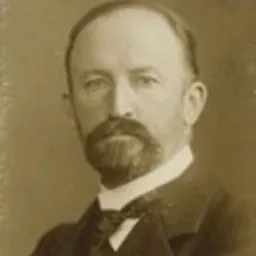
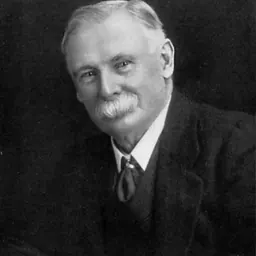

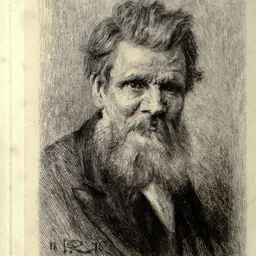
Related people
Same field, nearest in time


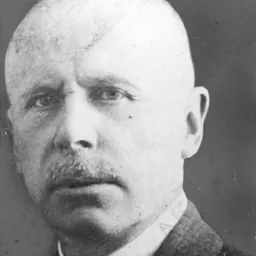

Contemporaries
People whose lives overlapped Jocelyn Field Thorpe's

Frequently asked questions
Who was Jocelyn Field Thorpe?
English chemist
When was Jocelyn Field Thorpe born?
Jocelyn Field Thorpe was born on 1 December 1872 in Clapham.
When did Jocelyn Field Thorpe die?
Jocelyn Field Thorpe died on 10 June 1940 in Bexhill-on-Sea.
What was Jocelyn Field Thorpe's occupation?
Jocelyn Field Thorpe was a chemist and university teacher.
What was Jocelyn Field Thorpe known for?
Jocelyn Field Thorpe was known for 2-Pyridone, Thorpe reaction and Thorpe–Ingold effect.
What nationality was Jocelyn Field Thorpe?
Jocelyn Field Thorpe was British and English.
Sources & further reading
· Wikipedia: Jocelyn Field Thorpe
· DBpedia: Jocelyn Field Thorpe
Cite this page
APA: Biography.guide. (2026). Jocelyn Field Thorpe. https://biography.guide/jocelyn-field-thorpe/
MLA: "Jocelyn Field Thorpe." Biography.guide, https://biography.guide/jocelyn-field-thorpe/.
Chicago: "Jocelyn Field Thorpe." Biography.guide. https://biography.guide/jocelyn-field-thorpe/.
Data last updated: 2026-09-20 · Spot an error? Report a correction.
Page generated 2026-09-27 05:21 UTC